
You are currently browsing the tag archive for the ‘economics’ tag.
Assume that people like to have access to a community of people with similar habits, tastes, demographics, etc. A “community” is just a group of some minimal absolute size. Then the denser the population the more likely you will find enough people to form such a community.
But this effect is larger for people whose tastes, habits, and demographics are more idisyncratic than for people in the majority. Garden-variety people will find a community of garden-variety people just about anywhere they go. By contrast, if types of people are randomly distributed across locations, the density of cities makes it more likely that a community can be assembled there.
But that means that types won’t be just randomly distributed across locations. The unique types are willing to pay more to live in cities than the garden-variety types.
The number of laws grows rapidly, yet the number of regulators grows relatively slowly. There are always more laws than there are regulators to enforce them, and thus the number of regulators is the binding constraint.
The regulators face pressure to enforce the most recently issued directives, if only to avoid being fired or to limit bad publicity. On any given day, it is what they are told to do. Issuing new regulations therefore displaces the enforcement of old ones.
One rejoinder would begin by observing that the origin of the problem is that future legislators are short-run players. Given that, it may even be normatively optimal for today’s short-run legislators to speed up the pace of their own regulations so that they are in effect as long as possible before their eventual displacement by the next generation. Of course this is conditional on today’s regulation being better than the marginal old one being displaced, which is presumably the case otherwise it wouldn’t have been under consideration in the first place.
You and your spouse plan your lifetime household consumption collectively. This is complicated because you have different discount factors. Your wife is patient, her discount factor is .8; you are not so patient, your discount factor is .5. But you are a utilitarian household so you resolve your conflicts by maximizing the total household utility.
Leeat Yariv and Matt Jackson show in this cool paper that your household necessarily violates a basic postulate of rationality: your household preferences are not time consistent. For example, consider how you rank the following two streams of household consumption:
- (0,10,0,0, …)
- (0,0,15,0,0, …)
Each of you evaluates the first plan by computing the present value of 10 units of consumption one period from now. Total household utility for the first plan is the sum of your two utilities, i.e. 

But now consider what happens when you actually reach date 1 and you re-consider your plan. Now the total utilities are 

Indeed your household exhibits a present bias: present consumption looms large in your household preferences, so much so that you cannot forego consumption that, earlier on, you were planning to delay in exchange for a greater later reward.
Jackson and Yariv show that this example is perfectly general. If a group of individuals is trying to aggregate their conflicting time preferences, and if that group insists on a rule that respects unanimous preferences and is not dictatorial, then it must be time inconsistent.
Do you know about the Nemmers Prize in Economics? It is a prestigious prize awarded biennially in recognition of “major contributions to new knowledge or the development of significant new modes of analysis.” It comes with a significant monetary award funded originally via a gift from the Nemmers brothers to Northwestern University. (There are also Nemmers Prizes in Mathematics and Music Composition.)
The Nemmers wanted the prize to eventually carry a degree prestige that would rival the Nobel Prizes. So far 9 prizes have been awarded and 5 of those recipients have gone on to win Nobel Prizes. (The Nemmers charter forbids giving the award to a previous Nobel Laureate.) They are
- Peter Diamond (Nemmers 1994 Nobel 2010)
- Tom Sargent (Nemmers 1996 Nobel 2011)
- Bob Aumann (Nemmers 1998 Nobel 2005)
- Dan McFadden (Nemmers 2000 Nobel later that same year)
- Ed Prescott (Nemmers 2002 Nobel 2004)
Indeed each of the first 5 Nemmers winners later won Nobels. The next four, Ariel Rubinstein, Lars Hansen, Paul Milgrom, and Elhanan Helpman are perennial favorites in department pools and polls.
If you had placed your Nobel bets over the last decade based on the Nemmers record you would have made some money.
I have now seen this paper presented twice and I really like it. It’s Gul, Pesendorfer, and Strzalecki modeling the implications of limited attention on asset prices. They show how competitive equilibrium requires large fluctuations in prices in extreme states of productivity.
Their model is very simple and the logic can be explained in a few sentences. Output in the economy is stochastic so that there are high productivity and low productivity states. There is one simple behavioral assumption: each agent is limited in his cognition, (or attention, or flexibility) so that he must partition states into a small number of categories. His limitation is modeled by a constraint that his consumption must be the same in all states belonging to the same category.
Qualitatively, the results of the paper follow almost immediately now. Consider the very small probability event that productivity is at the extreme low end. Agents will lump these states together with other states and so they will not be able to reduce their consumption in response to the very low output. So in order for the market to clear there must be some agent, or small set of agents, who do pay attention to these states and reduce their consumption exactly when output is this low.
Think about these agents. They are committing their scarce resource, namely attention, to this rare event. Its very unlikely that this use of their attention will pay off. In order to give them enough incentive to do this, the reward must be very large. And the way to reward them is to make the price extremely high in these low productivity states. The ability to sell at these extreme high prices is the necessary incentive.
A similar logic explains why prices must be extremely low in high productivity states. Overall there are large price fluctuations, larger than in a standard economy without the need for these incentives.
The paper is a beautiful example of the value of abstraction. Rather than getting into details about how complexity/attention constraints actually work, it is enough to model their essential implication, namely the partition. This keeps the canvas clean for the economic logic to stand out.
There is one conceptual point that I haven’t been able to come to terms with. It has to do with feasibility. In competitive equilibrium, feasibility–the assumption that total consumption equals the total endowment– is just a way of modeling market clearing. And market clearing is the essential assumption of competitive equilibrium.
If markets didn’t clear then there would be excess demand and supply and the resulting competitive pressures would cause prices to adjust so that market clearing was restored. That’s the usual story behind competitive equilibrium. But it doesn’t work here, at least not in the usual way.
For example, suppose that nobody was paying attention to the lowest state. All traders are grouping it with higher productivity states and so they are planning to consume more than the total output in this lowest state. There will be excess demand. That can’t be a competitive equilibrium, therefore someone must be paying attention to the lowest state.
But notice we cannot explain this “equilibration” by the textbook story of how prices adjust to clear markets. No matter how much the price adjusts, since nobody is paying attention to this lowest state, nobody can change their behavior in response to changes in prices.
Instead, the story has to work something like this. If nobody is paying attention to the lowest state, the price in that lowest state has to rise so that somebody starts paying attention to it. That is, it’s as if there is some ex ante stage where everybody is paying attention to every state, and on the basis of all that information they decide which states to then stop paying attention to.
Probably this is taking the model too literally and there is an as if interpretation that doesn’t sound so convoluted. I am still trying to find that.
January of 1996 I was on the junior job market and I had just finished giving a recruiting seminar at the University of Chicago. This was everything a job market seminar at Chicago was supposed to be. I barely made it through the first slide, I spent the rest of the 90 minutes moderating a debate among the people in the audience, and this particular debate was punctuated by Bob Lucas shouting “Will you shut up Derek? Contract theory has not produced a single useful insight.”
Suffice it to say that my job market paper had nothing in common with either contract theory, Bob Lucas, or the Derek in question. But it was the most fun I have ever had in a seminar.
So I was going out to dinner with Tom Sargent and Peyton Young. Peyton was visiting the Harris school for the quarter and we would be going in his car to the restaurant. Actually it was his mother’s car because his mother lived in the area and he was borrowing it while he was visiting. It was one of those Plymouth Satellite or Dodge Dart kinda cars: a long steel plinth on wheels. Peyton warned us that it hadn’t been driven much in recent years and it had just gotten really cold in Chicago so there was some uncertainty whether it would actually start.
We got in with me on the passenger side and Sargent in the back seat and sure enough the car wasn’t going to start. It was making a good effort, the battery was strong and the starter was cranking away but the engine just wouldn’t turn over. After a while Tom says let him have a crack at it. I am sitting there freezing my never-been-out-of-California butt off thinking that this is the comical extension of the surreal seminar experience I just went through. First I had to play guest emcee while they hashed out their unfinished lunchtime arguments, and now I am going to have to get out and push the car through the snow.
But when Sargent got into the front seat there was this look on his face. I know these American cars, he says, you gotta work with them. He leans forward to put his ear close to the dashboard, he’s got the ignition in his right hand and his left hand looped around the steering column holding the gear shift. And then he goes to work. He turns the key and starts wiggling the gear shift while he is pumping the gas pedal. This makes the car emit some strange sounds but apart from that it doesn’t accomplish much and he starts over. He’s mumbling something under his breath about engine flooding, his head is bobbing manically and his eyes are folding down giving the effect of a cross between Doc Brown and Yoda. In the back seat Peyton appears to have total faith in this guy’s command of the machine, meanwhile I am about to start laughing out loud.
After three or four more cycles, he starts ramping up the body English. He is bouncing off the seat to get extra leverage on the gear shift. His ear is right up against the steering wheel, his eyes are shut and from the look on his face you would assume he was straining to heed the car’s wheezing, last dying wish. But then there is a different sound. The dry electric sound of the starter motor starts to give way to the deep hum of internal combustion. The car begins to bounce along with Professor Tom Sargent. Bounce, bounce, bounce, vrum –ayngayngayng– vrum ayng vrum -vrum -vrum, BANG. That backfire knocks me out of my seat, but it just gently opens Sargent’s eyes and Peyton’s look is pretending that he saw all of this coming.
Sargent turns back the ignition, pauses and draws his face back away from the wheel. His head turns toward me and a grin comes over his face. He’s saying here it goes, watch this. He turns the key one last time and the engine rolls over like a cat, stretching out its neck for one more scratch.
“You don’t mind if I drive do you Peyton?”
On Monday, me and some dudes are gonna tailgate outside the Kellogg School of Management before the Sveriges Riksbank Prize in Economic Sciences in Memory of Alfred Nobel is announced. You should totally come. It’s gonna be ill. My pick to click this year is N. Gregory Mankiw. They’re gonna say it’s for his work on menu costs and price stickiness, but that’s bunk. It’s really so they can hand it over to someone who isn’t Paul Krugman.
Who’s on your Nobel fantasy team?
In related news, Harvard has shut down its Nobel pool (and Al Roth plans on a late breakfast.)
The Mexico City Assembly is considering a measure which would enable marrying couples to specify a fixed, finite duration for the marriage contract.
The minimum marriage contract would be for two years and could be renewed if the couple stays happy. The contracts would include provisions on how children and property would be handled if the couple splits.
“The proposal is, when the two-year period is up, if the relationship is not stable or harmonious, the contract simply ends,” said Leonel Luna, the Mexico City assemblyman who co-authored the bill.
I wonder if they considered the various other margins along which to move to an interior solution. We could be married forever but only on Thursdays. Or if you are not yet ready to marry my I can still incentivize you to invest in me by writing you an option to marry me in the future. Or I can go public, issuing matrimony shares. My commitment to you is proportional to your ownership stake.
Digitopoloy.org: Josh Gans, Erik Brynjolfsson, and Shane Greenstein. Should be good.
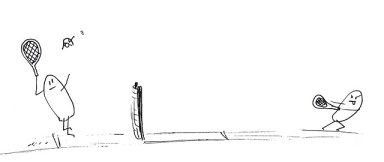
A lot of economic theory is empirically empty. Most of what is “under the hood” in an economic model makes no difference whatsoever from the point of view of the “empirical implications.” Here is an example to illustrate what I mean.
There are two ways I could present to you the standard theory of bidding behavior. The first way, and the way we actually do it, starts with some primitive hypotheses and derives the theory from them. So I might start by specifying the rules of the auction, then state some assumptions like that the bidders have certain payoff functions, they are maximizing utility, they have some specific information, and they play an equilibrium. All of these assumptions together tell you what bids you can expect.
The second way is simpler. I just write down the bids you can expect. That is my theory. I hypothesize a certain (joint distribution of) bidding behavior. Now, this theory is incredibly boring. But from an empirical point of view; i.e. in terms of the observable predictions it makes, it is equivalent to the first version of the theory.
(You might be thinking that the first theory makes more hypotheses and these hypotheses can be tested independently of their joint implications. I have two responses. A) that’s probably not true. Utilities, information, optimization, and equilibrium are all separately vacuous assumptions. They have implications only in conjunction with each other. B) from the empirical point of view that’s only a stronger argument that the simpler theory is preferred. If we can match the data on bids, does it matter whether the underlying hypotheses are rejected?)
If the point of economic theory was to generate empirical predictions, most of economic theory would be a waste of time. But it’s not the point.
There is value in a theory that describes the route from parameters to conclusions even if those parameters could never even be measured. And that is because the users of economic theory have a source of data that is unavailable to empirical researchers, and would not be permissible anyway: personal experience and intuition.
If you are about to compete in an auction, you look around you and see your competitors, the context, and the object up for sale. This is a unique situation because every situation is unique. You have a sense that one guy is an insider, one guy is bankrolled, and one guy is his competitor. You know that all of these things matter for how you should bid but you want to know how they matter. A theory is a recipe for translating your completely subjective description of the situation into an educated hypothesis about what is going to happen.
(Drawing: Summer Off-site from www.f1me.net)
It’s hard to measure media bias in general because bias is hard to quantify. Movie reviews are one way forward, a cool idea in a new paper by DellaVigna and Kennedy. Here’s the abstract:
Fueled by the need to cut costs in a competitive industry, media companies have be- come increasingly concentrated. But is this consolidation without costs for the quality of information? Concentrated media companies generate a conflict of interest: a media outlet can bias its coverage to benefit companies in the same group. We test empirically for bias by examining movie reviews by media outlets owned by News Corp.–such as the Wall Street Journal–and by Time Warner–such as Time. We find a statistically significant, if small, bias in the review score for 20th Century Fox movies in the News Corp. outlets. We detect no bias for Warner Bros. movies in the reviews of the Time Warner outlets, but find instead some evidence of bias by omission: the media in this group are more likely to review highly-rated movies by affiliated studios. Using the wealth of detail in the data, we present evidence regarding bias by individual reviewer, and also biases in the editorial assignment of review tasks. We conclude that reputation limits the extent of bias due to conflict of interest, but that nonetheless powerful biasing forces are at work due to consolidation in the media industry.
Tubeteika toss: Josh Gans.
Al Roth starts a list of comparative advantages of the new electronic parking meters relative to old school coin-fed.
In Brookline, where I live, one can already begin to catalog some of the relative advantages and disadvantages of the old and new technologies, aside from those mentioned above, regarding credit cards in particular.
Waiting time and queues: old meters took your quarters immediately (if they were working well enough to take them at all); new meters take some time even if you are first in line, and since they serve multiple spots, you may have to wait while they take that time for the people ahead of you.
Parking at 7:45am: old meters made you start paying even if you rolled up to the curb before payment was required; new meters know that you don’t have to pay until e.g. 8am, and so can sell you parking until 8:30 without charging you for the first 15 minutes until 8.
Adding time to the meter: old meters let you add another quarter to add time, e.g. if you glanced in at the coffee shop after you had already put money in the meter and noticed that there were no vacant tables, so you would have to go across the street, and wouldn’t be back by 8:30. New meters print a receipt for you to put on your dashboard, and don’t let you add time to the end of the time interval you have already bought.
To which I would add: No Free Riding. There is no more hope of rolling into a space with time still left on the meter from the last guy.
And a spinoff list of disadvantages of both systems. Pre-payment. The meter forces me to bear the risk associated with my own uncertain parking duration. I pay in advance and hope I don’t pay too much or too little. If I pay ex post I am insured against that risk and I am willing to pay a higher per-minute rate. (What is the effect on my incentive to park for longer? With ex-post payment I bear a constant cost per minute I stay. With pre-payment that incremental cost is zero up until the meter expires and from there increases with the probability that the meter maid turns up.)
- Second-sourcing. You are a monopolist selling a durable good that requires periodic upgrades. Think enterprise software. The monopoly price extracts the lifetime user-value of the product. To maximize the lifetime user-value of the product you should set the price for future upgrades at cost. The problem is that your users don’t trust you. They foresee that at the time of the upgrade, when the original purchase price of the software is a sunk cost you are not going to set upgrade prices at cost. Indeed you will again try to extract the (remaining) lifetime user-value of the product with the upgrade price. You need a device to commit yourself not to try to exploit your customers in the future so that you they will submit to your exploitation today. By spinning off a division of your company you can create a competitor for upgrades. This competition guarantees that you cannot act like a monopolist for upgrades and the upgrade price will be competitively priced at cost.
- Pre-emption. You are currently a monopolist in an industry that can accommodate at most two firms. It is inevitable that there will be an entrant eventually and your monopoly profits will turn into duopolist profits. Since you are going to have a competitor anyway why not create your own competitor? You could sell half of your company to the highest bidder. He will be willing to pay up to the duopolist profits and then he will compete with you driving the profits of your remaining half down to the duopolist profits. In total your profits are equal to the sum of the two duopolist’s profits rather than just a single duopolist profit. That’s necessarily less than the monopoly profit but that wasn’t going to last anyway.
Registration for the 2012 Allied Social Sciences Meetings has just opened up today. The ASSA meeting is the annual “winter meeting” in which hordes of economists descend on a rotating list of cities to spend a weekend shuffling papers around and stiffing cab drivers.
It was by sheer luck that last night I noticed that today would be the first day to register. And so this morning I was one of the first to login to the ASSA hotel registration system and reserve one of the better suites (we will be in the Fairmont) in one of the more central conference hotels where Northwestern Economics will conduct its job market interviews. (New PhD recruitment is one of the main, perhaps the main, activity at the ASSA meetings.) Had I been just a few hours later we would have been relegated to a remote hotel making it harder for interviewers and interviewees to get to and from the interviews.
(If that happened to you, you can follow @ASSAMeeting on Twitter to wait for announcements of new suites opening up. But wouldn’t you rather follow me? Sandeep?)
It’s funny that a conference run by economists uses a qeueing/rationing system to allocate scarce hotel space. The system doesn’t even allow ex post exchanges between departments which would undo inefficient misallocations. If MIT gets stuck in the Embassy Suites and Podunk U is in the Hyatt Regency, then tough luck MIT (maybe Podunk can build a stronger theory group, ha ha ha.)
The problem is that ASSA negotiates discounted rates for the suites by reserving them in bulk. Obviously that is good for everyone. But the discounted rate is below market clearing and therefore there will be excess demand for the best hotels. It would seem that the resulting inefficiency is the price we have to pay for our monopsony power.
Indeed it would not work to have ASSA negotiate hotel space at discount rates and then turn around and use an efficient auction internally to allocate it. The reason is somewhat subtle. Here’s one way of seeing it. An efficient auction for a single suite is (essentially) a second-price auction. It works efficiently becuase when I know that I will have to pay the second highest bid then I will bid exactly my willingness to pay. Therefore the winner will be the bidder who values the suite the most. However, because ASSA bought the suite at a rate that is below market clearing, the second highest bid for a suite is going to be more than ASSA paid for it.
That means ASSA makes money. Sounds good right? No. In fact it is a problem precisely because we all benefit from ASSA making money (we get lower registration fees, lower journal subscription fees, etc.) You see I internalize the benefits of ASSA’s revenue which essentially means that I get back some of the price I pay when I win the auction. In other words I am not really paying the second highest bid, I am paying something less. And because of that I no longer want to bid my true willingness to pay, and the mechanism breaks down. In the jargon, the efficient auction is no longer incentive compatible.
But there is a solution. The basic mistake ASSA is making is to negotiate discounted suites. Why does it do that? Well, it has monopsony power and it has different hotels in the area compete with one another for the business. Since we are buying hotel space it seems natural to make hotel discounts the currency of that competition. But we saw the problem with that. Instead ASSA should ask for lump sum cash bids from the hotels. The highest bidding hotel gets the right to auction off their suites to ASSA members using an efficient auction. The hotel keeps all revenues from the auction.
That way I don’t internalize any of the revenues from the auction. The mechanism is incentive compatible again and therefore gives an efficient allocation. The hotels make some money. And the amount of money they can expect to earn is exactly how much they are willing to pay to ASSA in advance for that right. So in fact ASSA comes away with their monopsony rents without having to sacrifice efficiency.
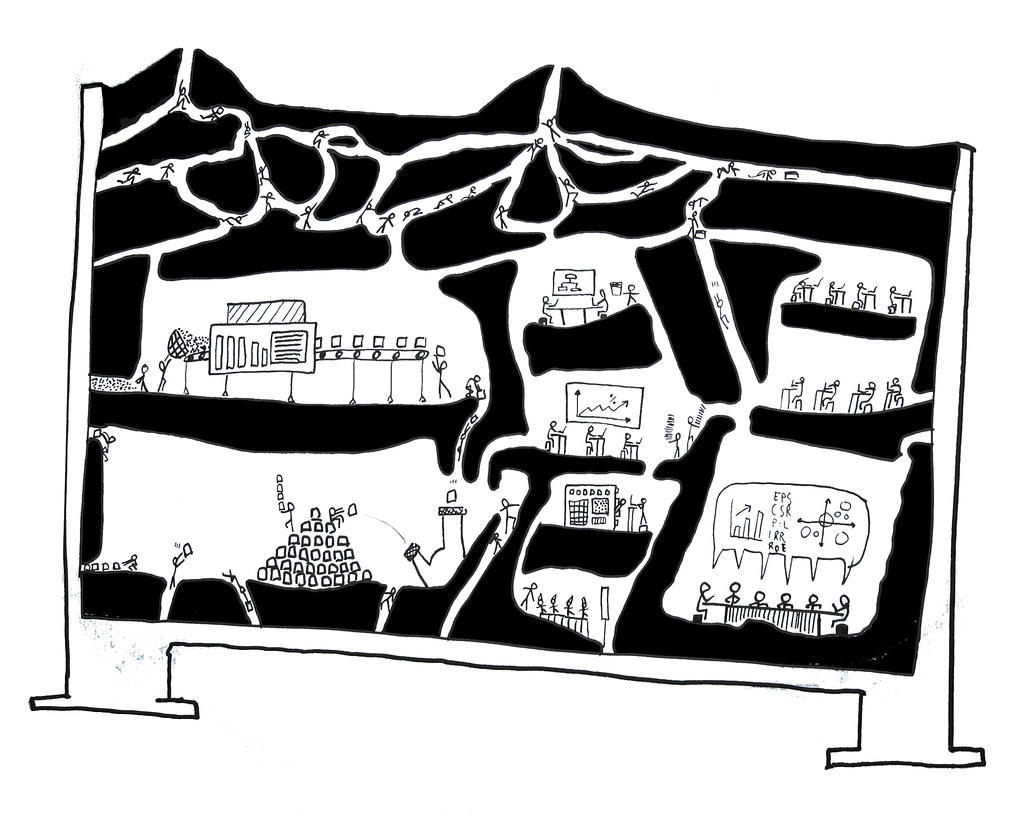
In the movie Inside Job, George Soros makes an analogy that made an impression on me. He talks about how oil tankers have partitions in their hulls with their oil divided across the compartments. That way when the seas are rough the oil sloshes around within its own restricted space rather than the entire cargo splashing forward and back the full length of the ship, as would happen if there were no partitions. This obviously makes the tanker more stable.
The analogy is to financial markets and regulation. Erecting partitions to make the market less liquid should improve stability. At first you say, oh that’s a nice piece of rhetoric but financial markets aren’t anything like oil tankers. At least I said that.
But let’s take it for a spin. Let’s analyze the partitioned tanker but forget that it is a mechanical system and instead analyze it in the same way we would use equilibrium theory to analyze a market. Here goes.
There is a shock (rough seas) and the oil starts to spill to one end of the boat. But the partition stops the oil from going where it wants to go. There is a friction in the market. The oil in one compartment and the empty space in the adjacent compartment want to make a voluntary exchange. And it would be Pareto improving (otherwise they wouldn’t want to do it.) But that partition is stopping them. This is welfare-reducing.
Moreover, there is a powerful incentive for arbitrage. Any small leak in the partition would allow equilibrium to be reached by removing the friction, allowing the oil to go where it wants to go, and relieving some internal pressure. That must be welfare-improving.
If you think about it, market models pretty much stop there. Pareto improving trades should and do happen. Financial innovation brings down those partitions and that’s good. What is almost always missing is any way of talking about the hard-to-define but clearly very real externality that is the effect of these trades on the stability of the system as a whole. That’s about process and transitional dynamics, not about equilibrium.
Indeed, in equilibrium the oil in the tanker is in the same place whether or not the partitions are there.
(drawing: The Bigger Picture from www.f1me.net)

The efficient way to allocate scarce capacity on a flight is to hold an auction as close to departure time as possible. Allocating space prior to that point runs the risk that a ticketed passenger learns that his willingness to pay is lower than he expected (business meeting is cancelled, family member falls ill, etc.) Allocating space close to the time of departure ensures that passengers have resolved any uncertainty about their willingness to pay and those with the highest willingness to pay will be seated.
But with an auction the airline cedes a lot of consumer surplus to the passengers, because in an efficient auction the winner pays not his own willingness to pay, but the willingness to pay of the marginal bidder. The airline is willing to sacrifice efficient allocation in exchange for a mechanism that extracts more of the gains from trade.
The ideal for the airline would be to sell tickets to the auction and to put these tickets up for sale as early as possible, before passengers have any private information about their willingness to pay.
Here’s an extreme example to illustrate. There is a plane with one seat and two potential passengers. By the time of departure they will know their willingness to pay, but when they first enter this world they know only the probability distribution. The airline should announce that there will be a 2nd price auction at the time of departure but in order to be allowed to participate in that auction the passengers must purchase a ticket the moment they are born. The price of this ticket will be set equal to the expected value of consumer surplus from the auction. This way the airline achieves the maximal gains from trade and secures all the rents for itself.
Obviously the problem is that the airline cannot contract with every potential passenger still in the bassinet. Indeed contracting is initiated by the passenger, not the airline. Thus, in order to be able to extract consumer surplus the airline’s mechanism has to give the passengers the incentive to voluntarily contract early prior to the resolution of uncertainty.
A mechanism that accomplishes this will have two features. First, ticket prices must rise as the departure date approaches. This incentivizes early purchases. Second, flights will be oversold. This enables efficient re-allocation of seats on the basis of information realized after tickets are purchased. In particular, those with lowest realized willingness to pay will sell back their tickets in a reverse auction.
(This is ongoing research with Daniel Garrett and Toomas Hinnosaar, two NU students who will be on the job market this year.)
The ultimatum game is a workhorse for economics experiments. Subject A has 100 dollars to split with Subject B. A proposes a division and if B accepts then the division is carried out. If B rejects then both parties get nothing. In these experiments, A is surprisingly generous and B is surprisingly spiteful. A Fine Theorem makes a good point:
…I’m sure someone has done this but I don’t have a cite, the “standard” instructions in ultimatum games seem to prime the results to a ridiculous degree. Imagine the following exercise. Give 100 dollars to a research subject (Mr. A). Afterwards, tell some other subject (Ms. B) that 100 dollars was given to Mr. A. Tell Mr. A that the other subject knows he was given the money, but don’t prime him to “share” or “offer a split” or anything similar. Later, tell Ms. B that she can, if she wishes, reverse the result and take the 100 dollars away from A – if she does so, had Mr. A happened to have given her some of the money, that would also be taken. I hope we can agree that if you did such an experiment, A would share no money and B would show no spite, as neither has been primed to see the 100 dollars as something that should have been shared in the first place. One doesn’t normally expect anonymous strangers to share their good fortune with you, surely. That is, feelings of spite, jealousy and fairness can be, and are, primed by researchers. I think this is worth keeping in mind when trying to apply the experimental results on ultimatum games to the real economy.
Its called Fehr Advice!
Traditional economic research assumes that managers, employees, customers, and suppliers usually make rational decisions and thus do not make systematic decision errors. Behavioral economics, however, has found numerous proofs that people make systematic decision errors that limit their own welfare and also diminish efficiency, perceived fairness, and the profitability of firms.
It was for this reason that FehrAdvice & Partners AG developed the consulting approach BEA™ that is based on empirical insights about the human tendency to make erroneous decisions. This approach systematically includes this knowledge in consulting activities. Our consultants have a “trained eye” in the area of behavioral economics, and the innovative methods of empirical research we use allow us to identify potential areas of improvement in enterprises, markets, and organizations that were previously ignored.
They have a blog (in German), they are on Twitter, and they are hiring.
In the thirteenth century, Italians and Dutch traders went to Champagne not to drink champagne but to trade. They had to travel there and back and worry about theft. There was always the chance that some dispute would arise at the trade fairs. Courts arose to enforce contracts. Did they arise spontaneously in Coasian fashion, created by contracting parties to facilitate trade? Or was their government intervention? The first view is advocated by Milgrom, North and Weingast in a lovely and influential paper. MNW invoke some “stylized facts” about the institution of the “Law Merchant”, They claim the law merchant was a kind of store of the history of past exchanges. The law merchant could substitute for the incomplete knowledge of trading parties themselves and had good incentives to be honest himself to retain his income as a law merchant. The paper is mainly theoretical and has a nice prisoner’s dilemma model with traders changing partners every period.
A new paper by Edwards and Ogilvie challenges the stylized facts that motivate MNW. They claim:
The policies of the counts of Champagne played a major role in the rise of the fairs. The counts had an interest in ensuring the success of the fairs, which brought in very
significant revenues. These revenues in turn enabled the counts to consolidate their political position by rewarding allies and attracting powerful vassals….The first institutional service provided by the counts of Champagne consisted of mechanisms for ensuring security of the persons and property rights of traders. The counts undertook early, focused and comprehensive action to ensure the safety of merchants travelling to and from the fairs..
A second institutional service provided by the rulers of Champagne was contract enforcement. The counts of Champagne operated a four-tiered system of public lawcourts which judged lawsuits and officially witnessed contracts with a view to subsequent enforcement…
A final reason for the success of the Champagne fair-cycle was that it offered an almost continuous market for merchandise and financial services throughout the year, like a great trading city, but without the most severe disadvantage of medieval cities – special privileges for locals that discriminated against foreign merchants
The paper is an interesting read and there are lots of rich details about the Champagne fairs themselves.
This was Mallesh Pai last month:
Everyone here has heard about price discrimination. I know something about your willingness to pay (from other data about you or people like you), and use that to charge you a ‘better’ price. This has mostly been restricted by some combination of ethics, vague legal standards and technology to use ‘coarse’ information, e.g. your age (student/ senior discounts), your address (mailed coupons), and so on. As we pointed out a few months back there are cleverer methods on the way. But today, I think I’ve seen the best yet. A company calledKlout (indubitably with the cooler K-based variant of the spelling) looks into your social network and offers a ‘score’ estimating the influence you have. Some geniuses have decided that one’s ‘Klout score’ might be a good way to discriminate on what website you see (and indeed, what free swag you get offered): http://mashable.com/2011/06/22/klout-gate/ .
And this is Spotify this week proving him right.
The Spotify invites are part of the Klout Perks program, which rewards top influencers with special deals based on their interests and comprehensive Klout score rating. People who are rated as influential on Klout get access to the free trial version of the music service. They can also get a free month of Spotify’s premium service if enough people within their community sign up for the music service.
“The Spotify guys actually reached out to us about launching in the U.S. They had been using Klout and thought it was really cool,” said Klout CEO Joe Fernandez. “We talked a lot about how to hit the people in middle America that are also early adopters but don’t read the tech blogs and stuff.”
Experiments concerning the effect of publishing calorie counts on restaurant menus tend to show little effect on choices. In the experiments that I know of, choices before and after publishing calorie counts are compared. But this form of test cannot be considered conclusive. Some people were overestimating the calories and they might cut back, some were underestimating and they might eat more. There is no reason to expect that the aggregate change should be positive or negative.
A better experiment would be to use a restaurant where calorie counts are already published and manipulate them. Will people change their choices when you add 5% to the reported calories? 10%? What is the elasticity? It’s a safe guess that there would be little response for small changes and a large response for very large changes. Any response at all would prove that their is value is publishing calorie counts because it would prove that this information is useful for choices.
The only question that would remain is how those welfare gains measure up against the cost of collecting and publicizing the information.
It doesn’t take much to win a tennis match no matter how strong your opponent is. It’s enough to win just one point, the last one.
There is an analogous saying about economics research, I heard it originally attributed to Roger Myerson. The paper is finished as soon as you have the right notation. This is exactly right because economic theory is about crafting the model and assumptions to highlight just the point you are trying to convey, nothing more nothing less. There is a continual back and forth between formulating assumptions, proving results, changing the setup, checking how the results are affected, etc. until you have it just exactly perfect (Don’t get cynical now.) How the notation is chosen, i.e. which concepts in the model get their own basic symbol and which concepts are expressed as derivatives, is a key linchpin. By grouping the right concepts with well-chosen notation you can turn an opaque argument into one that transparently lets the main idea through, i.e. just exactly perfect.

A mother I know was looking into a week of golf camp for her son. She was quoted a price and it sounded reasonable to her but the fact is she doesn’t really know what a reasonable price is for golf camp. Think about your own experience in a situation like this. Somehow, whether this is rational or not, the price itself tells you what a reasonable price is. Once you hear the price you are anchored to it. For sure anything more than that would be unreasonable.
Now back to the mother who is the subject of this story. Having been quoted a reasonable price she is inclined to go for it. But first, she has some further inquiries. What happens if it rains? Will there be a refund for that day?
There is some checking with higher ups and a return phone call with the answer in the negative. Camp is rain or shine. In the event of rain the children will play board games in the clubhouse.
Now the pro-rated daily fee is, by basic arithmetic, a reasonable price for a day of golf camp but not a reasonable price to pay for day care. Thus, given the non-negligible probability of rain, the value of golf camp has just dropped by a non-negligible amount. And indeed this price which was a reasonable price for 5 days of golf camp is not reasonable for an expected 4.25 days of golf camp.
No golf camp for junior.
Here is the lesson for optimal pricing policies. A fully informed, risk-neutral expected utility maximizer sees two equivalent ways of pricing golf camp. Way #1: Price is fixed and set at the value of the expected number of non-rain days. Way #2: A higher price but with refunds on rain days.
But given the inherent reference-dependence that comes from the natural tendency to interpret any price as just on the threshold of reasonable, Way #2 is clearly superior. This has many implications. Think shipping costs, all-inclusive holidays, etc.

You receive a notice in the mail reminding you that your subscription to Food and Wine Magazine is about to expire. Don’t miss out on everything you have come to love about Food and Wine Magazine, renew today!
I received one of these last week. Thing is, I don’t subscribe to Food and Wine Magazine and I never have. Still, for the briefest moments I think I did start to worry that I would miss out on everything I love about it.
In the end, I didn’t “renew” but I would bet that lots of people do.
He is expecting regular raises. Not every month, maybe not even every year but he expects a raise and he has his own timetable for when you should give it to him. No matter how hard you try to keep to a fair schedule of raises, uncertainty about his expectations together with other random factors mean that at some point you are going to fall behind.
As time passes and no raise he is going to start slacking off. Maybe just a little bit at first but it’s going to be noticeable. Now from your perspective it just looks like he is not working as hard as when you first hired him. You tell yourself stories about how gardeners start out by working hard to get your business and then slack off over time. You might even consider that maybe he is slacking off because you aren’t giving him a raise but what are you going to do now? You can’t possibly give him a raise and reward him for slacking off. If anything your raise is going to come even later now.
And so he slacks off even more. In fact he has been through this before so the very first slack-off was a big drop because he knew it was the beginning of the end. He’s gonna be fired pretty soon.
You remember that game where you ask your friends which of two unbearable acts they would rather endure? The more incomparably unspeakable the acts the more torturous it is to decide. The game gets its irresistable charm from the way it tests our ability to decide beween alternatives we would never admit to being able to tolerate.
But that ability is the essence of compromise. You have your preferred policy but policy-making requires negotiation and your preferred policy just isn’t in the feasible set. You’ve got to take stock of all the worst-best policies that your negotiating partners would agree to and decide which one is the least worst.
Admitting which one you would settle for is psychologically and strategically hard. Because rhetorically it amounts to approval. Your constituents will ask you how you possibly could have proposed that. In the future your approval will tend to cement this compromise into place. Bargaining frequently reaches impasse just because people have not had enough practice ranking alternatives that are far below their favorites.
That’s what I was thinking about when Courtney Conklin Knapp (guest-blogging this week for Megan Mcardle) wrote about the new death-images to be printed on cigarette packs. The images are revolting. It seems wrong in some basic way to be forcing people to look at those. But in practice we are faced with two choices.
Suppose you had a choice between only two policies: A) grotesque pictures or B) increased per-pack taxes calculated to generate exactly the same reduction in demand. Which do you prefer?
I think I favor the pictures. But look at the 220 comments to Courtney’s post where she asked her readers to choose. They are the roots of gridlock text-onified. Almost nobody actually answers the question. Its like when your friend forgets the rules of the game. You have to pick one.
I spent the weekend in bed with the flu. Sunday morning, on the tail end of it, I popped a few Advil to bring the fever down so I could semi-enjoy Father’s Day. Was I making a mistake?
As I understand it, my body elevates its temperature as a defense mechanism. Evolution has been operating long enough to have a pretty well-calibrated trade-off between the losses of reduced activity from the fever versus the speed and probability of a successful recovery. Is my intervention distorting away from the optimum?
- Arguably I have private information about idiosyncratic conditions and Nature is calibrated only to the average state. Note that while this hypothesis justifies my use of Advil on Father’s Day, it also implies that I should go short on Advil on other days.
- And anyway Nature has given me the infrastructure to condition physiology on my knowledge of immediate environmental conditions. For example when I know that I am in danger, the body re-allocates resources to help me escape. What makes this any different?
- My objective is probably different. In Mother Nature’s eyes I am just a vessel from which offspring should spring forth. She could care less whether I get to practice Pink Floyd’s San Tropez on the piano with my daughters. So Nature’s revealed preference for activity is necessarily weaker than mine.
- But wait, my personal preference for non-reproductive activity is also something that Nature shaped. So what would explain the wedge?
- If I am making the wrong decision by taking Advil it’s not because I have the wrong preferences but because Advil is something Nature never expected. She has me well-trained when it comes to the fundamentals but she hasn’t had time to design my direct preference for the intermediate good Advil. She must leave it up to me to do the calculation of its implied tradeoffs in terms of the fundamentals. It’s only because of my miscalculation that I am making a mistake.

It’s hard to model serendipity in a rational choice framework. For example, people say that the web’s ability to focus your attention on subjects you like prevents you from being exposed to new stuff and that makes you worse off. That may be true, but it could never be true in a rational framework because if you wanted exposure to new stuff you would choose that. (I am leaving out market structure explanations, i.e. the market for serendipitous content may shrink. That’s beside the point I am making and anyway I would guess exactly the opposite. I can always take advantage of the increased diversity in content by supplying my own randomness.)
But here’s a version of serendipity that may be rationalized. I have started reading blogs in my Google reader using the “All Items” tab where all the articles in all the blogs I subscribe to are listed in a flat format in chronological order, rather than blog-by-blog. I have found a non-obvious effect of serendipity: not knowing which blog I am reading and just reading the article prevents me from approaching it with expectation of the author’s prior biases, etc. I recommend it.
For some kinds of information it may be beneficial to hide the source. For example, pure rhetoric. My ability to judge whether it is convincing or not is based purely on the logical connections between premise and conclusion and my prior beliefs about the plausibility of the premises. Knowing the author of the rhetoric provides no additional information. And if, for psychological reasons, knowing the source biases my interpretation then I am strictly better off having it hidden from me. (At least temporarily)
You will complain that by appealing to psychological biases I have departed from the rational choice framework. But I think there is a useful distinction between rational choice, and rational information processing (if the latter even has any meaning.) If I can be expected to choose my sources rationally then there is no role for serendipitous exposure to new sources, even if I make errors in processing information. But rational choice together with (self-aware) processing errors can justify keeping the source hidden.
(Drawing by Stephanie Yee.)
What was slated to be the world’s first brothel for women has been put on hold in New Zealand. The reasons are murky but here’s one tangential item:
At the time of the launch, Corkery claimed that hundreds of men had applied to be $240-an-hour gigolos and satisfy the demands of Kiwi women wanting sex.
No surprises there! NZ$240 = US$200 (approximately.) Your first reaction is that the market clearing price must be much lower than that, possibly negative. But demand is certainly non-standard in this market due to adverse selection. How much are Kiwi women willing to pay to have sex with a man who is paying to have sex with her? It could easily be that we need a price high enough to increase the supply of men who have valuable outside options. You may just have to live with excess supply.
Whatever-hat-you-wear-to-a-brothel (I wouldn’t know) insert-your-favorite-gesture: Arthur Robson.
- Among the males in my family tree, underwear preference alternates generations: briefs then boxers then briefs…
- Smoking guns for this theory. Italians who pronounce the hard b in the word “subtle”, and pronounce “differ” as in “diffAIR” (they have no trouble with water, later, etc.) Also, the hard p in “psychology.”
- Here’s the best way to get your wife to agree to a parenting strategy X: “My mother tried not-X and that didn’t work.”
- I want to play a negative drum: it makes a sound except when I hit it.
- What is the effect on equilibrium search models and assortative matching when once-matched, husbands can use headscarves to hide the quality of their mate from potential poachers?
 Cheap Talk