
You are currently browsing the category archive for the ‘Uncategorized’ category.
People are taught to us association as a mnemonic device to help them remember things. Well it appears you can do something similar to help you forget:
The experiments started with MacLeod and Noreen showing their subjects a series of different words — “barbecue,” “theater,” “occasion,” “rapid,” for example — and then telling them to generate one specific personal memory in response to each word.
There were 24 words in all, and after the subjects had described their memories, they were all sent home and told to come back a week later.
The following week, when they returned, they were given a transcript of each of the memories they’d shared, along with the specific word that had generated it. They reviewed the words and memories until they knew exactly which word went with which memory, and then were put in front of a computer and told that they would see each of those words flash on the computer screen in front of them.
If the word appeared in green, they were to repeat the memory associated with that word out loud, but if the word appeared in red, it was very important for them not to think about the memory associated with that word.
MacLeod and Noreen showed the subjects 16 of the 24 words over and over and over. Each time a subject either repeated the memory or blocked it. Some people apparently pictured a blank; others distracted themselves with other thoughts.
‘A Significant Forgetting Effect’
At the end of this process, the subjects were tested to see if there was a change in what they recalled. And there was — in the memories that had been repeatedly blocked.
“There was a significant forgetting effect, about a 12 percent drop in the level of details recalled,” MacLeod says. “That’s a large effect.”
If you got out a pencil and graphed my kids’ time outside, with the date on the horizontal axis and the number of hours spent outside (and not fraying their parents nerves alternately bickering with one another and submitting requests to play on the iPad or watch TV) on the vertical, you would find a dramatic and sustained upward spike beginning right after Labor Day.
What is the underlying structural change that explains this? School has begun. Indeed, just as the school year begins and forces them to stay inside half the day (thankfully under the care of somebody else), suddenly going outside and playing with their friends becomes their favorite way to pass the time.
It’s not because time outside has suddenly become more precious. On any August day when they have already wasted half of it sitting around inside, the time has become equally scarce. And it’s not because time outside is a way to escape homework because that doesn’t really start until the second or third week of school.
I think the reason is coordination failure. Playing outside by yourself is not very much fun, you only want to go outside when everyone else is outside. But when you have the luxury of the entire day, it becomes difficult to predict the precise time of day when all the neighborhood kids are going to be outside. And since they all have the same problem there in fact is no time of the day when all the neighborhood kids are outside and therefore no time of day when any of the neighborhood kids are outside.
Uniformly robbing all children in the neighborhood of 6 hours of prime playtime leaves them with only a few hours left in the day in which to coordinate. And releasing them all from captivity at exactly the same time synchronizes them and creates an ideal focal point. You find your friends outside immediately after school is out.
Unfortunately, in September in Chicago the sun is going to set not long after that, the weather is getting cool, and we really have only a month or so before playing outside is not going to be feasible anymore. And that’s why “Summer Vacation” is a badly misguided convention. School should be in session through the entire summer so that kids can make the most out of its coordination benefits. There would be no more “summer time blues.”
Since kids spend their vacation indoors anyway, the vacation should be in the Winter when going outside isn’t an option. Then we can really put Winter Vacation to good use: they can catch up on all of the homework they avoided during the Summer School year when they were instead outside playing.
According to AP, the Romney campaign is using data mining firm to identify donors:
The head of Buxton Co. of Fort Worth, Texas, chief executive Tom Buxton, confirmed to the AP his company’s efforts, which help Romney identify potentially wealthy and previously untapped Republican donors across the country…..
An early test analyzed details of more than 2 million households near San Francisco and elsewhere on the West Coast and identified thousands of people who would be comfortably able and inclined to give Romney at least $2,500 or more.
An AP analysis this week determined that Romney’s campaign has made impressive inroads into even traditionally Democratic neighborhoods, collecting more than $350,000 this summer around San Francisco in contributions that averaged $400 each.
NEW Republication donors are likely to be lower willingness to pay than donors who have consistently given in the past. So, Romney would have to get high volume to make this matter.
I haven’t seen anyone reporting of a similar effort to identify new donors by the Obama campaign. They are facing declining demand relative to 2008. They should be giving discounts to their old donors to generate $$s. As yet, I couldn’t find a sale on their store website.
Mitt Romney made a “birther” joke on the stump. A journalist got the following fundraising email:
Benjamin —
Mitt Romney, the Republican nominee for president of the United States, just said this:
“No one has ever asked to see my birth certificate. They know that this is the place that we were born and raised.”
Take a moment or two to think about that, what he’s actually saying, and what it says about Mitt Romney.
Then make a donation of $68 or more to re-elect Barack Obama today:
https://donate.barackobama.com/74-Days
Thanks,
Messina
Jim Messina
Campaign Manager
Obama for America
I got the same email, but with “$150” not “$68” as my suggested donation. I also get Romney emails but haven’t noticed any similar sophistry there yet so far.
The difference between cycling and badminton:
“I just crashed, I did it on purpose to get a restart, just to have the fastest ride. I did it. So it was all planned, really,” Hindes reportedly said immediately after the race. He modified his comments at the official news conference to say he lost control of his bike.”
The opposition took it in stride:
French officials did not formally complain about the British tactic.
“You have to make the most of the rules. You have to play with them in a competition and no one should complain about that,” the France team’s technical director, Isabelle Gautheron, told The Associated Press.
But,
“He (Hindes) should not have told the truth,” Daniel Morelon, a Frenchman who coaches the China team, told the AP. “It’s part of the game, but you should not tell others.”
Eight female badminton players were disqualified from the Olympics on Wednesday for trying to lose matches the day before, the Badminton World Federation announced after a disciplinary hearing.
The players from China, South Korea and Indonesia were accused of playing to lose in order to face easier opponents in future matches, drawing boos from spectators and warnings from match officials Tuesday night.
All four pairs of players were charged with not doing their best to win a match and abusing or demeaning the sport.
Apparently the Badminton competition has the typical structure of a preliminary round followed by an elimination tournament. Performance in the preliminary round determines seeding in the elimination tournament. The Chinese and South Korean teams had already qualified for the elimination tournament but wanted to lose their final qualifying match in order to get a worse seeding in the elimination tournament. They must have expected to face easier competition with the worse seeding.
This widely-used system is not incentive-compatible. This is a problem with every sport that uses a seeded elimination tournament. Economist/Market Designers have fixed Public School Matching and Kidney Exchange, let’s fix tournament seeding. Here are two examples to illustrate the issue:
1. Suppose there are only three teams in the competition. Then the elimination tournament will have two teams play in a first elimination round and the remaining team will have a “bye” and face the winner in the final. This system is incentive compatible. Having the bye is unambiguously desirable so all teams will play their best in the qualifying to try and win the bye.
2. Now suppose there are four teams. The typical way to seed the elimination tournament is to put the top performing team against the worst-performing team in one match and the middle two teams in the other match. But what if the best team in the tournament has bad luck in the qualifying and will be seeded fourth. Then no team wants to win the top seed and there will be sandbagging.
As I see it the basic problem is that the seeding is too rigid. One way to try and improve the system is to give the teams some control over their seeding after the qualifying round is over. For example, we order the teams by their performance then we allow the top team to choose its seed, then the second team chooses, etc. The challenge in designing such a system is to make this seed-selection stage incentive-compatible. The risk is that the top team chooses a seed and then after all others have chosen theirs the top team regrets its choice and wants to switch. If the top team foresees this possibility it may not have a clear choice and this instability is not only problematic in itself but could ruin qualifying-round incentives again.
So that is the question. As far as I know there is no literature on this. Let’s us, the Cheap Talk community, solve this problem. Give your analysis in the comments and if we come up with a good answer we will all be co-authors.
UPDATE: It seems we have a mechanism which solves some problems but not all and a strong conjecture that no mechanism can do much better than ours. GM was the first to suggest that teams select their opponents with higher qualifiers selecting earlier and Will proposed the recursive version. (alex, AG, and Hanzhe Zhang had similar proposals) The mechanism, lets call it GMW, works like this:
The qualifiers are ranked in descending order of qualifying results. (In case the qualifying stage produces only a partial ranking, as is the case with the group stages in the FIFA World Cup, we complete the ranking by randomly ordering within classes.) In the first round of the elimination stage the top qualifier chooses his opponent. The second qualifier (if we was not chosen!) then chooses his opponent from the teams that remain. This continues until the teams are paired up. In the second round of elimination we pair teams via the same procedure again ordering the surviving teams according to their performance in the qualifying stage. This process repeats until the final.
It was pointed out by David Miller (also JWH with a concrete example, and afinetheorem) that GMW is not going to satisfy the strongest version of our incentive compatibility condition and indeed no mechanism can.
Let me try to formalize the positive and negative result. Let’s consider two versions of No Envy. They are strong and weak versions of a requirement that no team should want to have a lower ranking after qualifying.
Weak No Envy: Let P_k(r,h) be the pairing that results in stage k of the elimination procedure when the ordering of teams after the qualifying stage was r and the history of eliminations prior to stage k is given by h. Let r’ be the ordering obtained by altering r by moving team x to some lower position without altering the relative ordering of all other teams. We insist that for every r, k, h, and x, the pairing P_k(r,h) is preferred by team x to the pairing P_k(r’,h).
Strong No Envy: Let r’ be an ordering that obtains by moving team x to some lower position and possibly also altering the relative positions of other teams. We insist that for every r,k,h, and x, the pairing P_k(r,h) is preferred by team x to P_k(r’,h).
GMW satisfies Weak No Envy but no mechanism satisfies Strong No Envy. (The latter is not quite a formal statement because it could be that the teams pairing choices, which come from the exogenous relative strengths of teams, make Strong No Envy hold “by accident.” We really want No Envy to hold for every possible pattern of relative strengths.)
One could also weaken Strong No Envy and still get impossibility. The interesting impossibility result would find exactly the kind of reorderings r->r’ that cause problems.
Finally, we considered a second desideratum like strategy-proofness. We want the mechanism that determines the seedings to be solvable in dominant strategies. Note that this is not really an issue when the teams are strictly ordered in objective strength and this ordering is common knowledge. It becomes an issue when there is some incomplete information (an issue raised by AG, and maybe also when there are heterogeneous strengths and weaknesses, also mentioned by AG.)
Formalizing this may bring up some new issues but it appears that GMW is strategyproof even with incomplete information about teams strengths and weaknesses.
Finally, there are some interesting miscellaneous ideas brought up by Scott (you can unambiguously improve any existing system by allowing a team who wins a qualifying match to choose to be recorded as the loser of the match) and DRDR (you minimize sandbagging, although you don’t eliminate it, by having a group format for qualifiers and randomly pairing groups ex post to determine the elimination matchups, this was also suggested by Erik, ASt and SX.)
For a scintillating spell as guest blogger. He once introduced a talk about evolution with a disclaimer explaining why his model was assuming asexual reproduction,”There will be no sex today. I have purposefully left sex out of the model because A) I am shy and I don’t talk about sex in polite company and B) once sex enters the discussion it becomes impossible to talk about anything else.”
It appears he was right on one count.
- A pescatarian?
- Its the Game Theory Society World Congress, I am presenting this new paper on Tuesday.

“Hoist with one’s own petard”– as in Hamlet– a deconstruction. “Hoist” here is an archaic past participle. “Petard” comes from the French meaning a small bomb. Petard is related to the French for “f..t”. (Please note the “t”. I’m rude, but not that rude.) “Le Pétomane” was the stage name of a professional French “flatulist.” (Imagine telling an immigration officer that was your occupation.) Some of the highlights of his stage act involved sound effects of cannon fire and thunderstorms, as well as playing “O Sole Mio” and “La Marseillaise” on an ocarino. He could blow out a candle from several yards away. His audience included Edward, Prince of Wales, King Leopold II of the Belgians, and Sigmund Freud. His life was commemorated in Le Pétomane: Parti Avec Le Vent (Le Pétomane: Gone With The Wind). H/t Google, Blazing Saddles
Via my favorite source for toilet humor, Adriana Lleras-Muney, here is a paper describing how the urinal game and other bathroom customs can be used in introductory Sociology classes.
the use of “interactive exercises” can also be a valuable way by which to underscore the connection between individual actions and social structure. So stated, this paper identifies a number of “everyday” participatory exercises designed to spur classroom interaction and highlight core sociological concepts. Specifically, I use interactional scenarios within the typical American men’s public restroom to emphasize: 1) that individual actions, even those that exist in the mundane, are influenced by larger social-cultural forces; and 2) that a number of core sociological concepts can be found and explored in a place generally ignored or taken for granted.
I wrote about the urinal game here and the trough variant here.
Arthur Robson is going to be sitting in with us this week. I have written a lot about Arthur and his work, if you just enter his name into the Cheap Talk search bar you will find a lot of interesting stuff to read. Arthur is an economist who has written on various areas in economic theory and who today is the main driving force behind an emerging field of biology and economics.
Here is a link to a recent conference he organized with a bunch of interesting papers. At that conference, Balazs Szentes thanked the organizers, Arthur and Gary Becker, with a speech like this (paraphrasing from memory): “Everyone thinks Becker is such a great pioneer but really he is so risk-averse. He invented like 20 fields just hoping that one or two of them would take off. Arthur on the other hand is the real hero to economics. He was doing perfectly fine writing about normal theory and then he completely and permanently screwed up his career to pursue this biology and economics stuff. So thank you.” (Both Becker and Robson were present and both took it as the compliment it was intended to be. We are still hoping to get video of that.)
So thank you Arthur.
CJ Roberts rescues the mandate by noticing that it’s a tax. Here’s the key line in the dissent of the minority, Kennedy, Scalia, Alito, and Thomas:
The issue is not whether Congress had the power to frame the minimum-coverage provision as a tax, but whether it did so.
The full decision is here.
In his peroration, Justice Scalia says that “Arizona bears the brunt of the country’s illegal immigration problem. Its citizens feel themselves under siege by large numbers of illegal immigrant who invade their property, strain their social services, and even place their lives in jeopardy.” Arizona bears the brunt? Arizona is only one of the states that border Mexico, and if it succeeds in excluding illegal immigrants, these other states will bear the brunt, so it is unclear what the net gain to society would have been from Arizona’s efforts, now partially invalidated by the Supreme Court. But the suggestion that illegal immigrants in Arizona are invading Americans’ property, straining their social services, and even placing their lives in jeopardy is sufficiently inflammatory to call for a citation to some reputable source of such hyperbole. Justice Scalia cites nothing to support it.
Treatment 1 is you give people a cookie and some cake and you ask them to rate how much they like the cookie better (which of course would be negative if they like the cake better.)
Treatment 2 is you present them with the cookie and the cake and you let them choose. Then you also give them the other item and have them rate just as in treatment 1.
Of course those in treatment 2 are going to rate their chosen item higher on average than those in treatment 1. But let’s look at the overall variance in ratings. A behavioral hypothesis is that the variance is larger in treatment 2 due to cognitive dissonance. Those who expressed a preference will want to rationalize their preference an this will lead them to exaggerate their rating.
Now I wouldn’t be surprised if an experiment like that has already been done and found evidence of cognitive dissonance. The next twist will explore the effect in more detail.
The cookies will be tinged with a random quantity of some foul tasting ingredient, unknown to the subjects. Let’s think of the quantity as ranging from 0 to 100. We want to plot the quantity on the x-axis versus the rating on the y.
My hopothesis is about how this relation differs between the two treatments. At an individual level here is what I would expect to see. Consider a subject who likes cookies better. In treatment 1 he will have a continuous and decreasing curve which will cross zero at some quantity. I.e too much of the yucky stuff and he rates the cake higher.
In treatment 2 his curve will be shifted upward but only in the region where his treatment 2 rating is positive. At higher quantities the curve exactly coincides with the treatment 1 curve.
I have in mind the following theory. There is a psychic cost of convincing yourself that you like something that tastes bad. Cognitive dissonance leads you to do that. But when the cookie tastes so bad that it’s beyon your capacity to convince yourself otherwise you save yourself the psychic cost and don’t even try.
Now we won’t have such data at an individual level to see this. The challenge is to identify restrictions on the aggregate data that the hypothesis implies.
From CNN:
Sprinters Allyson Felix and Jeneba Tarmoh threw their bodies across the finish line so evenly matched that cameras recording 3,000 frames a second couldn’t tell who beat whom.
Both runners recorded precisely the same finishing time, down to thousandths of a second: 11.068 seconds.
Two women beat Felix and Tarmoh: Carmelita Jeter and Tianna Madison. Their first and second place finishes on Saturday give them the chance to represent the United States at the Olympics in London this summer.
But the photo finish leaves USA Track & Field with a dilemma: Who gets the third slot?
There appears to be no precedent for a dead heat at U.S. Olympic Team track and field trials, prompting the U.S. Olympic Committee to announce new rules Sunday.
One of the runners can give up her claim to a spot on the Olympic team.
If neither one takes that unlikely option, they’ll be asked if they want to run a tie-breaking race or flip a coin.
If they choose the same option, the committee will respect their wishes.
If they disagree, they’ll have to race for it.
And if both athletes refuse to declare a preference, officials will flip a coin — a U.S. quarter to be exact.
They certainly have given it some thought but they may want to consult the previous literature as it seems they might be slightly off track:
Leaving nothing to chance, other than the flip itself, the rules also detail who gets to pick heads or tails and how the coin should be flipped.
“The USATF representative shall bend his or her index finger at a 90-degree angle to his or her thumb, allowing the coin to rest on his or her thumb,” the rules say.
Have you been following the Jonah Lehrer self-plagiarism flap? Here’s a backgrounder.
At a superficial level this is an absurdity. Recycling an idea is good if it speeds up the spread of the idea. Plagiarism is an offense only if it harms the original creator. If Jonah Lehrer is the original creator then whatever harm he is causing himself (i.e. none) he fully internalizes. No exernalities here, move on. You get the sense that journalists are mindlessly misapplying a norm they apparently don’t fully understand.
But at a level deeper, Jonah Lehrer’s self-plagiarism is basically the same as plagiarism. Because he recycled material he wrote for one publisher into new material written for a different publisher. The original publisher had a role in the creative process. They selected Jonah Lehrer as an author, they edited and ultimately approved his work. They invested in it. The new publisher probably has an implicit agreement with other publishers not to infringe on their creative output. Because Jonah Lehrer did not inform the new publisher of his self-plagiarism he led them to violate that agreement.
But let’s go the final level deeper. When we recognize the equivalence what we really should conclude is that policing plagiarism is just as absurd as policing self-plagiarism. Ideas are useless if they are not spread and the value of an idea is independent of who created it. To put a halt to the spread of an idea just because of a dispute about somebody’s long-ago sunk cost is a pure social waste.
I want to say this would be hilarious if true. But the thing is it can’t be hilarious even if its true because, not knowing for sure whether its true or a hoax its too easily hoaxed and its exactly the kind of thing that would be hoaxed and having that in your mind when you watch it makes it not funny even if its true. There is a trough in the funny curve as we move along the x-axis between the two local optima of overtly made-up (e.g. an SNL fake commercial) at the left end-point and true with subjective probability 1 on the right end-point. Its getting near impossible to make it that far to the right, indeed the farthest we can get still puts us below the local optimum at the left.
(Capotain curl: Kottke.)
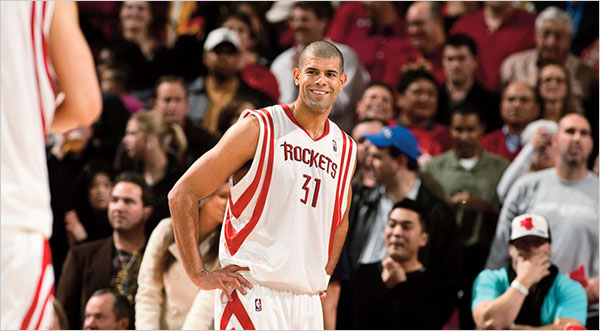 So, we have found by Chris Bosh’s absence and then his presence that he is a significant part of the Miami Heat. But who is the fourth most important man on the team? An argument can be made that it is Shane Battier. A New Yorker story espouses the same theory. It led me to an old article by Michael Lewis. But just why is Battier so good? Lewis makes a telling point:
There is a tension, peculiar to basketball, between the interests of the team and the interests of the individual. The game continually tempts the people who play it to do things that are not in the interest of the group. On the baseball field, it would be hard for a player to sacrifice his team’s interest for his own. Baseball is an individual sport masquerading as a team one: by doing what’s best for himself, the player nearly always also does what is best for his team….It is in basketball where the problems are most likely to be in the game — where the player, in his play, faces choices between maximizing his own perceived self-interest and winning. The choices are sufficiently complex that there is a fair chance he doesn’t fully grasp that he is making them.
Taking a bad shot when you don’t need to is only the most obvious example. A point guard might selfishly give up an open shot for an assist. You can see it happen every night, when he’s racing down court for an open layup, and instead of taking it, he passes it back to a trailing teammate. The teammate usually finishes with some sensational dunk, but the likelihood of scoring nevertheless declined. “The marginal assist is worth more money to the point guard than the marginal point,” Morey says. Blocked shots — they look great, but unless you secure the ball afterward, you haven’t helped your team all that much. Players love the spectacle of a ball being swatted into the fifth row, and it becomes a matter of personal indifference that the other team still gets the ball back…
Having watched Battier play for the past two and a half years, Morey has come to think of him as an exception: the most abnormally unselfish basketball player he has ever seen. Or rather, the player who seems one step ahead of the analysts, helping the team in all sorts of subtle, hard-to-measure ways that appear to violate his own personal interests.
This has two Holmstrom and Milgrom ideas: tension between individual incentives and team incentives; use of easily identifiable measures of output distorting incentives to invest is less identifiable costly tasks. And in the absence of monetary incentives and market efficiency, the only solution to the moral hazard problem is in ethical behavior (Arrow made similar points many years ago).
Because of runners’ high:
When people exercise aerobically, their bodies can actually make drugs — cannabinoids, the same kind of chemicals in marijuana. Raichlen wondered if other distance-running animals also produced those drugs. If so, maybe runner’s high is not some peculiar thing with humans. Maybe it’s an evolutionary payoff for doing something hard and painful, that also helps them survive better, be healthier, hunt better or have more offspring.
So he put dogs — also distance runners — on a treadmill. Also ferrets, but ferrets are not long-distance runners. The dogs produced the drug, but the ferrets did not. Says Raichlen: “It suggests some level of aerobic exercise was encouraged by natural selection, and it may be fairly deep in our evolutionary roots.”
The story is from NPR, the pointer is from Balazs Szentes.
A great story on The Morning News about a guy who is trying to preserve his spoiler-free existence in the face of meddling Internets, bus riders, and Amazon delivery guys:
Well, don’t you worry. This book will be on your doorstep tomorrow afternoon, ready to read.
I, of course, could read the book–YOUR book–right now.
And I gotta admit, it WOULD be fun to be one of the first people in the world to know how it all ends.
Hmm. So, maybe I’ll just read the last page…
OH MY GOD I CANNOT BELIEVE IT!! IT WAS ALL A DREAM???!
Hah hah. I’m just yanking your chain. That’s not how it ends. Or maybe it IS, and I’m just saying it’s not so you’ll be doubly surprised when you finish it. You never know.
I really did read the last page, though. The final word is “haberdashery.” You can verify that when you get the book. Tomorrow. A full day after I had it.
I gotta tell ya, though: Now that I know how it ends, I kind of want to read the whole thing. If I start right now, I could probably finish it and get this book in the mail to you by Wednesday. You wouldn’t mind waiting a few extra days, would you?
Also, I dog-ear pages to save my place. I hope that’s OK.
j/k. I wouldn’t really read this book. 1,000 words about fairies? Yeah, no. Besides, who has the time? Some of us have to work for a living. For instance, I bust my hump 60 hours a week schlepping your books around.
Besides, I’d rather see the movie anyway. That chick who plays Hermione is smoking hot. I’d quidditch, if you know what I’m sayin’.
Including analysis of the ncessary and sufficient epistemic conditions for an arbitrary statement to qualify as a spoiler:
- Did your comment spoil my reading experience? Yes.
- Was my experience any less spoiled because you didn’t know your comment was true? No.
- Was my experience any less spoiled because you really, truly, honestly, swear to God didn’t mean to spoil the experience for anyone? No.
- Was my experience any less spoiled because I knew your comment was true only by accident? Nope again.
Read it. (Spoiler alert.)
He is 84 years old today. This is a 1 hour PBS documentary from 2002. Thanks to Paola Manzini for the pointer.
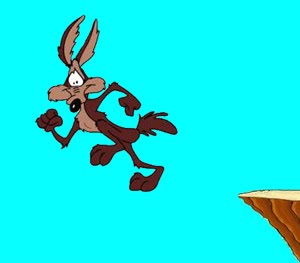
Wile E. Coyote runs off a cliff but gravity doesn’t seem to work on him. He just keeps on running, suspended in air, a supernatural feat. But here’s the tragedy: he is capable of this feat only because he doesn’t know he’s doing it. And it’s exactly the moment he realizes there is no ground beneath his feet that he comes crashing down into the canyon below. There is never an instant where he is both flying and aware that he is flying.
It’s the fearless who succeed. But take two people who are equally talented and ask which one is more likely to be fearless. It’s the one who is less worried about failure. But if we turn that around then what it says is that the guy for whom failure hurts the most is the one that’s going to fail.
Everyone has gone through something like this: you take on some new challenge like playing chess or the piano. You work hard at it because initially two things are true: a) when you see other people who do it well you sense the feeling of pride and satisfaction you would have if you could do it well too, and b) at the beginning you cannot yet do it well. Then after lots of hard work finally you can do it too. But somewhere along the way something changed. Mastering it meant discovering that it’s not such an impressive feat after all. Now that you can do it you see that there is a method to it, it’s not magic like you thought.
Could it be that the causality actually works in the opposite direction: those skills that you eventually do master, you master them because you stop thinking of them as magic as start to think of them as routine methodical tricks.
Is it even possible for someone to be great at something and be in as much awe of himself as the rest of us failures are of him?
Winning a Nobel just got slightly less lucrative:
On Monday the Nobel Foundation, which bestows the world’s most prestigious academic, literary and humanitarian prizes, said it was reducing the cash awarded with Nobel Prizes by about 20 percent. Each prize, awarded in Swedish kronor, will now be worth about $1.1 million, down from $1.4 million.
The reduction was the result of ugly returns on its invested capital, which was valued at $419 million as of Dec. 31, down 8 percent from the previous year. In the last decade, the costs of the prizes and related operating expenses have exceeded the endowment’s average annual return.
But Peter Diamond has some words of consolation for Sargent and Sims, the most recent winners:
Peter A. Diamond, a professor emeritus at the Massachusetts Institute of Technology who also received the Nobel in economic science in 2010, observed that over the long run, cutting the cash award could dilute the prize’s prestige.
But he added that Monday’s news overstates the financial blow to future laureates. “One of the things that comes with the prize, besides the prestige and the money,” he said, “is the opportunities to make more money.”
And it didn’t take very long for his words to come true:
Thomas Sargent, an American economist who won the Nobel Memorial Prize in Economic Sciences in 2011 together with Christopher Sims, will teach at Seoul National University (SNU) beginning this year.
The school said Monday Sargent, 69, currently a professor of New York University, will teach macroeconomics at SNU as a full-time professor for two years beginning the second semester of this year.
The economist has been serving as an advisor to the Bank of Korea since 2007.
“We are very proud to announce that Sargent has decided to join SNU,” said Park Myung-jin, the school’s vice president of education. “He will teach students as a full-time professor and conduct joint research with SNU faculty on various fields of economics.”
Sargent is expected to receive some 1.5 billion won ($1.27 million) annually, including salaries and research funds.
(thanks to Mark Witte and Daniel Lin for the pointers.)
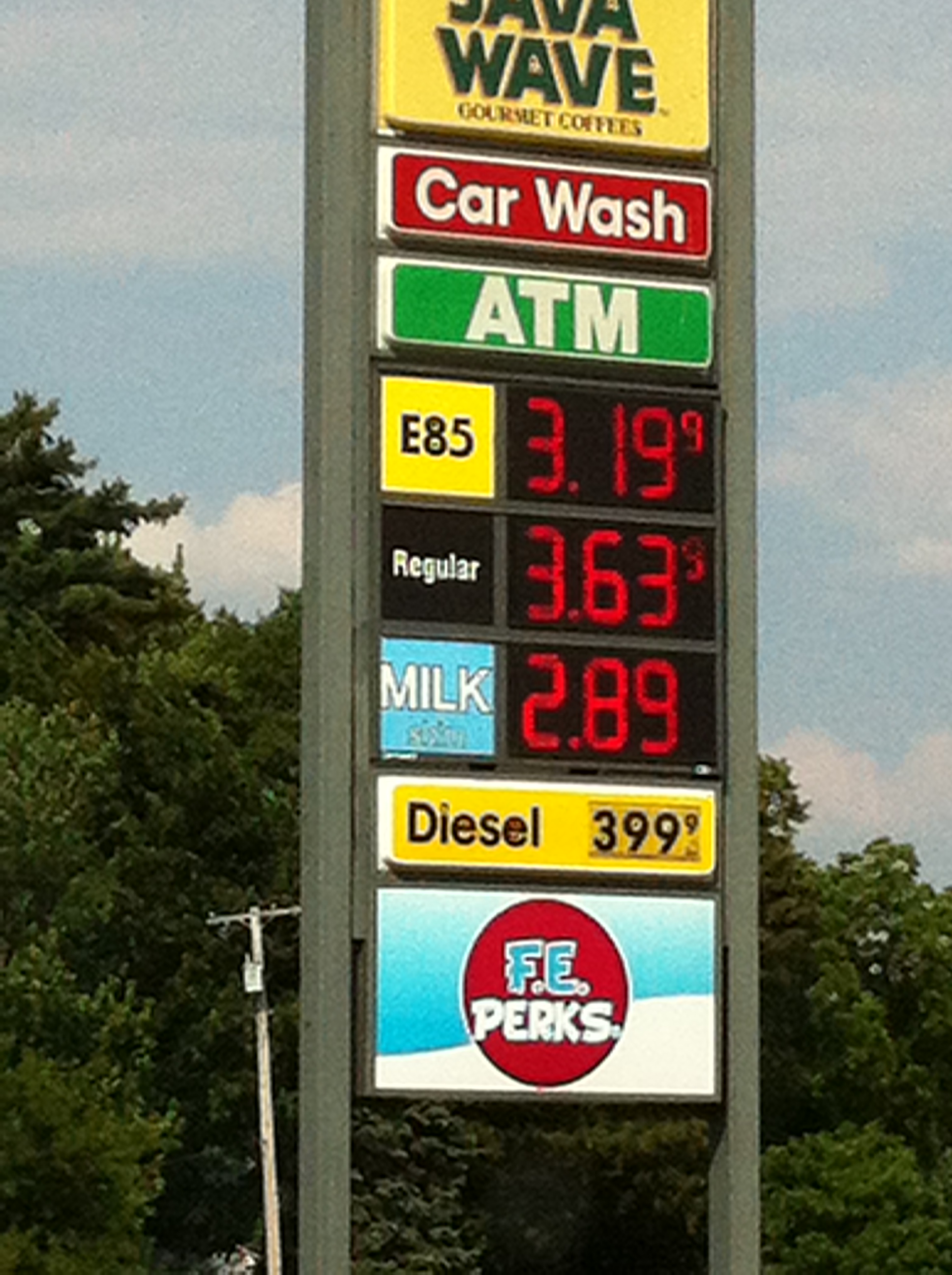
She complained that when I practice the piano late at night I play too loud and it wakes her up every time. So I said oh I didn’t realize that, did I wake you up last night. She said yes. Ha, I said but I didn’t practice last night. Oh. She was caught. Thing is, I actually did practice last night.
We have examples of markets crowding out morality. But what about the reverse?
Your Gran lives in your hometown. Your hometown has no decent jobs and is small for your large ambitions. You want to leave. But old Gran is a bit frail. She needs to go the doctor weekly and sometimes there are emergencies. Gran’s neighbor is a nurse, now a stay-at-home mom with kids in high school. You ask the neighbor if, in return for a weekly wage, she would be willing to take Gran to the doctor every week and respond to emergency calls. She agrees. You think this is a great solution. The neighbor is much better qualified than you to look after Gran in emergencies. Gran is going to get excellent care. And now you get to explore broader horizons and make use of your Executive MBA to work in private equity just like Mitt Romney.
But when you propose the plan to Gran she looks a bit sad. She knows many other Grans. All of them have dutiful grandsons who drive them to the doctor every week. She’s not going to be able to hold her head up high at the daily Granny meetings. You feel guilty. You stay in your hometown to help out your Gran.The deal with your neighbor is off. She takes a job cleaning houses. You get a job at a local steel mill doing their accounts. You lose your job when a private equity firm takes it over.
This guy wrote a column about The Hunger Games and gave away many details of the plot, some of them big-time spoilers. Then he wrote a column about how he was actually doing his readers a favor because spoilers actually increase the enjoyment of the book. For example
The suggestion is that there is a trade-off in the pleasures available to first-time readers or viewers on the one hand, and “repeaters” (as they are called in the scholarly literature) on the other. First-time readers or viewers, because they don’t know what’s going to happen, have access to the pleasures of suspense — going down the wrong path, guessing at the identity of the killer, wondering about the fate of the hero. Repeaters who do know what is going to happen cannot experience those pleasures, but they can recognize significances they missed the first time around, see ironies that emerge only in hindsight and savor the skill with which a plot is constructed. If suspense is taken away by certainty, certainty offers other compensations, and those compensations, rather than being undermined by a spoiler, require one.
and
The positive case for spoilers is even stronger if you are persuaded by those who argue, in the face of common sense, that suspense survives certainty. This is called “the paradox of suspense” and it is explained by A. R. Duckworth: “1. Suspense requires uncertainty. 2. Knowledge of the outcome of a narrative, scene or situation precludes any uncertainty. 3. [Yet] we feel suspense in response to fictions we know the outcomes of” (“The Paradox of Suspense II—The Problem,” The Journal of Film, Art and Aesthetics, Jan. 14, 2012).
and some other related arguments. Even if you accept these arguments, they amount to saying that there is a qualitative difference between the spoiled reading and the fresh reading and you want to have both. But this does not vindicate the spoilage. The problem with the spoiler is that it deprives you of the fresh reading. Spared the spoiler, or suitably alerted, you could have had both.
Now maybe you have time for only one reading. And so the counterargument could be that if the spoiled reading is in fact better than the fresh one then the spoiler saves you the effort of self-spoiling (settle down Beavis!) and gets you straight to the good, i.e. spoiled, stuff.
But notice what this says about the author of the novel. The author invented this whole story. She created the entire spoil-fodder. Indeed the spoiler only exists because the author chose not to “spoil” it himself by informing the reader right away what’s going to happen later. Either that is because this makes for a better story, or because the author is incompetent. In other words, putting a naked spoiler into your column and claiming that it makes the story better is tantamount to saying that the author is a hack. Not
If “The Hunger Games” is so shallow that it can be spoiled by a plot revelation, the alert doesn’t save much. If “The Hunger Games” is a serious accomplishment, no plot revelation can spoil it.
Deerstalker dash: Alex Frankel.
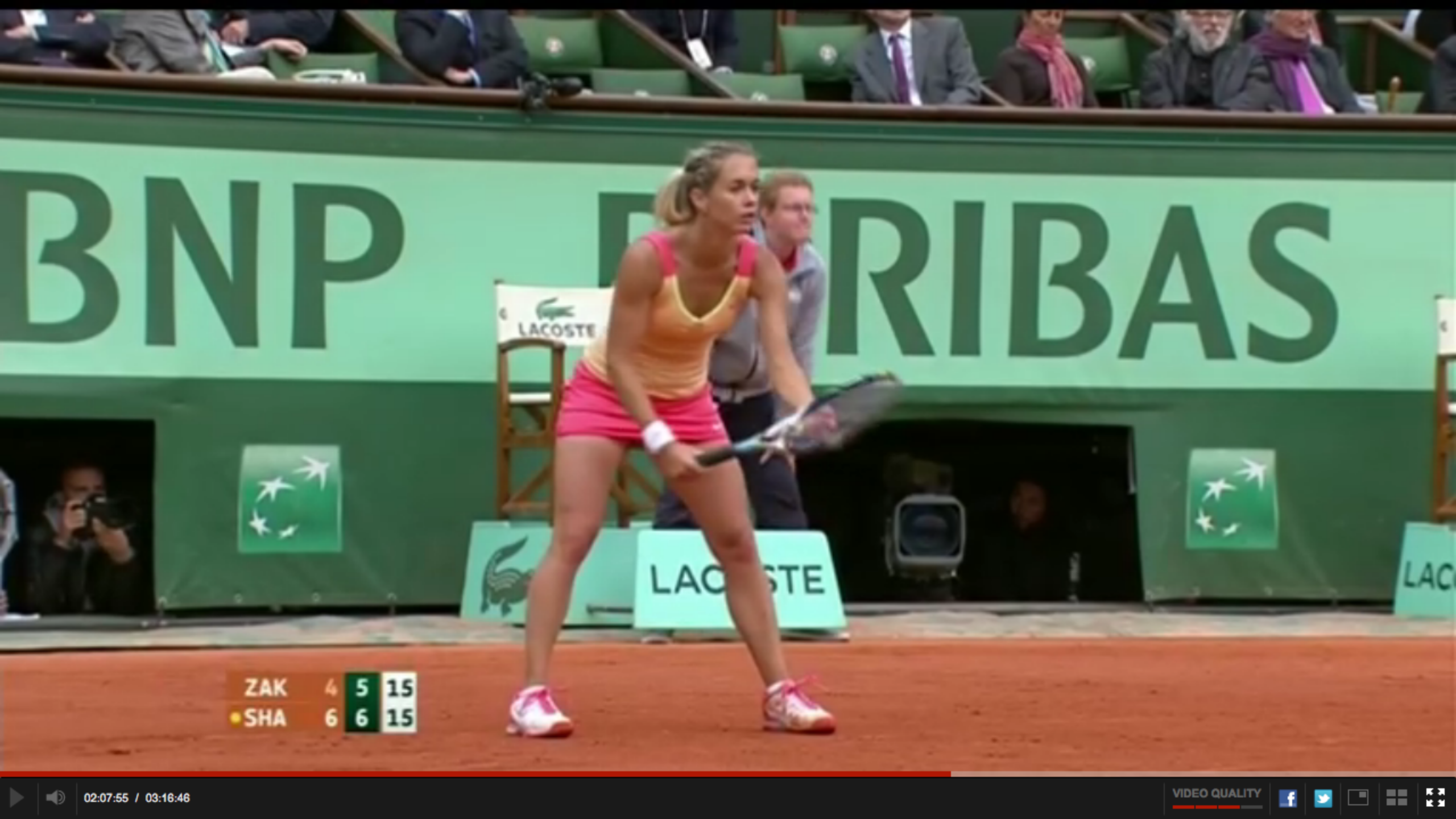
This is a screenshot from an espn.com webstreaming replay of the French Open match between Maria Sharapova and Klara Zakapalova. As you can see Sharapova won the first set and now they are locked in a tight second set. But hmmm… something tells me that Zakapalova will be able to push it to three sets…
Courtesy of Emir Kamenica.
 Cheap Talk