
You are currently browsing Sandeep Baliga’s articles.
“In Egypt and Libya and Yemen, again demonstrations — the respect for America has gone down, there’s not a sense of American resolve and we can’t even protect sovereign American property.”
The implicit logic is that the protests are caused by weakness on the part of America. The protestors are taking advantage of us because they think we will not strike back. If we are strong, the protestors would be deterred by the threat of American reprisals. So, as President Romney would be strong, foreign policy would be easier as there would be no events like this.
But there is an equally (more?) compelling reverse logic. The protestors are weak. They are extremists who have little support in the population. But if America is aggressive even the moderates in the population will favor fighting fire with fire. Of course the extremists attacking the embassies would be happy if we withdrew. But their strategy would also succeed if we respond with aggression. So, the right move is not to over-react. Use proxies to fight this battle. Perhaps the moderates in the local populations themselves would be willing to work with us as they have a lot to lose if tensions escalate and conditions worsen.
The situation calls for smart lateral thinking not a one-size-fits-all bellicosity.
Netanyahu is aggressively trying to persuade President Obama to draw a “red line” on Iran – if Iran crosses the line, presumably drawn on the level of uranium enrichment, they would face a US attack. Such an attack would set back the Iranian nuclear program but it would likely unify the Iranian population behind the regime and make them redouble their efforts to go nuclear. So, we should also evaluate what might happen if Iran does go nuclear before we commit to a strategy of a preemptive strike. It turns out that Jim Fearon thought this through a while ago and did a little empirical work to flesh out the historical record. He finds:
China, France, India, Israel, Pakistan, and the UK all saw declines in their total militarized dispute involvement in the years after they got nuclear weapons. A number of these are big declines. USSR/Russia and South Africa have higher rates in their nuclear versus non-nuclear periods, though it should be kept in mind that for the USSR we only have four years in the sample with no nukes, just as the Cold War is starting.
The whole article is an interesting read.
Romney and Ryan’s weekend performances on TV generated much right wing angst. They looked shady trying to dodge questions asking them to spell out which tax loopholes they would close. There are similar issues with their healthcare plan: they would “repeal and replace” Obamacare, but replace it with what exactly?
There is an obvious advantage to policy ambiguity: if you are clear, the other side knows what to attack but if you are opaque, it is harder. The disadvantage is that you opponent can then make something up as being our policy and hang you with that. Your counter-argument is to claim that your policy is not what your opponent says it is etc etc.
The balance is weighed towards disadvantage when there is an obvious policy to use to fill in the blanks. This is the issue Romney faced as soon as he picked Ryan. Ryan has lots of plans for the budget, Medicare, privatizing Social Security etc. These are obvious and credible policy options for a Romney-Ryan White House. The fact that the VP candidate has embraced these policies undercuts your counter-argument to your opponent’s argument. Policy ambiguity loses its strategic advantage. If Romney had picked Pawlenty, it might have worked. But with Ryan on board, Romney has to spell out his policies in greater detail and Ryan has to own them. He has done this already with abortion and he has to start doing the same with his economic policies.
The difficulty is that Romney has not embraced ambiguity enough to make it easy to embrace clarity. He has promised various tax cuts (e.g. estate tax), and these tie him down. Can he identify loopholes to raise revenue that covers the tax cuts he has promised without raising taxes on the middle class? If he can’t, he’s stuck using an outsider’s strategy but with an insider as his partner.
Some economists toiled away in Stockholm on U.S. Labor Day. They were attending the Nobel Symposium on Growth and Development. This implies that the 2012 Prize cannot be in Growth and Development. The fallout from the symposium has to settle before a Prize is awarded. Next year is probably still too early so my guess is that a growth and development prize will be awarded in 2014 or later.
Looking at the program, a few people can be excluded as they are too young to get it now. The pivotal voter will be Robert Lucas who has enormous scientific credibility on this topic and is also attending the symposium.
According to AP, the Romney campaign is using data mining firm to identify donors:
The head of Buxton Co. of Fort Worth, Texas, chief executive Tom Buxton, confirmed to the AP his company’s efforts, which help Romney identify potentially wealthy and previously untapped Republican donors across the country…..
An early test analyzed details of more than 2 million households near San Francisco and elsewhere on the West Coast and identified thousands of people who would be comfortably able and inclined to give Romney at least $2,500 or more.
An AP analysis this week determined that Romney’s campaign has made impressive inroads into even traditionally Democratic neighborhoods, collecting more than $350,000 this summer around San Francisco in contributions that averaged $400 each.
NEW Republication donors are likely to be lower willingness to pay than donors who have consistently given in the past. So, Romney would have to get high volume to make this matter.
I haven’t seen anyone reporting of a similar effort to identify new donors by the Obama campaign. They are facing declining demand relative to 2008. They should be giving discounts to their old donors to generate $$s. As yet, I couldn’t find a sale on their store website.
Mitt Romney made a “birther” joke on the stump. A journalist got the following fundraising email:
Benjamin —
Mitt Romney, the Republican nominee for president of the United States, just said this:
“No one has ever asked to see my birth certificate. They know that this is the place that we were born and raised.”
Take a moment or two to think about that, what he’s actually saying, and what it says about Mitt Romney.
Then make a donation of $68 or more to re-elect Barack Obama today:
https://donate.barackobama.com/74-Days
Thanks,
Messina
Jim Messina
Campaign Manager
Obama for America
I got the same email, but with “$150” not “$68” as my suggested donation. I also get Romney emails but haven’t noticed any similar sophistry there yet so far.
How do we “bend the cost curve” of healthcare? Atul Gawande has some ideas after visiting the Cheesecake Factory with his daughters:
“We have forecasting models based on historical data—the trend of the past six weeks and also the trend of the previous year,” Gordon told me. “The predictability of the business has become astounding.” The company has even learned how to make adjustments for the weather or for scheduled events like playoff games that keep people at home.
A computer program known as Net Chef showed Luz that for this one restaurant food costs accounted for 28.73 per cent of expenses the previous week. It also showed exactly how many chicken breasts were ordered that week ($1,614 worth), the volume sold, the volume on hand, and how much of last week’s order had been wasted (three dollars’ worth). Chain production requires control, and they’d figured out how to achieve it on a mass scale.
Mitt said that Israeli and Palestinian and Mexican and US economic outcomes differ because of cultural differences. This immediately brought to mind the recent book by Daron and Jim, “Why Nations Fail” because they begin by comparing Nogales Arizona and Nogales Mexico. These have quite similar geography, quite similar culture and yet very different GDPs. Daron and Jim argue this is because of vastly different political and economic institutions. Now Daron and Jim have addressed the issue themselves on their blog. They offer a couple of more examples:
But as we show in Why Nations Fail, cultural differences cannot explain differing levels of prosperity. Deng Xaioping didn´t change Chinese culture after 1978 to make the economy grow, but he did change economic institutions a lot. Indeed, many cultural differences we see are the outcomes of different institutional choices. This is surely the case between North and South Korea, for example. After all, does Mitt and David think that there were huge cultural differences between the north and the south of the 38th parallel before the separation of Korea into two?
I guess we need a convincing example of a situation where two countries have the same geography, the same institutions, but different cultures and vastly different economic outcomes.

Crown should get a copy of Acemoglu and Robinson’s “Why Nations Fail” over to the Romney campaign a.s.a.p. Speaking about the difference in income between Israelis and Palestinians, Romney suggested:
that cultural differences between the Israelis and the Palestinians were the reason the Israelis were so much more economically successful than the Palestinians. He also vastly understated the income disparities between the two groups.
Hin inspiration for the theory? Two books:
In his speech, Mr. Romney mentioned two books that had influenced his thinking about nations — “Guns, Germs and Steel,” by Jared Diamond, and “The Wealth and Poverty of Nations,” by David S. Landes. Mr. Diamond’s book, Mr. Romney said, argues that the physical characteristics of the land account for the success of the people living there, while Mr. Landes’s book, he continued, argues that culture is the defining factor.
“Culture makes all the difference,” Mr. Romney said. “And as I come here and I look out over this city and consider the accomplishments of the people of this nation, I recognize the power of at least culture and a few other things.”
After this caused some backlash:
[H]is campaign said that the Associated Press had “grossly mischaracterized” the remarks by not providing the full context. For instance, the campaign said, after mentioning the per capita G.D.P. of Israel and Palestine, Mr. Romney also said: “And that is also between other countries that are near or next to each other. Chile and Ecuador, Mexico and the United States.”
The Acemoglu and Robinson book begins with Nogales AZ (USA) vs Nogales Mexico and puts institutions at the center of an explanation of income disparities not culture or geography.
Things are not going smoothly for Romney’s London trip. First, he criticizes secuirty and attendance at the London Olympics only to draw a rebuke from Prime Mister David Cameron. The Telegraph reports:
Mitt Romney is perhaps the only politician who could start a trip that was supposed to be a charm offensive by being utterly devoid of charm and mildly offensive.
And now it seems tickets are not selling for his fundraiser so he has been forced to cut prices. According to the Guardian:
The Mitt Romney Summer 2012 World Tour to Three Countries is apparently having trouble moving tickets.
The London blogger Guido Fawkes reports that organizers of a Romney fundraising reception in the city this evening have slashed the original $2,500 ticket price to $1,000 for “a few last minute guests,” in an effort to drum up participation.
Via Decanter:
By the end of this year, Champagne sales in the UK will have fallen by a third since the start of the recession, according to the latest figures.
At the same time, sales of sparkling wine – mainly Prosecco and Cava – will have risen by over 50%.
Your manager is a pain in the neck. He takes credit for your ideas, orders you around, second guesses himself and is horribly indecisive. His subordinates can’t stand him. But you are all too scared to complain to the Big Boss – who knows what the repercussions will be? But the Big Boss does get some sense that things are not going well. Some projects don’t work out because they are badly conceived and poorly executed. At one point, she just takes away some of the responsibilities of your manager. At the same time she heaps him with effusive praise. Why?
She and he know that her praise is insincere and that the manager has been demoted. What effect could her insincere praise have?
Even though you know the Big Boss’s statements are empty, does everyone else? You don’t know. Maybe some of them think she means every word she said. They will treat your former manager with respect. You could enlighten them. But that would ruin the workplace atmosphere and make you seem churlish. So you keep your mouth shut. So does everyone else. So you all act as if the Big Bos’s words were true. As you all live the big lie, so can your former manager. He does his work diligently and the Big Boss is happy.
From Matt Yglesias, an intriguing theory. In 2009:
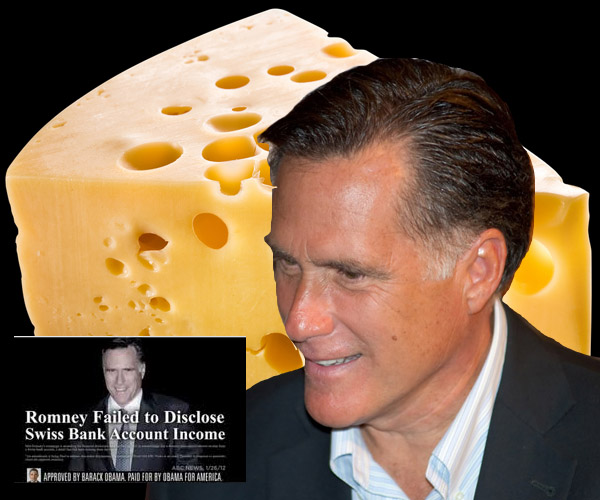
Wealthy U.S. taxpayers, concerned about an Internal Revenue Service crackdown on the use of secret overseas bank accounts as tax havens, are rushing to meet a Thursday deadline to disclose those accounts or face possible criminal prosecution.
The concern was triggered this summer when Switzerland’s largest bank, caught up in an international tax evasion dispute, said it would disclose the names of more than 4,000 of its U.S. account holders.
Yglesias adds:
Romney might well have thought in 2007 and 2008 that there was nothing to fear about a non-disclosed offshore account he’d set up years earlier precisely because it wasn’t disclosed. But then came the settlement and the rush of non-disclosers to apply for the amnesty. Failing to apply for the amnesty and then getting charged by the IRS would have been both financially and politically disastrous. So amnesty it was. But even though the amnesty would eliminate any legal or financial liability for past acts, it would hardly eliminate political liability.

CNN got the call wrong on the Supreme Court and the individual mandate. They then tweeted it, put it up on their website, put in as a banner onscreen etc etc. Then news began filtering in that the mandate had been upheld as a tax. What should they do now? There is an interesting blow by blow account of what happened by Tom Goldstein on SCOTUSblog. He adds:
Ironically, CNN reacted too slowly in part to avoid a second error. The network did not want to be in the position of reporting that the mandate had been struck down, then reporting that it was upheld, then reverting to its initial report. (That had happened to the media in the 2000 presidential election, and it had been a debacle.) CNN gravitated to an intermediate position of uncertainty on the air, which of course was not decisive enough to correct viewers’ initial impressions.
CNN had also converted itself into an integrated circuit in which its electronic media teams were tied directly into the broadcast operation. But not anticipating the possibility of an error or confusion, its first web, electronic, and Twitter reports did not hedge. And the network did not have a clear plan to reverse the circuit on the electronic-media side and tell readers that its initial reports may have been wrong.
Once CNN made one mistake, it was hard to admit it because they were operating in an open environment with other players judging their actions. If CNN were operating in isolation – like an individual deciding whether to invest in a healthcare company – they would have reacted rapidly to correct their action given their latest information. But in an environment where others are watching them, they have to make future decisions which are consistent with their earlier error.

Chief Justice Roberts and four others found that the individual mandate could not be justified via the Commerce Clause (CC) in the Constitution. The CC allows the federal government to “regulate” interstate commerce. Roberts found that precedent allows the government to regulate activity via the CC but the individual mandate regulates inactivity and is hence unconstitutional (p. 20 of Roberts’ opinion):
The individual mandate, however, does not regulate existing commercial activity. It instead compels individuals to become active in commerce by purchasing a product, on the ground that their failure to do so affects interstate commerce. Construing the Commerce Clause to permit Congress to regulate individuals precisely because they are doing nothing would open a new and potentially vast domain to congressional authority.
Moreover (p. 22-23),
Indeed, the Government’s logic would justify a mandatory purchase to solve almost any problem…To consider a different example in the health care market, many Americans do not eat a balanced diet. That group makes up a larger percentage of the total population than those without health insurance…..The failure of that group to have a healthy diet increases health care costs, to a greater extent than the failure of the uninsured to purchase insurance….Those increased costs are borne in part by other Americans who must pay more, just as the uninsured shift costs to the insured….Congress addressed the insurance problem by ordering everyone to buy insurance. Under the Government’s theory, Congress could address the diet problem by ordering everyone to buy vegetables.
Let’s take a quick look at the broccoli market. At the prevailing price, absent regulation, some consumers are active in the market and buy broccoli and other are inactive and don’t buy broccoli. Similarly, there are some producers who sell broccoli and other potential sellers who, given the prevailing price, produce chilis. Domestic broccoli growers are mainly in California but many broccoli consumers live in the Acela corridor so there is interstate commerce.
Then, the government enters the broccoli market. Some say this is because of the health benefits of broccoli, others say this is because the broccoli growers have formed an effective lobby, much like the sugar producers. The government intervention comes in the form of a subsidy to broccoli consumers. Consumers who consume 1 lb of broccoli/week get a $300 deduction on their taxes (Whole Foods immediately starts selling an annual contract which can easily be appended to your IRS form to get the broccoli deduction.)
Consumers who were active before still continue to buy: after all they are getting an extra incentive to buy. But also consumers who were inactive before now start to buy: after all the broccoli vs arugula margin now favors broccoli. In fact there is a new annual demand curve for broccoli D'(p) where D'(p)=D(p-300) where D was the original demand curve. There is higher demand at every price and the price of broccoli goes up. This changes the broccoli-chili margin for producers and inactive broccoli producers now switch to activity. (Also, profits go up for broccoli producers giving them the incentive to lobby for a consumer subsidy.)
Therefore, intervention in the “active” market changes the active-inactive decision and influences inactivity. An equivalent policy is to use to stick rather than a carrot and impose a penalty of $300 on consumers who are consuming less that 52 pounds of broccoli/year. Appropriately chosen carrots and sticks are equivalent in terms of broccoli trade. (More broadly, a tax or subsidy to broccoli production could also implement the same output of broccoli.) This simple analysis has some implications for Democrats and Republicans.
First, many instruments can implement the same output so the fact that one kind of intervention has been deemed unconstitutional is not important. A carrot can replace a stick.
But, second, the instruments differ in their revenue implications. Carrots are expensive to the government and sticks raise revenue. More use of carrots means bigger deficits or distortionary taxes.
And, third, since penalizing inactivity is equivalent to incentivizing activity, we appear to have conflicting precedents. It is legal to regulate activity but not to regulate inactivity. But regulating activity impacts inactivity and if regulating inactivity is unconstitutional, in a roundabout way, the Roberts et al applies. On the other hand, there are plenty of precedents for regulating activity even if they influence inactivity. In the (in)famous Wickard case, quotas on farmers reduced activity and increased inactivity. I am not a lawyer so I can not sure what happens in this circumstance. I guess the Supremes get to vote and they can rationalize votes one way or the other based on conflicting precedents. All bets are off – will Roberts switch his vote at the last minute etc.?
Plenty of stuff for us citizens to contemplate on July 4. I’ll be grilling broccoli.
In his peroration, Justice Scalia says that “Arizona bears the brunt of the country’s illegal immigration problem. Its citizens feel themselves under siege by large numbers of illegal immigrant who invade their property, strain their social services, and even place their lives in jeopardy.” Arizona bears the brunt? Arizona is only one of the states that border Mexico, and if it succeeds in excluding illegal immigrants, these other states will bear the brunt, so it is unclear what the net gain to society would have been from Arizona’s efforts, now partially invalidated by the Supreme Court. But the suggestion that illegal immigrants in Arizona are invading Americans’ property, straining their social services, and even placing their lives in jeopardy is sufficiently inflammatory to call for a citation to some reputable source of such hyperbole. Justice Scalia cites nothing to support it.

Orbitz Worldwide Inc. has found that people who use Apple Inc.’s Mac computers spend as much as 30% more a night on hotels, so the online travel agency is starting to show them different, and sometimes costlier, travel options than Windows visitors see.
Orbitz is not attempting third degree price discrimination:
Orbitz executives confirmed that the company is experimenting with showing different hotel offers to Mac and PC visitors, but said the company isn’t showing the same room to different users at different prices. They also pointed out that users can opt to rank results by price.
But is it just a matter of time?

At an all-you-can-buffet lunch, the incentives are clear: go back again and again, refill your plate and guzzle away. You would eat less if each new plate came with another price tag. Add to that a lack of self control and you get overconsumption and a desperate desire for a nap in the afternoon.
A CEO has a salaried employee. The employee gets paid much the same however much work he does. So, the CEO asks him to sit on this committee or investigate that new market or run recruiting etc. etc. Add to that moral suasion so it is a duty to work hard for the firm and you get overwork and a desperate desire to avoid the CEO. There will be many task forces and layers of bureaucracy as the cost of each initiative is so small. Better to pay for performance and internalize some of the costs of each extra foray into administration and work.
What is the difference between the Bowles-Simpson plan for deficit reduction vs President Obama’s plan? Ever wondered? I have. It seems the President’s plan calls for less cuts in Defense and Social Security but has more cuts in annual domestic spending. An Obama for America document summarizes the differences and of course does a comparison with the Romney plan. Romney’s plan is short on details so there is a lot of extrapolation. Is there an equivalent document put out by the Romney campaign?
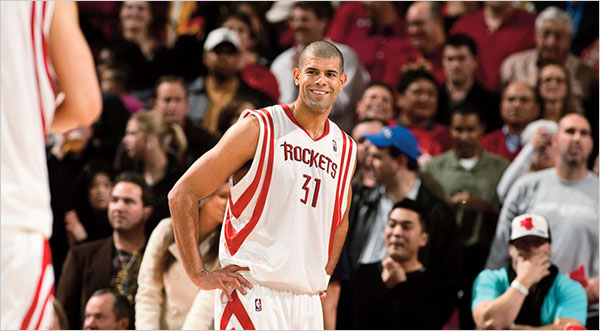 So, we have found by Chris Bosh’s absence and then his presence that he is a significant part of the Miami Heat. But who is the fourth most important man on the team? An argument can be made that it is Shane Battier. A New Yorker story espouses the same theory. It led me to an old article by Michael Lewis. But just why is Battier so good? Lewis makes a telling point:
There is a tension, peculiar to basketball, between the interests of the team and the interests of the individual. The game continually tempts the people who play it to do things that are not in the interest of the group. On the baseball field, it would be hard for a player to sacrifice his team’s interest for his own. Baseball is an individual sport masquerading as a team one: by doing what’s best for himself, the player nearly always also does what is best for his team….It is in basketball where the problems are most likely to be in the game — where the player, in his play, faces choices between maximizing his own perceived self-interest and winning. The choices are sufficiently complex that there is a fair chance he doesn’t fully grasp that he is making them.
Taking a bad shot when you don’t need to is only the most obvious example. A point guard might selfishly give up an open shot for an assist. You can see it happen every night, when he’s racing down court for an open layup, and instead of taking it, he passes it back to a trailing teammate. The teammate usually finishes with some sensational dunk, but the likelihood of scoring nevertheless declined. “The marginal assist is worth more money to the point guard than the marginal point,” Morey says. Blocked shots — they look great, but unless you secure the ball afterward, you haven’t helped your team all that much. Players love the spectacle of a ball being swatted into the fifth row, and it becomes a matter of personal indifference that the other team still gets the ball back…
Having watched Battier play for the past two and a half years, Morey has come to think of him as an exception: the most abnormally unselfish basketball player he has ever seen. Or rather, the player who seems one step ahead of the analysts, helping the team in all sorts of subtle, hard-to-measure ways that appear to violate his own personal interests.
This has two Holmstrom and Milgrom ideas: tension between individual incentives and team incentives; use of easily identifiable measures of output distorting incentives to invest is less identifiable costly tasks. And in the absence of monetary incentives and market efficiency, the only solution to the moral hazard problem is in ethical behavior (Arrow made similar points many years ago).
Orley Ashenfelter plus friends recreated the famous “Judgement of Paris” competition that first brought American wines to worldwide attention but with NJ wines. The results:
Results Whites
| 1 | Clos des Mouches Drouhin 2009 | FRA |
| 2 | Unionville Pheasant Hill Single Vineyard 2010 | USA |
| 3 | Heritage Chardonnay 2010 | USA |
| 4 | Silver Decoy “Black Feather” 2010 | USA |
| 5 | Puligny Montrachet Domaine Leflaive 2009 | FRA |
| Tied 6 | Bellview Chardonnay 2010 | USA |
| Tied 6 | Bâtard Montrachet Marc-Antonin Blain 2009 | FRA |
| 8 | Amalthea Chardonnay 2008 | USA |
| 9 | Ventimiglia Chardonnay 2010 | USA |
| 10 | Meursault-Charmes Jean Latour-Labille2008 | FRA |
Results Reds
| 1 | Ch. Mouton Rothschild 2004 | FRA |
| 2 | Ch. Haut Brion 2004 | FRA |
| 3 | Heritage Estate BDX 2010 | USA |
| 4 | Ch. Montrose 2004 | FRA |
| 5 | Tomasello Oak Reserve 2007 | USA |
| 6 | Ch. Leoville Las Cases 2004 | FRA |
| 7 | Bellview Lumiere 2010 | USA |
| 8 | Silver Decoy Cab. Franc 2008 | USA |
| 9 | Amalthea Europa VI 2008 | USA |
| 10 | Four JG’s Cab Franc 2008 | USA |
Except for the best white and the worst red, the rank order of the wines by assorted judges was not significant. Details are here. If you aggregate up though, at least for the reds, the French wines might be significantly better than the NJ wines.
We have examples of markets crowding out morality. But what about the reverse?
Your Gran lives in your hometown. Your hometown has no decent jobs and is small for your large ambitions. You want to leave. But old Gran is a bit frail. She needs to go the doctor weekly and sometimes there are emergencies. Gran’s neighbor is a nurse, now a stay-at-home mom with kids in high school. You ask the neighbor if, in return for a weekly wage, she would be willing to take Gran to the doctor every week and respond to emergency calls. She agrees. You think this is a great solution. The neighbor is much better qualified than you to look after Gran in emergencies. Gran is going to get excellent care. And now you get to explore broader horizons and make use of your Executive MBA to work in private equity just like Mitt Romney.
But when you propose the plan to Gran she looks a bit sad. She knows many other Grans. All of them have dutiful grandsons who drive them to the doctor every week. She’s not going to be able to hold her head up high at the daily Granny meetings. You feel guilty. You stay in your hometown to help out your Gran.The deal with your neighbor is off. She takes a job cleaning houses. You get a job at a local steel mill doing their accounts. You lose your job when a private equity firm takes it over.
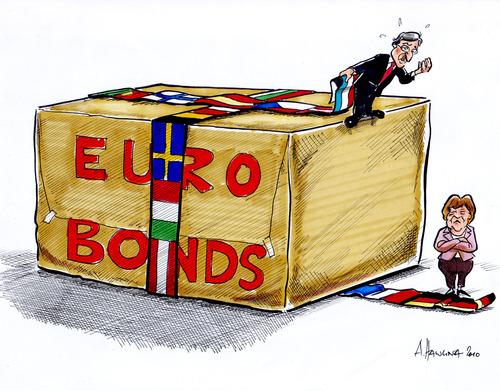 The German view of the eurocrisis is as follows. They believe that the crisis was caused by too much debt, as in Greece. They believe this is the case in very country facing trouble, not just Greece. In particular, they think this is true of Spain.
The solution then is to cut debt. Eurobonds make it easier for the Spanish government to borrow and increase debt. Hence, not only are Eurobonds not the solution to the crisis but they will make it worse. Therefore, Germany does not support the creation of Eurobonds.
This view is internally consistent and has many corollaries related to austerity etc. It may not be externally consistent. In some countries there was a pure debt crisis, in others there was a financial crisis perhaps with an associated debt crisis. In the latter case, applying the German theory would be disastrous.
(This is what I gleaned from a conversation with Christian Hellwig at the Ravello conference though he bears no blame for any misunderstandings my post contains.)

I am attending the Third Ravello workshop on The Economics of Coordination and Communication.The workshop has brought together micro, applied micro, macro and finance researchers unified by the research theme. I presented a paper offering a theory of the firm based on coordination. Salvatore Piccolo presented a paper on information sharing, joint work with Marco Pagnozzi. Christian Hellwig had a theory of bubbles based on heterogeneous beliefs but generated from a common prior. There are many theoretical and empirical papers on networks, by Sanjeev Goyal, Yves Zenou, Luigo Pistaferri and others.
There are many young Italian researchers and PhD students and the idea is partly to introduce them to contemporary research. I enjoyed the way the conference is organized around a theme (coordination) rather than afunctional specialty (theory, IO etc.). I got to see interesting papers that I would not normally see at the conferences and seminars I attend.
I went to a conference in Capri organized a few years ago and was very keen to come to this one. I was not disappointed. The location is spectacular. Ravello is perched on top of a mountain overlooking Amalfi. The food is quite good. As Ravello is quite hard to get to, we ourselves are the main tourist horde so the atmosphere is quite mellow. I hope I am invited again!
Cogent analysis by James Surowiecki at New Yorker:
[P]olicymakers are seriously discussing a so-called Grexit—in which Greece would default on its debts and abandon the euro.
This isn’t an outcome that anyone wants. Even though a devalued currency would make Greece’s exports cheaper and attract tourists, it would do so at a terrible price, destroying huge amounts of wealth and seriously harming the country’s G.D.P. It would be costly for the rest of Europe, too. Greece owes almost half a trillion euros, and containing the damage would likely require the recapitalization of banks, continent-wide deposit insurance (to prevent bank runs), and more aid to Portugal, Spain, and Italy, which seem to be the next countries in line to default. That’s a very high price to pay for getting rid of Greece, and much more expensive than letting it stay……
But the catch is that Europe isn’t arguing just about what the most sensible economic policy is. It’s arguing about what is fair. German voters and politicians think it’s unfair to ask Germany to continue to foot the bill for countries that lived beyond their means and piled up huge debts they can’t repay. They think it’s unfair to expect Germany to make an open-ended commitment to support these countries in the absence of meaningful reform. But Greek voters are equally certain that it’s unfair for them to suffer years of slim government budgets and high unemployment in order to repay foreign banks and richer northern neighbors, which have reaped outsized benefits from closer European integration……
The basic problem is that we care so much about fairness that we are often willing to sacrifice economic well-being to enforce it…. a famous experiment known as the ultimatum game—one person offers another a cut of a sum of money and the second person decides whether or not to accept—shows that people will walk away from free money if they feel that an offer is unfair. Thus, even when there’s a solution that would leave everyone better off, a fixation on fairness can make agreement impossible.
Hart and Moore and Hart and Holmstrom have offered theories of centralization based on behavioral issues. I’m not familiar with the other work on behavioral contract theory. But my guess is there is plenty of room for interesting research in the area along lines implicit in this article.
Philosopher Gary Gutting opines:
Public policy debates often involve appeals to results of work in social sciences like economics and sociology. For example, in his State of the Union address this year, President Obama cited a recent high-profile study to support his emphasis on evaluating teachers by their students’ test scores. The study purportedly shows that students with teachers who raise their standardized test scores are “more likely to attend college, earn higher salaries, live in better neighborhoods and save more for retirement.”
How much authority should we give to such work in our policy decisions? The question is important because media reports often seem to assume that any result presented as “scientific” has a claim to our serious attention. But this is hardly a reasonable view. There is considerable distance between, say, the confidence we should place in astronomers’ calculations of eclipses and a small marketing study suggesting that consumers prefer laundry soap in blue boxes.
Either we have to pay teachers according to test scores or not. A choice is unavoidable. Similarly, soap has to be packaged in some way, a choice is unavoidable. Better to make that choice based on research. If we can place great confidence in the research, all the better. But even if we have less confidence, so be it, because what choice do we have other than to use the research?

Jamie Dimon, head of JPMorgan Chase, argues against regulation because, according to him, it lumps in good bankers with bad bankers. For example, via Maureen Dowd,
After the economy nearly atomized in a cloud of cupidity, Dimon became known as America’s least-hated banker. But now the blunt 56-year-old Queens native who snowed Democrats in Washington with all his talk about not lumping in “good banks” with “bad banks” has fallen off his pedestal.
For us humble outsiders, it is hard to tell a good banker from a bad banker, particularly when even good bankers can’t catch a “whale”. This generates Gresham’s Law of Bankers – bad bankers adversely affect good bankers. If I am not sure if I am employing the services of a good banker or a bad banker, I am going to make transactions under an expected quality of banker. Then good bankers suffer as they are pooled with bad bankers.
Screening out the bad bankers via regulation can help the good bankers by creating separation.
In Going Negative: How Political Advertising Divides And Shrinks The Electorate, Ansolabehere and Iyengar demonstrate:
how attack advertisements win elections. Political adverts cost millions and they now increasingly focus on the opponents weaknesses through nasty and personal attacks. Drawing on both laboratory experiments and the real world of America’s presidential, and congressional races, the authors shows that negative advertising drives down voter turnout, and the political consultants intentionally use adverts for this purpose. Among the authors conclusions are that negative adverts work better for Republicans than for Democrats, and better for men than for women. Negative adverts also work better than positive ones, so attacking has become nearly universal. The authors also argue that as independent voters are driven away by all this negativity, the voting public is increasingly reduced to partisan extremes.
A question:
During the last month, have you voluntarily hung out with people who were smoking cigarettes?
Answer this question and more and find out how culturally isolated you are. The quiz is “is inspired by American Enterprise Institute scholar Charles Murray’s new book, “Coming Apart: The State of White America, 1960-2010,” which explores the unprecedented, class-based cultural gap in America. How culturally isolated are you?”
I can’t believe I hadn’t seen this already. Eddie also has a spiffy new website. His lecture is one in a series for the 20th Anniversary for the IGIER research center at Bocconi University in Milan.
 Cheap Talk