
[B]efore Apple launched its own iOS Maps app, Google Maps for iOS was already markedly inferior to Google Maps for Android. Not because Google was incapable of producing a great Google Maps app for iOS but because they didn’t want to make one.
To get out of that bind, Apple has never needed to make a product that’s actually superior to Google Maps. What they’ve needed to do is produce an application that clears two bars. One is that it has to be good enough that your typcial doesn’t-care-too-much phone consumer doesn’t reject iOS out of hand. The other is that it has to be good enough such that if Google doesn’t want to lose the entire iOS customer base it has to scramble and release a great Google Maps app for iOS and not just for Android. Apple’s Maps app easily clears both of those bars. Before the release of iOS 6, the inferiority of Apple’s Google-powered iOS Maps app to Android’s Google maps was a real reason to prefer an Android phone. Today, there is no such reason. Not because Apple Maps is as good at Google Maps, but because Google Maps for iOS is as good as Google Maps for Android.
Its called Chhota Pegs and so far has been mostly a chronicle of a visit to Calcutta (his hometown?) where food seems to be the star attraction:
Now this is the hard part. The damn thing must cook above and below but it is thick, and hard to turn over. On the other hand if you don’t turn it over the potatoes will burn. So what you do is cook it for a while (covered if needed) until you can move the pan and have the entire omelette wobble in it. The top will still be uncooked (if it is cooked, I’m guessing the bottom is burnt).
Then (and here you must take a large swig of what’s left of the Bloody Mary / Laphroaig and if you are married and male, remove spouse from kitchen) cover the pan with the snug plate, put on the oven mitts, and turn the whole contraption over until the omelette is on the plate. Or at least, try turning it.
Do not forget the oven mitts as you will have to grab the bottom of the pan. Exhortations such as Allah ho Akbar, Joy Ma Kali or milder (Hare Krishna!) or even secular variants, such asBande Mataram, are useful here. Indeed, I encourage them.
With a sprinkling of Peter Hammond:
Thanks to Diego Garcia (uninhabited except temporarily by various U.K. and U.S. military personnel) and to Pitcairn (population now about 50), the British Empire appears safe from sunsets for the time being. (Both these territories have websites, by the way, though that for Diego Garcia is maintained by the U.S. Navy at www.nctsdg.navy.mil.) But the sun will be getting very low over the British Empire at around 01:40 GMT in late June each year….
Also, it seems that the sun could finally set over the British Empire if the sea level were to rise high enough because of global warming. It turns out that Diego Garcia has a mean elevation of only 4 feet above sea level, and a maximum elevation of only 22 feet. Perhaps the U.S. Navy will erect dikes around their strategically located communication facilities…
And Paul Dirac:
“[W]e have an economic system which tries to maintain an equality of value between two things, which it would be better to recognize from the beginning as of unequal value. These two things are the receipt of a single payment (say 100 crowns) and the receipt of a regular income (say 3 crowns a year) all through eternity…May I ask you to trace out for yourselves how all the obscurities become clear, if one assumes from the beginning that a regular income is worth incomparably more, in fact infinitely more, in the mathematical sense, than any single payment?” (From Dirac’s biography, The Strangest Man, by Graham Farmelo. Highly recommended btw.)Coming from a physics genius, this is quite stunning in its stupidity. The most charitable thing I can say about the bloke is that he certainly wasn’t a hyperbolic discounter. (Never mind.) I find particularly telling the following observations: (a) how winning the Nobel prize appears to confer intellectual “rights” over other disciplines that one just don’t have the ability to exercise, but more importantly (b) how fundamentally “intuition” differs from field to field, so that a genius in one area can be a blithering idiot in another.

Homemade ravioli with truffles, Rovinj, Istria, Croatia.
When he left Rwanda that July, Mr. Tourre returned to the United States to enter the Ph.D. program at the University of Chicago. He also joined an intramural soccer team there, the Bootstrappers, until an Achilles’ tendon injury that required surgery sidelined him for a period of time.
As with many of the people who met him in Chicago, Nancy L. Stokey, an economics professor, initially had no idea of Mr. Tourre’s legal woes. She found out only after he had served as a teaching assistant in one of her undergraduate classes. “He was one of my best students,” she said.
Robert Shimer, another of Mr. Tourre’s economics professors, agreed. “He’s someone who, if he continues on the same track, is going to be one of our top job market candidates.”
The Democrats are threatening the change the filibuster rules in the Senate. The repercussion may be a significant response by the Republicans when they take control of the Senate. This may be quite soon if Nate Silver’s forecasts pan out.
But perhaps the magnitude of the response can be quantified by examining history? Legislation has to be approved by the House, Senate, President and often the Supreme Court. How would a simple majority rule in the Senate have changed legislation? Repealing Obamacare, civil rights, etc might be hard even with Senate majority rule. Cabinet and other appointments require Senate approval. How would a simple majority rule have changed personnel? John Bolton was a recess appointment at the U.N. – things would not have been different if he had been approved by Senate majority rule. Etc , etc.
Probably someone has studied this already…
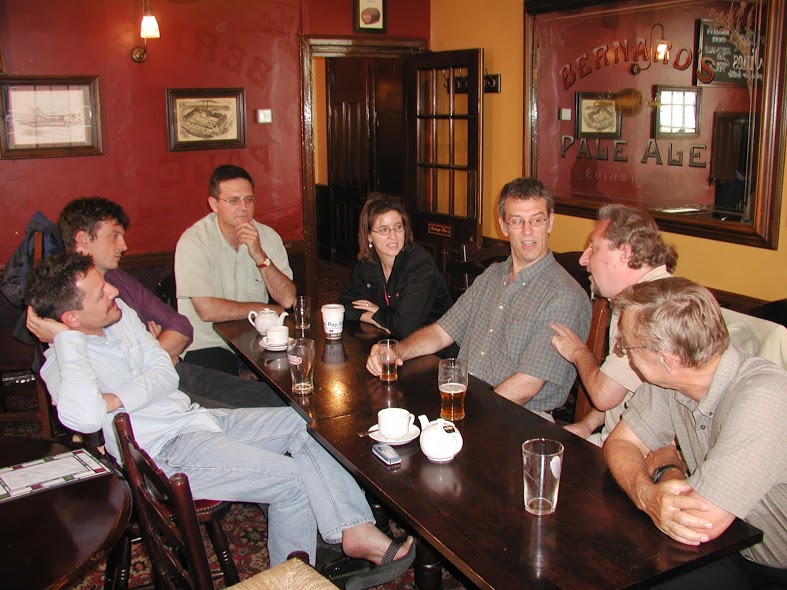
Martin Osborne, the first Managing Editor of Theoretical Economics has just completed his term and handed the reins to George Mailath. Martin is the last of the original co-editors to complete his final term and on the (private) TE Editorial Message Board he offers this reflection on the making of the journal.
TE has been—and continues to be—very much a collaborative project. With a few days to go before my term as editor ends, I want to acknowledge the contributors and outline their role in the development of the journal for those of you who may not be aware of the journal’s history.
TE emerged from a project initiated by Manfredi La Manna. In the late 1990s (or maybe the early 2000s—I have been unable to find a record), Manfredi proposed starting low-cost economics journals to compete one-on-one with a long list of high-priced Elsevier offerings. His plans were extremely (even absurdly) ambitious, and although many economists signaled their support, none was willing to commit to work on the project. None, that is, until Manfredi found David Levine and George Mailath. Manfredi had been looking for someone to act as an editor of a journal he hoped would compete with JET. As I understand it, David and George suggested instead that they form an Executive Board with the aim of searching for an editor. David and George soon recruited Drew Fudenberg, Patrick Bolton, and Ariel Rubinstein (with whom Manfredi had been in touch previously) to join the Board.
In October 2002, after no doubt getting turned down by their top picks, they asked me if I would become the editor. We quickly recruited Bart Lipman, Narayana Kocherlakota, and Georg Nöldeke to serve as coeditors, and for two years worked with Manfredi on the “Review of Economic Theory”. For a variety of reasons, we parted ways with Manfredi in mid-2004 and started designing and setting up an Open Access journal. The team initially consisted of Patrick Bolton, Drew Fudenberg, David Levine, George Mailath, Bart Lipman, Georg Nöldeke, and myself, and was soon augmented by Ted Bergstrom, Jeff Ely, Preston McAfee, and Ariel Rubinstein (who re-joined the group, having left the La Manna project before the rest of us). A huge amount of work was involved; everyone played an important role.
One of the major tasks in starting TE was setting up a nonprofit corporation to run it. This task was handled by Bart and David. David had previously set up such a corporation to run his “Not A Journal”, but even with the benefit of that experience, a huge amount of work was involved. In Bart’s role as Treasurer, he also conducted the tricky negotiations necessary to get a credit card authorizer to deal with us. Eventually he found a company that specialized in small operations. Although that company appeared a bit disorganized—at some point it has us down as “Theological Economics”—it served us flawlessly during our pre-ES days.
Another major task was soliciting papers. That involved finding papers, reading them, discussing them, and selecting the ones that were potentially publishable. And then, usually, finding out that the authors had submitted them to Econometrica. Bart, Jeff, and Drew were particularly active in evaluating papers. Collectively, we read over 250 papers; Bart alone posted comments on more than 200 of them.
A final task that proved to be especially difficult was the choice of a name. The list we considered was long; it was very hard to find a reasonable name that was not close to the name of another journal or book series and also had an acronym not close to the acronym of another journal. Dozens of creative titles were proposed. Three of the more colorful were Theoretical Economics Arsenal (acronym TEA, proposed by Jeff Ely), Ecotheoretica, and Ekonomiko (both proposed by Preston McAfee; Ekonomiko is Esperanto for economics). One thousand three hundred and thirty messages after I opened a thread to decide on a name, we voted for “Theoretical Economics” (which, incidentally, was one of the two options I suggested in my original message).
We were extraordinarily fortunate that just as the journal was starting, a new version of the Open Journal Systems software became (freely) available. This superb system allowed us to automate almost all the the “administrative” tasks of running a journal (tasks that, I might add, are still performed manually at many other journals). You may think that software quality is an incidental issue that has little bearing on the activities of a journal. I disagree. In fact, because it obviates the need for an editorial assistant, superb software like the OJS system allows Open Access journals to be financially viable—even ones without a rich aunt like the Econometric Society.
Once we started publishing, the generosity of another group of people came into play—authors. We owe the success of the journal in no small part to the generosity of the authors who submitted to TE papers that could have been published in Econometrica. Submitting a paper to TE now is, I hope, a natural step for the author of a outstanding paper. But despite the commitment of the coeditors that the project would succeed, submitting a paper to TE in 2005 entailed some risk, and we are certainly grateful to the authors who took that risk in order to support Open Access. Submitting a paper to TE in 2004, when we were not yet certain we would go ahead, entailed a much greater risk; we were certainly encouraged that Bill Zame was willing to take that step.
A key determinant of the reputation that the journal has earned is the quality of its editorial work. The decision letters written by the first group of coeditors—Jeff Ely, Ed Green, and Bart Lipman, joined by Debraj Ray in 2008—were better than any others I have seen. Even rejected papers received very close attention. The efforts of this initial group of brilliant coeditors were critical in establishing a reputation for the journal.
One measure of the extent to which the initial group worked together is the number of postings on this Message Board. Between 2004 and July 2009 (when the journal was taken over by the Econometric Society), the coeditors (Jeff Ely, Ed Green, Bart Lipman, Debraj Ray, and myself) and the other members of the Executive Board (Ted Bergstrom, Drew Fudenberg, David Levine, George Mailath, Preston McAfee, Ariel Rubinstein, and Joel Sobel) posted over over 5,000 messages here.
Finally, the coeditors who have served since TE’s takeover by the Econometric Society—Gadi Barlevy, Faruk Gul, Johannes Hörner, and Nicola Persico—have upheld TE’s standards of editorial excellence with enviable energy, and our outstanding Associate Editors have provided us with high-quality evaluations within timeframes matched by few other journals.
It has been a great pleasure to coordinate this very hard-working group, which has transformed TE from an idea to the success it is today. I am delighted to hand over my role to George Mailath, who will surely lead the journal to new heights!
Martin Osborne was a truly outstanding Editor. He vastly understates his own role in building the editorial software that makes the journal run so smoothly. In my opinion the open source software that we use for free and that Martin painstakingly customized is far superior to the commercial systems used by all of the major journals in economics. Do not believe it when it is said that open access journals can only survive on large fees by authors. TE is a top-class journal and it is incredibly cheap to run. Do not believe it when it is said that a new open access journal faces a chicken and egg problem. The people behind TE believed in it and made it happen. People wishing to start open access journals would do well to copy what TE did.
(photograph taken by Ariel Rubinstein. More photos here.)
I just had one of my worst travel experiences. On United.
I was flying with my two kids and we got to O’Hare at 9 am in plenty of time for our 10.30 am flight to Seattle. The plane was delayed for one hour initially but then, after the airplane arrived, it turned out there was some malfunction so we had to wait for another plane. That one was due to leave at 2 pm.
My kids are pretty good but they were getting a bit restless so I decided to let them pick a treat for every delay. They opted to have lunch at Wolfgang Puck’s in the other of the two United terminals. They got to veto Frontera Fresca. So far so good.
The next bit of news – easy to forecast – further delay till 2.25. Peanut M&Ms. But then things got interesting. The pilots on the incoming flight had timed out given the additional 25 minute delay and we had to wait for new pilots to turn up. Ice cream for the kids. But no-one was insuring me so I was getting more and more pissed off. This pilot time out was news to me but surely eminently foreseeable for United? We left at 4.30 pm. Kids were on a sugar high and I was on a United low.
Dani Rodrik will be the Albert O. Hirschman Professor of Social Science at the Institute for Advanced Study in Princeton as of July 1, 2013. Before then, he was the Rafiq Hariri Professor of International Political Economy at the John F. Kennedy School of Government, Harvard University. He has published widely in the areas of international economics, economic development, and political economy. His research focuses on what constitutes good economic policy and why some governments are better than others in adopting it.
Didn’t see anything on the IAS webpage announcing it as yet.
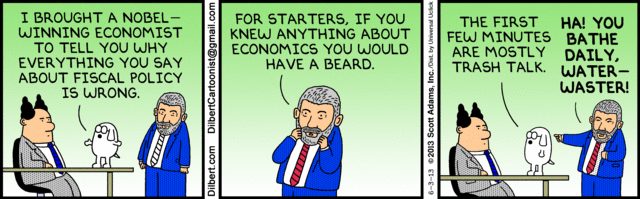
A prominent and well-connected economist who has openly supported opposition figures has resigned from several posts and abruptly left Russia under mounting pressure from investigators, officials of the university he leads said on Wednesday.
The economist, Sergei Guriev, has been questioned repeatedly in a case that stems from a report that he co-wrote that harshly criticized the treatment of Mikhail B. Khodorkovsky, the imprisoned oil tycoon and one-time political rival to President Vladimir V. Putin.
A centrist figure who is at home among Russia’s power brokers, Mr. Guriev drew attention a year ago for publicly declaring his support for the anti-corruption blogger Aleksei Navalny.
I’ve read Guriev’s papers in the past but his name seemed particularly familiar. I realized the Mikhail Golosov has presented a joint paper with Guriev and others at the Nemmers Conference just last week. Some people think Stalin’s policies were necessary to push labor from the countryside to industry and hence the hardship they caused, while cruel, had some long term positive economic impact. Chermukin, Golosov, Guriev and Tysvinki argue, using data they collected and a two sector growth model, that Stalin’s policies reduced welfare significantly in the long run.
This guy is hardly a radical.
Airlines that offer this either send travellers an email inviting them to upgrade or travellers can go direct to the airline’s website.Once you’re on their site, rather than them saying, ‘you can pay £400 to upgrade’, you can now say, ‘I’ll pay £300’,” explains Ken Harris chief executive of Plusgrade, the technology company behind the platform. “There may be a minimum upgrade price and there will be an indicator which shows the strength of your offer.” The airline will then email you at least 72 hours before your flight to tell you if your bid has been successful; if not, you retain your original reservation.
Taking things to another comfort level:
Along with upgrades, you can also pay a nominal fee to ensure the seat next to you is not occupied.
To extract surplus and reduce information rents from high types, “low” types must be punished with inefficient allocations. Expect to be seated en masse if you do not purchase an upgrade even if the plane is half empty.
As far as I know. Anyway I always assumed that the Ely Lecture at the AEA meetings was named after me.
But changing the subject, Adriana Lleras-Muney writes to me:
From Henry Miller
“To be intelligent may be a boon, but to be completely trusting, gullible to the point of idiocy, to surrender without reservation is of of the supreme joys of life”
Agree?
I think Henry Miller is confusing correlation with causation. Its probably true that in our happiest moments (among those moments we are with other people–I might even dispute that those moments are the happiest unconditionally) we are trusting, gullible and idiotically surrendering. But that’s likely because we are with a certain person and in a certain blissful state that we respond by surrendering. Its the person and the state that brings us the supreme joy and our surrender is just a symptom of that joy. I might go far as to say that the surrender is a complementary good but its enough to think about surrendering to the very next person who knocks on your office door to convince you that the surrender is not itself the source of joy.
“Thibs is a guru,” Gibson said. “He understands the game plan.
“He had me guarding Ray Allen. That’s how much confidence he has in everybody’s ability to guard on defense. He really drew up and knew what the team was gonna do.
Every time they ran down and ran offense, it was exactly what Thibs showed us on paper.”
Would it be possible to make a statistical model of a jazz solo and use it to create new ones? Take a standard, and let’s focus on the saxaphone, say. Go to the solo and estimate a Markov transition kernel which tells you the probability distribution over the next tone conditional on the previous tone. In particular you want the joint probability distribution over the following note (or just the interval) and the note’s value (eighth, quarter, etc.) Feed it tons and tons of recordings of sax solos for the same tune (that’s why you want a standard.)
Once you have estimated your kernel, simulate it. Will it be music? How much of an improvement do you get if the state variable is the last two notes instead of just one? If your state variable is the last n notes, at what n are improvements no longer noticeable?
In my kids’ tennis class they are getting good enough to have actual rallies. The coach feeds them a ball and has them play out points. Each rally is worth 1 point and they play to 10. To stop them from trying to hit winners on the first shot and in attempt to get them to play longer rallies, the coaches tried out an interesting rule. “The ball must cross the net four times before the point begins. If your shot goes out before that, its 2 points for the other side.”
One form of mental accounting is where you give yourself separate budgets for things like food, entertainment, gas, etc. It’s suboptimal because these separate budgets make you less flexible in your consumption plans. For example in a month where there are many attractive entertainment offerings, you are unable to reallocate spending away from other goods in favor of entertainment.
But it could be understood as a second-best solution when you have memory limitations. Suppose that when you decide how much to spend on groceries, you often forget or even fail to think of how much you have been spending on gas this month. If so, then its not really possible to be as flexible as you would be in the first-best because there’s no way to reduce your grocery expenditures in tandem with the increased spending on gas.
That means that you should not increase your spending on gas. In other words you should stick to a fixed gas budget.
Now memory is associative, i.e. current experiences stimulate memories of related experiences. This can give some structure to the theory. It makes sense to have a budget for entertainment overall rather than separate budgets for movies and concerts because when you are thinking of one you are likely to recall your spending on the other. So the boundaries of budget categories should be determined by an optimal grouping of expenditures based on how closely associated they are in memory.
(Discussion with Asher Wolinsky and Simone Galperti)
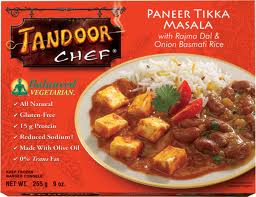
I enjoy my Mother’s cooking all too rarely. This is good for my waist line but bad for my taste buds. I have resorted to consumption of frozen Indian food as a poor substitute. I was surprised to find that Whole Foods carries a reasonable brand, Tandoor Chef, that has some decent options. Of course, these products come with a Whole Foods price tag.
On a recent trip to Devon Av., I happened to notice that the Fresh Farms supermarket carried these same products. Unfortunately, the prices are benchmarked against Whole Foods – no good deal there. But the supermarket also carries much cheaper products by Healthy Tiffin and they bear a remarkable resemblance to the Tandoor Chef products, e.g. both have Paneer Tikka Masala cooked in a relatively healthy way (if that is possible!). On closer inspection, Healthy Tiffin and Tandoor Chef are both made by Deep Products. I have been enjoying the arbitrage opportunity for a few months now. I worry that Deep Foods will reduce the quality of the Healthy Tiffin products to prevent arbitrage!

The NRA successfully lobbied to stop gun control legislation. Several Democrats sided with Republicans to defeat it. But the NRA seems to have spent more than necessary to defeat the measures because they failed by more than a one-vote margin. It would have been enough to buy exactly the number of Senators necessary to prevent the bill from progressing through the Senate, no more than that.
But in fact the cost of defeating legislation is decreasing in the number of excess votes purchased. If the NRA has already secured enough votes to win, the next vote cannot be pivotal and so the Senator casting that vote takes less blame for the defeat. Indeed if enough Senators are bought so that the bill goes down by at least two votes, no Senator is pivotal.
Here’s a simple model. Suppose that the political cost of failing to pass gun control is c. If the NRA buys the minimum number of votes needed to halt the legislation it must pay c to each Senator it buys. That’s because each of those Senators could refuse to vote for the NRA and avoid the cost c. But if the NRA buys one extra vote, each Senator incurs the cost c whether or not he goes along with the NRA and his vote has just become cheaper by the amount c.
For the Vapor Mill: What is the voting rule that maximizes the cost of defeating popular legislation?
Amnesty –forgiving all of the current and previous violators but renewing a threat to punish future violators– always seems like a reputation fail. If we are granting amnesty today then doesn’t that signal that we will eventually be granting amnesty again in the future?
But there is at least one environment in which a once-only amnesty is incentive compatible and effective: when crime has bandwagon effects. For example, suppose there’s a stash of candy in the pantry and my kids have taken to raiding it. I catch one red-handed but I can’t punish her because she rightly points out that since everybody’s doing it she assumed we were looking the other way. A culture of candy crime had taken hold.
An amnesty (bring me your private stash and you will be forgiven) moves us from the everyone’s a criminal because everyone’s a criminal equilibrium to the one in which nobody’s a criminal. The latter is potentially stable if its easier to single out and punish a lone offender than one of many.
I was watching Fox News and they were discussing whether the law needed to be changed so US citizens could be interrogated at length without being told their Miranda rights. The rationale is that the suspect is willing to give information if he knows it will not be used against him in a court. Also, he will be more pliable with no lawyer present. And if the information is very valuable, this is a price worth paying. (At least I think this was the gist of the Five on Fox crowd. I was a bit inebriated after a boozy conference meal at the Princeton Conference on Political Economy.)
The Five on Fox usually rail against rampant Leviathan – an uncontrolled government usurping the rights of honest, gun toting, red meat eating citizenry. That same Leviathan, if given the power to use domestic enemy combatant status, would apply it more and more broadly. A domestic enemy combatant is actually harder to define objectively than an assault weapon. A slippery slope would undoubtedly ensue and regular citizens would face being interrogated as enemy combatants. This is the risk of adopting the view of the illustrious Five.
But what about the benefits of greater Leviathan power, the power to interrogate true enemy combatants? We know Leviathan breaks the law at the risk of being held to account in court. There is no point running this risk in run of the mill cases. But there is a benefit in true enemy combatant cases. No jury will convict Leviathan in the latter case – the court of public opinion will replace the court of law. But egregious violations in run of the mill cases will surely lead to convictions by triggering the feeling “that could have been me” in jury members. So, roughly speaking, the law will be broken if and only if the case merits it.
Hence, there is no need for “domestic enemy combatant” status w.r.t. Miranda rights.
HT: I believe Becker and/or Posner made a similar argument years ago. If someone can tell me the reference I would be grateful.
- Capitalize on money illusion (and take a step toward eventually dispelling it) by having the Tooth Fairy leave 1000 Korean Won rather than 1 US Dollar.
- Security teams employ hackers to find flaws in their software before taking it live. Marketing teams should hire comedians to find potential bastardizations of new brand names/marketing campaigns under consideration.
- I would like to see brain images of pianists while they play. How does hand independence work in the brain? Are both sides continuously active or is the brain switching back and forth monitoring the hands separately?
- Even though I am the game theorist my wife does all the bargaining because she is better at “acting” irrational.
Say you are speaking for an hour to an audience of 100. Its just a fact of human nature that nobody in the audience is going to be paying close attention to what you are saying for more than 1/4 of the time. The other 45 minutes of the time people will be thinking, talking, or just daydreaming. You must accept this as an unavoidable constraint.
Absent any intervention on your part then you will get a randomly selected 15 minutes of attention from each member of the audience. This means that at any one point in time you will have the attention of only 1/4 of your audience or 25 out of the 100 people. The very important things you will have to say will be processed and potentially remembered by 1/4 of your audience, the same fraction that will be paying attention to the least important things you have to say.
So what you should do to prepare is ask yourself what are the three important things you have to say and you want remembered. Each of them should take you five minutes to say. Then imagine you have a sign that will flash above you which tells everyone in the audience whether now is the time to be paying close attention or now is an opportunity to doze off. With that sign you could coordinate their attention so that all of them are listening during the same 15 minutes, those 15 minutes when you will be saying your three important things.
Now you probably won’t be bringing that sign with you. But you can achieve the same effect by using the way that you stand, the way that you talk, and the style of your slides. When you are saying something important you speak slowly and loudly and you walk up and down the room and make eye contact and your slides have just one or two things on them so that they are easy to read and process.
You are telling them with your demeanor that now is the time to listen. Later, when you are saying something less important you lower your voice, go faster, stand still and read off your busy slides. You are doing these things to tell your audience that now is the time to think, talk or doodle and rest up for the next important moment.

How much did I add to the cost of the student edition when I disposed of it into a randomly chosen grad student’s mailbox? Should I have recycled it instead? (Textbook authors’ names hidden to protect their reputations.)
Coonskin coil: Scott Ogawa.
If you are like me you subscribe to many RSS feeds and you find them accumulating articles faster than you can read them. What do you do when MetaFilter has 500 unread articles?
Use the glance and scroll method. Look at an article and read it if it looks interesting. But if it doesnt then don’t keep browsing. Give a hard flick on your mousewheel, trackpad, phone screen whatever and scroll rapidly past a large number of articles and glance at the next one you land on. Repeat.
The point is that all articles, regardless of their position in the feed are equally likely to be interesting, other things equal. So if you can only read a fraction of what’s there you can’t do any worse than this. But in fact other things are not equal.
The quality of articles is endogenously serially correlated. Because any blog runs the best material available that day/couple of days/week. If you landed on a lame article then chances are you landed on a lame day. Scroll your way out of that trough and hope you land on a peak.
Non-peer reviewed, inaccessible data, and punditry that can’t tell the difference between P&P and a regular AER article can’t be good for the reputation of the journal, the AEA, or the profession.
Credit cards carry hidden fees, cell phone plans have two year contracts, hotels rip you off if you get a Kit Kat from the minibar etc etc.
It is possible to explain these features in the “rational firm, dumb consumer” paradigm if there is one rational firm, i.e. a monopolist. Things get trickier if there is competition. If one firm is offering a deliberately confusing pricing scheme to extract surplus from boundedly rational consumers, why doesn’t another offer something transparent and steal customers? Then the usual logic of Bertrand competition should eliminate intransparent pricing and lead to a zero profit equilibrium. There are two theories (I know of) for why this might not happen.
The first is the adverse selection story of Ausubel. If one credit card company cuts prices, instead of attracting confused, profitable consumers, it attracts unprofitable, risky customers who might default. The deviation is not worthwhile and this undercuts the usual Bertrand logic.
The second is the add-on story of Ellison and Gabaix and Laibson. Let’s say hotels are pricing hotel rooms below cost and making profits on the add-ons (minibars, pay per view, phones etc.). One hotel deviates and prices the room just above costs and gets rid of the rip off pricing on the add-ons. Confused consumers learn they have been confused and go to the hotel which prices rooms below cost and remember to take their cell phone and laptop (to watch streaming movies) and pack a few energy bars. The hotel that prices just above costs does not get new customers and the deviation was not worthwhile.
You can’t purchase the subsidized cell phone from ATT without signing on to the rip off two year plan – so the add-on story is hard to apply. There might be some adverse selection towards TMobile because you can pay for the cellphone in installments so you can default. But this effect does not seem large and could go the other way – stay with ATT, get an even more subsidized cell phone and default on the two year plan.
So, does that mean the upstart maverick player TMobile has triggered competition and cheap plans await us?
Oliver Sacks on the social costs of plagiarism stigma:
Helen Keller was accused of plagiarism when she was only twelve.2 Though deaf and blind from an early age, and indeed languageless before she met Annie Sullivan at the age of six, she became a prolific writer once she learned finger spelling and Braille. As a girl, she had written, among other things, a story called “The Frost King,” which she gave to a friend as a birthday gift. When the story found its way into print in a magazine, readers soon realized that it bore great similarities to “The Frost Fairies,” a children’s short story by Margaret Canby. Admiration for Keller now turned into accusation, and Helen was accused of plagiarism and deliberate falsehood, even though she said that she had no recollection of reading Canby’s story, and thought she had made it up herself. The young Helen was subjected to a ruthless inquisition, which left its mark on her for the rest of her life.
There is a subtle defense of plagiarism in the connection he draws with false memories, and the value of ignoring the source.
Indifference to source allows us to assimilate what we read, what we are told, what others say and think and write and paint, as intensely and richly as if they were primary experiences. It allows us to see and hear with other eyes and ears, to enter into other minds, to assimilate the art and science and religion of the whole culture, to enter into and contribute to the common mind, the general commonwealth of knowledge. This sort of sharing and participation, this communion, would not be possible if all our knowledge, our memories, were tagged and identified, seen as private, exclusively ours. Memory is dialogic and arises not only from direct experience but from the intercourse of many minds.
Kepi kiss: David Olson.
 Cheap Talk