Image

What does a biological perspective imply about impatience? The rate of mortality will contribute to impatience, as is thunderingly obvious, and well-known in economics, certainly since Irving Fisher. A specifically biological contribution is the rate of population growth. If population is growing, then a reproductive strategy that entails the earlier production of offspring would be smiled upon by evolution. Consider a population in which all individuals produce 4 offspring at age 2. The population quadruples in two periods or, equivalently, doubles every period. A type that produced these 4 offspring at age one instead would do much better, quadrupling every period.

However, back-of-the-envelope calculations suggest that the sum of the mortality rate and the population growth rate may be inadequate to produce a plausible pure rate of time preference. That is, even for hunter-gatherers, mortality may be  only 1-2% for most ages, for those who are not on the walls-of-death at the beginning of life or at the end. And the rate of population growth over the 1.8 million years of our evolutionary history must be close to zero, as an arithmetical necessity. However, the pure rate of time preference seems likely to be more than 1-2%.

One approach to closing the apparent gap is to suppose the average population growth rate of near zero cloaks a more dramatic detailed scenario. Perhaps, for example, there are long runs of peace and plenty generating substantial population growth. Occasionally, however, there are random demographic disasters of biblical proportions. Suppose these disasters are equal opportunity grim reapers, wreaking the same proportionate damage on all ages. Larry Samuelson and I (AER, 2009) show that the relevant rate of population growth is the rate that obtained during the sunny eras of peace and plenty, thus potentially closing the gap.

Another mechanism to close the gap is sex, finally validating the title of this post. (Thanks for your patience ;). Sorry if you were expecting something more lubricious.) This idea was formulated by an anthropologist, Alan Rogers (AER, 1994). Although there are mathematical difficulties with Alan’s model, and not all plausible models deliver the desired result, the intuition can be resuscitated. (This paragraph relies on work with Balazs Szentes.) This intuition is as follows. A prime motivation for saving for the future is to favor offspring. However, sexual reproduction means that each offspring has a value that is only 1/2 of each parent’s value. This is an instance of “Hamilton’s rule” from biology, but is also, more familiarly, the free-rider problem. That is, offspring are a public good to each couple, and there is a temptation for each parent in the couple to undercontribute.

Image

“Hoist with one’s own petard”– as in Hamlet– a deconstruction. “Hoist” here is an archaic past participle. “Petard” comes from the French meaning a small bomb. Petard is related to the French for “f..t”. (Please note the “t”. I’m rude, but not that rude.)  “Le Pétomane” was the stage name of a professional French “flatulist.” (Imagine telling an immigration officer that was your occupation.) Some of the highlights of his stage act involved sound effects of cannon fire and thunderstorms, as well as playing “O Sole Mio” and “La Marseillaise” on an ocarino. He could blow out a candle from several yards away. His audience included Edward, Prince of Wales, King Leopold II of the Belgians, and Sigmund Freud. His life was commemorated in Le Pétomane: Parti Avec Le Vent (Le Pétomane: Gone With The Wind). H/t Google, Blazing Saddles

Image

Consider a two horse race– with probability 3/4 Duchess Camilla wins, with probability 1/4, it’s Princess Anne. You have $1 to bet. Camilla pays $2 for a win, and Anne $1– the precise numbers don’t matter. You are risk-neutral. Which horse should you pick? Camilla, of course, who pays $1.50 in expectation, whereas Anne pays only $0.25. Now suppose this race is run twice and you reinvest your winnings from the first race as a bet in the second. How you should now bet? You will bet on Camilla in the second race, for the same reason as before. Indeed, it is not hard to see that you should bet on Camilla in the first race as well, since you should maximize the expected amount of money you’ll have available to bet on the second. This is kind of boring. If there is any finite number of repetitions, bet on Camilla always.

But what if there is an infinite number of these races, where you reinvest all your winnings, and you care about your wealth in the far distant future? Now there’s a problem with always betting on Camilla– she will lose eventually, and you will be broke as soon as that happens. You must bet some of that $1 on Anne. How much should you bet? If you bet a fraction f on Camilla and 1-f on Anne, your wealth at date T, w(T), say, will be a product of n(T) factors of 2f and T-n(T) factors of 1-f, where n(T) is the number of times that Camilla wins. It follows that (1/T)ln(w(T)) = (n(T)/T)ln(2f) + ((T-n(T))/T)ln(1-f). The law of large numbers implies that (1/T)ln(w(T)) tends to (3/4)ln(2f) + (1/4)ln(1-f). You should maximize this long run limiting growth rate. In this case, it follows that the optimal f = 3/4.

As a strategy for investment, this log criterion was proposed by Kelley in 1956, as Lones Smith reminded me yesterday. He also said this Kelly criterion led to “Beat the Dealer”, the MIT Blackjack team, and eventually the Kevin Spacey movie “21”.

Kelley was roundly criticized by PA Samuelson in 1971, who objected to the criterion of long run wealth maximization, but Kelley was rehabilitated by Blume and Easley in several relatively recent papers.

Without needing to take a stance on the merits of the objections, they do not apply with a biological reinterpretation. In particular, the criterion of long run population maximization is evolutionarily convincing. The corresponding result is that the evolved utility function should be the expectation, with respect to aggregate risk, of the natural log of the expected offspring conditional on each aggregate state.

Individuals should be more averse to aggregate risk than they are to idiosyncratic risk. Preferences do not satisfy “probabilistic sophistication,” since it is not enough to list the outcomes and the associated probabilities. Preferences are interdependent, since the impact of gambles on others matters. Individuals may be induced to take idiosyncratic gambles in the face of aggregate risk.

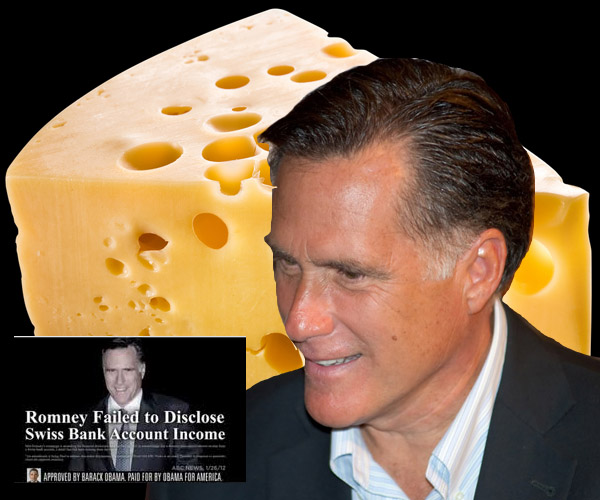
From Matt Yglesias, an intriguing theory.  In 2009:

Wealthy U.S. taxpayers, concerned about an Internal Revenue Service crackdown on the use of secret overseas bank accounts as tax havens, are rushing to meet a Thursday deadline to disclose those accounts or face possible criminal prosecution.
The concern was triggered this summer when Switzerland’s largest bank, caught up in an international tax evasion dispute, said it would disclose the names of more than 4,000 of its U.S. account holders.

Yglesias adds:

Romney might well have thought in 2007 and 2008 that there was nothing to fear about a non-disclosed offshore account he’d set up years earlier precisely because it wasn’t disclosed. But then came the settlement and the rush of non-disclosers to apply for the amnesty. Failing to apply for the amnesty and then getting charged by the IRS would have been both financially and politically disastrous. So amnesty it was. But even though the amnesty would eliminate any legal or financial liability for past acts, it would hardly eliminate political liability.

Via my favorite source for toilet humor, Adriana Lleras-Muney, here is a paper describing how the urinal game and other bathroom customs can be used in introductory Sociology classes.

the use of “interactive exercises” can also be a valuable way by which to underscore the connection between individual actions and social structure. So stated, this paper identifies a number of “everyday” participatory exercises designed to spur classroom interaction and highlight core sociological concepts. Specifically, I use interactional scenarios within the typical American men’s public restroom to emphasize: 1) that individual actions, even those that exist in the mundane, are influenced by larger social-cultural forces; and 2) that a number of core sociological concepts can be found and explored in a place generally ignored or taken for granted.

I wrote about the urinal game here and the trough variant here.

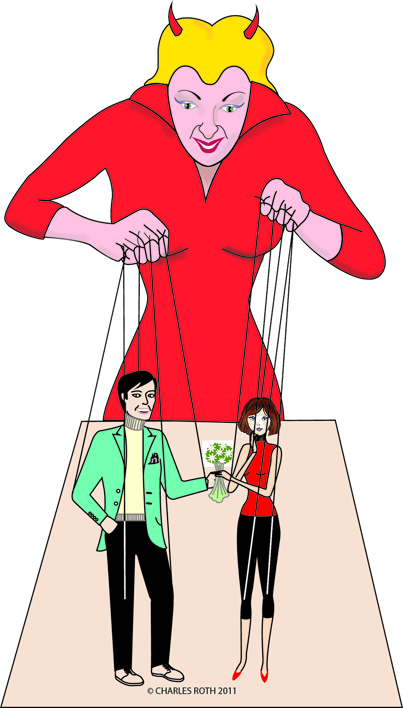
Questions that might at first blush seem banal may have illuminating answers from an evolutionary perspective. Why do we have a utility function, for example?  Perhaps because it permits a plastic response by an individual to circumstances that are unusual or even novel in our evolutionary history. Think of Mother Nature as a principal, a puppeteer, who knows the fitness consequences of various outcomes, say.  Nature wishes to enhance the evolutionary success of the individual, the agent, the puppet, where this individual also has some local information. This local information might be about the probabilities with which these outcomes occur in various gambles, say. An evolutionary strategy that fixes an appropriate hedonic scoring system for the outcomes within the agent and then devolves autonomy onto the agent permits the agent to blend together the two components–outcomes and probabilities. In the end, the agent chooses the optimal gamble in a flexible and optimal way, endowed with free will, but bound in an hedonic straitjacket.

To ask: Why do we value food, warmth, even of the intelligent and well-educated is to invite incredulity. “What are you, stupid? If we lack those, we will die and have no offspring. Aren’t you into biology?” But if utility is the solution to this principal-agent problem, and we credit ourselves with the requisite intelligence, then why would the optimal utility not simply be offspring? Why wouldn’t the optimal evolutionary strategy not set offspring as utility and then leave it to the intelligent and autonomous agent to figure out that it would be a good idea to eat to further this goal. Sex would seem messy and awkward, but it would have to be endured too. For the kids.

Again the reason why utility has as arguments goods that are intermediate to the production of offspring, as clearly it must in reality, might be that Nature has information that the individual lacks. Although there are, in principle, be other ways of conveying this information, as a matter perhaps of historical accident, Nature has come to whisper in your ear “Don’t think about it, just eat that cheesecake, bask in the sun, smile at that pretty girl…”

Economists stand pretty much alone in believing that people are indifferent to one another’s situation. Psychologists do not believe it, the man/woman in the street typically would not, your mum does not (mine didn’t anway). I wouldn’t go as far as Oliver Cromwell (I beseech you, in the bowels of Christ, think it possible that you may be mistaken.) But we might want to consider the possibility that we are wrong. The prime facie evidence in favor of a concern with status is strong–going back to Duesenberry’s discussion of the consumption function in 1949 and further of course. Modelling a concern with status is rewarding–for example, such a argument sheds light on attitudes to risk. The case for including status in utility could rest there. However, it also seems highly plausible that such a concern with status is the fruit of evolution.  It is easy to think of evolutionary scenarios that might engender a concern with relative standing. If males compete with one another to obtain resources, it might be that the most successful male in terms of resources, even if only by a smidgin, wins a wildly disproportionate level of attention from the fair sex. But the economists intense predilection for selfish preferences has only been moved to a deeper level. Deriving non-selfish preferences in this fashion is tantamount to embedding aspects of the game or the feasible set into preferences in a way that would win instant opprobrium in a conventional economic setting. Why wouldn’t an intelligent actor maintain purely selfish preferences in the winner-take-all game described, but apply the features of the game appropriately to arrive at the same course of action? In a new setting, the individual with aspects of the old game embedded in preferences is likely to behave inappropriately, but the actor with purely selfish preferences could recompute and find the optimal course.  What is the upshot of all this? Perhaps, non-selfish preferences evolved as a rule of thumb in complex circumstances, a rule of thumb necessitated by complexity and cognitive costs, a rule of thumb whose theoretical treatment is going to be famously awkward.

Arthur Robson is going to be sitting in with us this week.  I have written a lot about Arthur and his work, if you just enter his name into the Cheap Talk search bar you will find a lot of interesting stuff to read.  Arthur is an economist who has written on various areas in economic theory and who today is the main driving force behind an emerging field of biology and economics.

Here is a link to a recent conference he organized with a bunch of interesting papers.  At that conference, Balazs Szentes thanked the organizers, Arthur and Gary Becker, with a speech like this (paraphrasing from memory):  “Everyone thinks Becker is such a great pioneer but really he is so risk-averse.  He invented like 20 fields just hoping that one or two of them would take off.  Arthur on the other hand is the real hero to economics.  He was doing perfectly fine writing about normal theory and then he completely and permanently screwed up his career to pursue this biology and economics stuff.  So thank you.”  (Both Becker and Robson were present and both took it as the compliment it was intended to be.  We are still hoping to get video of that.)

So thank you Arthur.

CNN got the call wrong on the Supreme Court and the individual mandate. They then tweeted it, put it up on their website, put in as a banner onscreen etc etc. Then news began filtering in that the mandate had been upheld as a tax. What should they do now? There is an interesting blow by blow account of what happened by Tom Goldstein on SCOTUSblog. He adds:

Ironically, CNN reacted too slowly in part to avoid a second error.  The network did not want to be in the position of reporting that the mandate had been struck down, then reporting that it was upheld, then reverting to its initial report.  (That had happened to the media in the 2000 presidential election, and it had been a debacle.)  CNN gravitated to an intermediate position of uncertainty on the air, which of course was not decisive enough to correct viewers’ initial impressions.

CNN had also converted itself into an integrated circuit in which its electronic media teams were tied directly into the broadcast operation.  But not anticipating the possibility of an error or confusion, its first web, electronic, and Twitter reports did not hedge.  And the network did not have a clear plan to reverse the circuit on the electronic-media side and tell readers that its initial reports may have been wrong.

Once CNN made one mistake, it was hard to admit it because they were operating in an open environment with other players judging their actions. If CNN were operating in isolation – like an individual deciding whether to invest in a healthcare company – they would have reacted rapidly to correct their action given their latest information. But in an environment where others are watching them, they have to make future decisions which are consistent with their earlier error.

Chief Justice Roberts and four others found that the individual mandate could not be justified via the Commerce Clause (CC) in the Constitution. The CC allows the federal government to “regulate” interstate commerce. Roberts found that precedent allows the government to regulate activity via the CC but the individual mandate regulates inactivity and is hence unconstitutional (p. 20 of Roberts’ opinion):

The individual mandate, however, does not regulate existing commercial activity. It instead compels individuals to become active in commerce by purchasing a product, on the ground that their failure to do so affects interstate commerce. Construing the Commerce Clause to permit Congress to regulate individuals precisely because they are doing nothing would open a new and potentially vast domain to congressional authority.

Moreover (p. 22-23),

Indeed, the Government’s logic would justify a mandatory purchase to solve almost any problem…To consider a different example in the health care market, many Americans do not eat a balanced diet. That group makes up a larger percentage of the total population than those without health insurance…..The failure of that group to have a healthy diet increases health care costs, to a greater extent than the failure of the uninsured to purchase insurance….Those increased costs are borne in part by other Americans who must pay more, just as the uninsured shift costs to the insured….Congress addressed the insurance problem by ordering everyone to buy insurance. Under the Government’s theory, Congress could address the diet problem by ordering everyone to buy vegetables.

Let’s take a quick look at the broccoli market. At the prevailing price, absent regulation, some consumers are active in the market and buy broccoli and other are inactive and don’t buy broccoli. Similarly, there are some  producers who sell broccoli and other potential sellers who, given the prevailing price, produce chilis. Domestic broccoli growers are mainly in California but many broccoli consumers live in the Acela corridor so there is interstate commerce.

Then, the government enters the broccoli market. Some say this is because of the health benefits of broccoli, others say this is because the broccoli growers have formed an effective lobby, much like the sugar producers. The government intervention comes in the form of a subsidy to broccoli consumers. Consumers who consume 1 lb of broccoli/week get a $300 deduction on their taxes (Whole Foods immediately starts selling an annual contract which can easily be appended to your IRS form to get the broccoli deduction.)

Consumers who were active before still continue to buy: after all they are getting an extra incentive to buy. But also consumers who were inactive before now start to buy: after all the broccoli vs arugula margin now favors broccoli. In fact there is a new annual demand curve for broccoli D'(p) where D'(p)=D(p-300) where D was the original demand curve. There is higher demand at every price and the price of broccoli goes up. This changes the broccoli-chili margin for producers and inactive broccoli producers now switch to activity. (Also, profits go up for broccoli producers giving them the incentive to lobby for a consumer subsidy.)

Therefore, intervention in the “active” market changes the active-inactive decision and influences inactivity. An equivalent policy is to use to stick rather than a carrot and impose a penalty of $300 on consumers who are consuming less that 52 pounds of broccoli/year.  Appropriately chosen carrots and sticks are equivalent in terms of broccoli trade. (More broadly, a tax or subsidy to broccoli production could also implement the same output of broccoli.) This simple analysis has some implications for Democrats and Republicans.

First, many instruments can implement the same output so the fact that one kind of intervention has been deemed unconstitutional is not important. A carrot can replace a stick.

But, second, the instruments differ in their revenue implications. Carrots are expensive to the government and sticks raise revenue. More use of carrots means bigger deficits or distortionary taxes.

And, third, since penalizing inactivity is equivalent to incentivizing activity, we appear to have conflicting precedents. It is legal to regulate activity but not to regulate inactivity. But regulating activity impacts inactivity and if regulating inactivity is unconstitutional, in a roundabout way, the Roberts et al applies. On the other hand, there are plenty of precedents for regulating activity even if they influence inactivity. In the (in)famous Wickard case, quotas on farmers reduced activity and increased inactivity. I am not a lawyer so I can not sure what happens in this circumstance. I guess the Supremes get to vote and they can rationalize votes one way or the other based on conflicting precedents. All bets are off – will Roberts switch his vote at the last minute etc.?

Plenty of stuff for us citizens to contemplate on July 4. I’ll be grilling broccoli.

  1. How to make meth out of Legos.
  2. If you are married, on a plane, and hitting on a model, make sure she isn’t live tweeting it.
  3. Notice Jack Torrance’s reading material.
  4. Aaron Sorkin self-plagiarism.
  5. Various other Supreme Court bets that didn’t pay off.
  6. Toddler blog.

CJ Roberts rescues the mandate by noticing that it’s a tax.  Here’s the key line in the dissent of the minority, Kennedy, Scalia, Alito, and Thomas:

The issue is not whether Congress had the power to frame the minimum-coverage provision as a tax, but whether it did so.

The full decision is here.

Via Slate:

In his peroration, Justice Scalia says that “Arizona bears the brunt of the country’s illegal immigration problem. Its citizens feel themselves under siege by large numbers of illegal immigrant who invade their property, strain their social services, and even place their lives in jeopardy.” Arizona bears the brunt? Arizona is only one of the states that border Mexico, and if it succeeds in excluding illegal immigrants, these other states will bear the brunt, so it is unclear what the net gain to society would have been from Arizona’s efforts, now partially invalidated by the Supreme Court. But the suggestion that illegal immigrants in Arizona are invading Americans’ property, straining their social services, and even placing their lives in jeopardy is sufficiently inflammatory to call for a citation to some reputable source of such hyperbole. Justice Scalia cites nothing to support it.

Via WSJ:

Orbitz Worldwide Inc.  has found that people who use Apple Inc.’s Mac computers spend as much as 30% more a night on hotels, so the online travel agency is starting to show them different, and sometimes costlier, travel options than Windows visitors see.

Orbitz is not attempting third degree price discrimination:

Orbitz executives confirmed that the company is experimenting with showing different hotel offers to Mac and PC visitors, but said the company isn’t showing the same room to different users at different prices. They also pointed out that users can opt to rank results by price.

But is it just a matter of time?

At an all-you-can-buffet lunch, the incentives are clear: go back again and again, refill your plate and guzzle away. You would eat less if each new plate came with another price tag. Add to that a lack of self control and you get overconsumption and a desperate desire for a nap in the afternoon.

A CEO has a salaried employee. The employee gets paid much the same however much work he does. So, the CEO asks him to sit on this committee or investigate that new market or run recruiting etc. etc. Add to that moral suasion so it is a duty to work hard for the firm and you get overwork and a desperate desire to avoid the CEO. There will be many task forces and layers of bureaucracy as the cost of each initiative is so small. Better to pay for performance and internalize some of the costs of each extra foray into administration and work.

Treatment 1 is you give people a cookie and some cake and you ask them to rate how much they like the cookie better (which of course would be negative if they like the cake better.)

Treatment 2 is you present them with the cookie and the cake and you let them choose. Then you also give them the other item and have them rate just as in treatment 1.

Of course those in treatment 2 are going to rate their chosen item higher on average than those in treatment 1. But let’s look at the overall variance in ratings. A behavioral hypothesis is that the variance is larger in treatment 2 due to cognitive dissonance. Those who expressed a preference will want to rationalize their preference an this will lead them to exaggerate their rating.

Now I wouldn’t be surprised if an experiment like that has already been done and found evidence of cognitive dissonance. The next twist will explore the effect in more detail.

The cookies will be tinged with a random quantity of some foul tasting ingredient, unknown to the subjects. Let’s think of the quantity as ranging from 0 to 100. We want to plot the quantity on the x-axis versus the rating on the y.

My hopothesis is about how this relation differs between the two treatments. At an individual level here is what I would expect to see. Consider a subject who likes cookies better. In treatment 1 he will have a continuous and decreasing curve which will cross zero at some quantity. I.e too much of the yucky stuff and he rates the cake higher.

In treatment 2 his curve will be shifted upward but only in the region where his treatment 2 rating is positive. At higher quantities the curve exactly coincides with the treatment 1 curve.

I have in mind the following theory. There is a psychic cost of convincing yourself that you like something that tastes bad. Cognitive dissonance leads you to do that. But when the cookie tastes so bad that it’s beyon your capacity to convince yourself otherwise you save yourself the psychic cost and don’t even try.

Now we won’t have such data at an individual level to see this. The challenge is to identify restrictions on the aggregate data that the hypothesis implies.

From CNN:

Sprinters Allyson Felix and Jeneba Tarmoh threw their bodies across the finish line so evenly matched that cameras recording 3,000 frames a second couldn’t tell who beat whom.

Both runners recorded precisely the same finishing time, down to thousandths of a second: 11.068 seconds.

Two women beat Felix and Tarmoh: Carmelita Jeter and Tianna Madison. Their first and second place finishes on Saturday give them the chance to represent the United States at the Olympics in London this summer.

But the photo finish leaves USA Track & Field with a dilemma: Who gets the third slot?

There appears to be no precedent for a dead heat at U.S. Olympic Team track and field trials, prompting the U.S. Olympic Committee to announce new rules Sunday.

One of the runners can give up her claim to a spot on the Olympic team.

If neither one takes that unlikely option, they’ll be asked if they want to run a tie-breaking race or flip a coin.

If they choose the same option, the committee will respect their wishes.

If they disagree, they’ll have to race for it.

And if both athletes refuse to declare a preference, officials will flip a coin — a U.S. quarter to be exact.

They certainly have given it some thought but they may want to consult the previous literature as it seems they might be slightly off track:

Leaving nothing to chance, other than the flip itself, the rules also detail who gets to pick heads or tails and how the coin should be flipped.

“The USATF representative shall bend his or her index finger at a 90-degree angle to his or her thumb, allowing the coin to rest on his or her thumb,” the rules say.

Have you been following the Jonah Lehrer self-plagiarism flap?  Here’s a backgrounder.

At a superficial level this is an absurdity. Recycling an idea is good if it speeds up the spread of the idea. Plagiarism is an offense only if it harms the original creator.  If Jonah Lehrer is the original creator then whatever harm he is causing himself (i.e. none) he fully internalizes.  No exernalities here, move on. You get the sense that journalists are mindlessly misapplying a norm they apparently don’t fully understand.

But at a level deeper, Jonah Lehrer’s self-plagiarism is basically the same as plagiarism.  Because he recycled material he wrote for one publisher into new material written for a different publisher.  The original publisher had a role in the creative process.  They selected Jonah Lehrer as an author, they edited and ultimately approved his work.  They invested in it.  The new publisher probably has an implicit agreement with other publishers not to infringe on their creative output. Because Jonah Lehrer did not inform the new publisher of his self-plagiarism he led them to violate that agreement.

But let’s go the final level deeper.  When we recognize the equivalence what we really should conclude is that policing plagiarism is just as absurd as policing self-plagiarism.  Ideas are useless if they are not spread and the value of an idea is independent of who created it.  To put a halt to the spread of an idea just because of a dispute about somebody’s long-ago sunk cost is a pure social waste.

I want to say this would be hilarious if true.  But the thing is it can’t be hilarious even if its true because, not knowing for sure whether its true or a hoax its too easily hoaxed and its exactly the kind of thing that would be hoaxed and having that in your mind when you watch it makes it not funny even if its true.  There is a trough in the funny curve as we move along the x-axis between the two local optima of overtly made-up (e.g. an SNL fake commercial) at the left end-point and true with subjective probability 1 on the right end-point.  Its getting near impossible to make it that far to the right, indeed the farthest we can get still puts us below the local optimum at the left.

(Capotain curl:  Kottke.)

What is the difference between the Bowles-Simpson plan for deficit reduction vs President Obama’s plan? Ever wondered? I have. It seems the President’s plan calls for less cuts in Defense and Social Security but has more cuts in annual domestic spending. An Obama for America document summarizes the differences and of course does a comparison with the Romney plan. Romney’s plan is short on details so there is a lot of extrapolation. Is there an equivalent document put out by the Romney campaign?

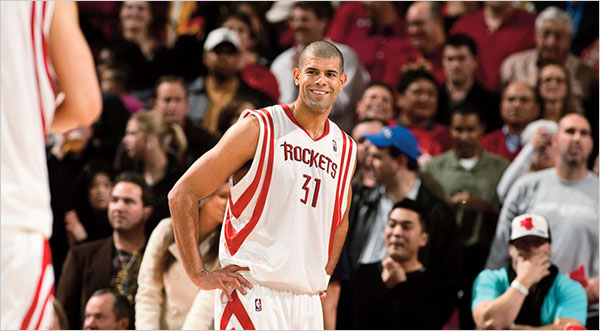
So, we have found by Chris Bosh’s absence and then his presence that he is a significant part of the Miami Heat. But who is the fourth most important man on the team? An argument can be made that it is Shane Battier. A New Yorker story espouses the same theory. It led me to an old article by Michael Lewis. But just why is Battier so good? Lewis makes a telling point:

There is a tension, peculiar to basketball, between the interests of the team and the interests of the individual. The game continually tempts the people who play it to do things that are not in the interest of the group. On the baseball field, it would be hard for a player to sacrifice his team’s interest for his own. Baseball is an individual sport masquerading as a team one: by doing what’s best for himself, the player nearly always also does what is best for his team….It is in basketball where the problems are most likely to be in the game — where the player, in his play, faces choices between maximizing his own perceived self-interest and winning. The choices are sufficiently complex that there is a fair chance he doesn’t fully grasp that he is making them.

Taking a bad shot when you don’t need to is only the most obvious example. A point guard might selfishly give up an open shot for an assist. You can see it happen every night, when he’s racing down court for an open layup, and instead of taking it, he passes it back to a trailing teammate. The teammate usually finishes with some sensational dunk, but the likelihood of scoring nevertheless declined. “The marginal assist is worth more money to the point guard than the marginal point,” Morey says. Blocked shots — they look great, but unless you secure the ball afterward, you haven’t helped your team all that much. Players love the spectacle of a ball being swatted into the fifth row, and it becomes a matter of personal indifference that the other team still gets the ball back…

Having watched Battier play for the past two and a half years, Morey has come to think of him as an exception: the most abnormally unselfish basketball player he has ever seen. Or rather, the player who seems one step ahead of the analysts, helping the team in all sorts of subtle, hard-to-measure ways that appear to violate his own personal interests.

This has two Holmstrom and Milgrom ideas: tension between individual incentives and team incentives; use of easily identifiable measures of output distorting incentives to invest is less identifiable costly tasks. And in the absence of monetary incentives and market efficiency, the only solution to the moral hazard problem is in ethical behavior (Arrow made similar points many years ago).

Because of runners’ high:

When people exercise aerobically, their bodies can actually make drugs — cannabinoids, the same kind of chemicals in marijuana. Raichlen wondered if other distance-running animals also produced those drugs. If so, maybe runner’s high is not some peculiar thing with humans. Maybe it’s an evolutionary payoff for doing something hard and painful, that also helps them survive better, be healthier, hunt better or have more offspring.

So he put dogs — also distance runners — on a treadmill. Also ferrets, but ferrets are not long-distance runners. The dogs produced the drug, but the ferrets did not. Says Raichlen: “It suggests some level of aerobic exercise was encouraged by natural selection, and it may be fairly deep in our evolutionary roots.”

The story is from NPR, the pointer is from Balazs Szentes.

  1. Heather Christle reading her poem over the phone.
  2. House crashed into a building, but its actually just art.
  3. Sweden’s national hipster tweeter.
  4. Kludgy church.
  5. Runway models falling down.
  6. Every Jeopardy question ever.

A great story on The Morning News about a guy who is trying to preserve his spoiler-free existence in the face of meddling Internets, bus riders, and Amazon delivery guys:

Well, don’t you worry. This book will be on your doorstep tomorrow afternoon, ready to read.

I, of course, could read the book–YOUR book–right now.

And I gotta admit, it WOULD be fun to be one of the first people in the world to know how it all ends.

Hmm. So, maybe I’ll just read the last page…

OH MY GOD I CANNOT BELIEVE IT!! IT WAS ALL A DREAM???!

Hah hah. I’m just yanking your chain. That’s not how it ends. Or maybe it IS, and I’m just saying it’s not so you’ll be doubly surprised when you finish it. You never know.

I really did read the last page, though. The final word is “haberdashery.” You can verify that when you get the book. Tomorrow. A full day after I had it.

I gotta tell ya, though: Now that I know how it ends, I kind of want to read the whole thing. If I start right now, I could probably finish it and get this book in the mail to you by Wednesday. You wouldn’t mind waiting a few extra days, would you?

Also, I dog-ear pages to save my place. I hope that’s OK.

j/k. I wouldn’t really read this book. 1,000 words about fairies? Yeah, no. Besides, who has the time? Some of us have to work for a living. For instance, I bust my hump 60 hours a week schlepping your books around.

Besides, I’d rather see the movie anyway. That chick who plays Hermione is smoking hot. I’d quidditch, if you know what I’m sayin’.

 Including analysis of the ncessary and sufficient epistemic conditions for an arbitrary statement to qualify as a spoiler:

  • Did your comment spoil my reading experience? Yes.
  • Was my experience any less spoiled because you didn’t know your comment was true? No.
  • Was my experience any less spoiled because you really, truly, honestly, swear to God didn’t mean to spoil the experience for anyone? No.
  • Was my experience any less spoiled because I knew your comment was true only by accident? Nope again.

Read it.  (Spoiler alert.)

He is 84 years old today.  This is a 1 hour PBS documentary from 2002.  Thanks to Paola Manzini for the pointer.


Orley Ashenfelter plus friends recreated the famous “Judgement of Paris” competition that first brought American wines to worldwide attention but with NJ wines. The results:

Results Whites

1 Clos des Mouches Drouhin 2009 FRA
2 Unionville Pheasant Hill Single Vineyard 2010 USA
3 Heritage Chardonnay 2010 USA
4 Silver Decoy “Black  Feather” 2010 USA
5 Puligny Montrachet Domaine Leflaive 2009 FRA
Tied 6 Bellview Chardonnay 2010 USA
Tied 6 Bâtard Montrachet Marc-Antonin Blain 2009 FRA
8 Amalthea Chardonnay 2008 USA
9 Ventimiglia Chardonnay 2010 USA
10 Meursault-Charmes Jean Latour-Labille2008 FRA

Results Reds

1 Ch. Mouton Rothschild 2004 FRA
2 Ch. Haut Brion 2004 FRA
3 Heritage Estate  BDX 2010 USA
4 Ch. Montrose 2004 FRA
5 Tomasello Oak Reserve 2007 USA
6 Ch. Leoville Las Cases 2004 FRA
7 Bellview Lumiere 2010 USA
8 Silver Decoy Cab. Franc 2008 USA
9 Amalthea Europa VI 2008 USA
10 Four JG’s Cab Franc 2008 USA

Except for the best white and the worst red, the rank order of the wines by assorted judges was not significant. Details are here. If you aggregate up though, at least for the reds, the French wines might be significantly better than the NJ wines.

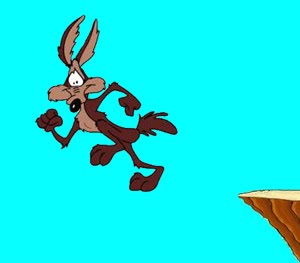
Wile E. Coyote runs off a cliff but gravity doesn’t seem to work on him. He just keeps on running, suspended in air, a supernatural feat. But here’s the tragedy: he is capable of this feat only because he doesn’t know he’s doing it. And it’s exactly the moment he realizes there is no ground beneath his feet that he comes crashing down into the canyon below. There is never an instant where he is both flying and aware that he is flying.

It’s the fearless who succeed. But take two people who are equally talented and ask which one is more likely to be fearless. It’s the one who is less worried about failure. But if we turn that around then what it says is that the guy for whom failure hurts the most is the one that’s going to fail.

Everyone has gone through something like this:  you take on some new challenge like playing chess or the piano. You work hard at it because initially two things are true: a) when you see other people who do it well you sense the feeling of pride and satisfaction you would have if you could do it well too, and b) at the beginning you cannot yet do it well. Then after lots of hard work finally you can do it too. But somewhere along the way something changed. Mastering it meant discovering that it’s not such an impressive feat after all. Now that you can do it you see that there is a method to it, it’s not magic like you thought.

Could it be that the causality actually works in the opposite direction:  those skills that you eventually do master, you master them because you stop thinking of them as magic as start to think of them as routine methodical tricks.

Is it even possible for someone to be great at something and be in as much awe of himself as the rest of us failures are of him?

Winning a Nobel just got slightly less lucrative:

On Monday the Nobel Foundation, which bestows the world’s most prestigious academic, literary and humanitarian prizes, said it was reducing the cash awarded with Nobel Prizes by about 20 percent. Each prize, awarded in Swedish kronor, will now be worth about $1.1 million, down from $1.4 million.

The reduction was the result of ugly returns on its invested capital, which was valued at $419 million as of Dec. 31, down 8 percent from the previous year. In the last decade, the costs of the prizes and related operating expenses have exceeded the endowment’s average annual return.

But Peter Diamond has some words of consolation for Sargent and Sims, the most recent winners:

Peter A. Diamond, a professor emeritus at the Massachusetts Institute of Technology who also received the Nobel in economic science in 2010, observed that over the long run, cutting the cash award could dilute the prize’s prestige.

But he added that Monday’s news overstates the financial blow to future laureates. “One of the things that comes with the prize, besides the prestige and the money,” he said, “is the opportunities to make more money.”

And it didn’t take very long for his words to come true:

Thomas Sargent, an American economist who won the Nobel Memorial Prize in Economic Sciences in 2011 together with Christopher Sims, will teach at Seoul National University (SNU) beginning this year.

The school said Monday Sargent, 69, currently a professor of New York University, will teach macroeconomics at SNU as a full-time professor for two years beginning the second semester of this year.

The economist has been serving as an advisor to the Bank of Korea since 2007.

“We are very proud to announce that Sargent has decided to join SNU,” said Park Myung-jin, the school’s vice president of education. “He will teach students as a full-time professor and conduct joint research with SNU faculty on various fields of economics.”

Sargent is expected to receive some 1.5 billion won ($1.27 million) annually, including salaries and research funds.

(thanks to Mark Witte and Daniel Lin for the pointers.)

She complained that when I practice the piano late at night I play too loud and it wakes her up every time.  So I said oh I didn’t realize that, did I wake you up last night.  She said yes.  Ha, I said but I didn’t practice last night.  Oh.  She was caught.  Thing is, I actually did practice last night.

We have examples of markets crowding out morality. But what about the reverse?

Your Gran lives in your hometown. Your hometown has no decent jobs and is small for your large ambitions. You want to leave. But old Gran is a bit frail. She needs to go the doctor weekly and sometimes there are emergencies. Gran’s neighbor is a nurse, now a stay-at-home mom with kids in high school. You ask the neighbor if, in return for a weekly wage, she would be willing to take Gran to the doctor every week and respond to emergency calls. She agrees. You think this is a great solution. The neighbor is much better qualified than you to look after Gran in emergencies. Gran is going to get excellent care. And now you get to explore broader horizons and make use of your Executive MBA to work in private equity just like Mitt Romney.

But when you propose the plan to Gran she looks a bit sad. She knows many other Grans. All of them have dutiful grandsons who drive them to the doctor every week. She’s not going to be able to hold her head up high at the daily Granny meetings. You feel guilty.  You stay in your hometown to help out your Gran.The deal with your neighbor is off. She takes a job cleaning houses. You get a job at a local steel mill doing their accounts. You lose your job when a private equity firm takes it over.