
You are currently browsing the monthly archive for October 2009.
I have read and heard anecdotal evidence that litigation in the United States is countercyclical. Usually this is cynically explained by saying that when times are tough everybody is looking to make an extra buck. But of course everybody is looking to make an extra buck when times are good too.
All of business activity relies on relationships that are partially supported by contracts and partially supported by trust. Trust fills in the gaps of incomplete contracts. When the contract is not followed to the letter, your interest in maintaining a healthy relationship smooths things over.
Bad times raise uncertainty about whether there are any gains left from this relationship in the future. This undermines trust and the result is that the courts are called in to fill the gaps.
There are a couple of natural ways to test this theory. First the countercyclical nature of litigation should vary across sectors. Thick markets with relatively anonymous actors should see less impact of economic downturns on the rate of litigation. Also, the effect outlined above is based on the assumption that contracts are written in good times and litigated in bad times. If the downturn is expected to last, then new contracts should tend to be more complete, taking into account the increased appetite for litigation. The result should be less litigation in longer downturns than in shorter ones.
I thank Rosemary for the conversation.
Started off too fruity and heavy. Took two hours to open up and then it was delicious. It smoothed out, the fruit receded. Tasted almost Bordeaux-like after it opened. Little bit of celery at the end. I thought it was overpriced initially but ended up accepting the $30 price by the time we finished the bottle.
I have a simple system for organizing recipes. I try out recipes I find in cookbooks, blogs, magazines, whatever. When one hits I do the following.
- Take a picture of it.
- Write down a list of the ingredients I wouldn’t typically have stocked.
- Email the above plus a link to the recipe (or what page in what cookbook) to myself.
Because the time you really need recipes is when you are shopping and you see, say some really good looking okra and you need to know what else to get. You pull out your iPhone, you search for okra in your mail folders, you get a picture and a list of ingredients. You go home and cook.
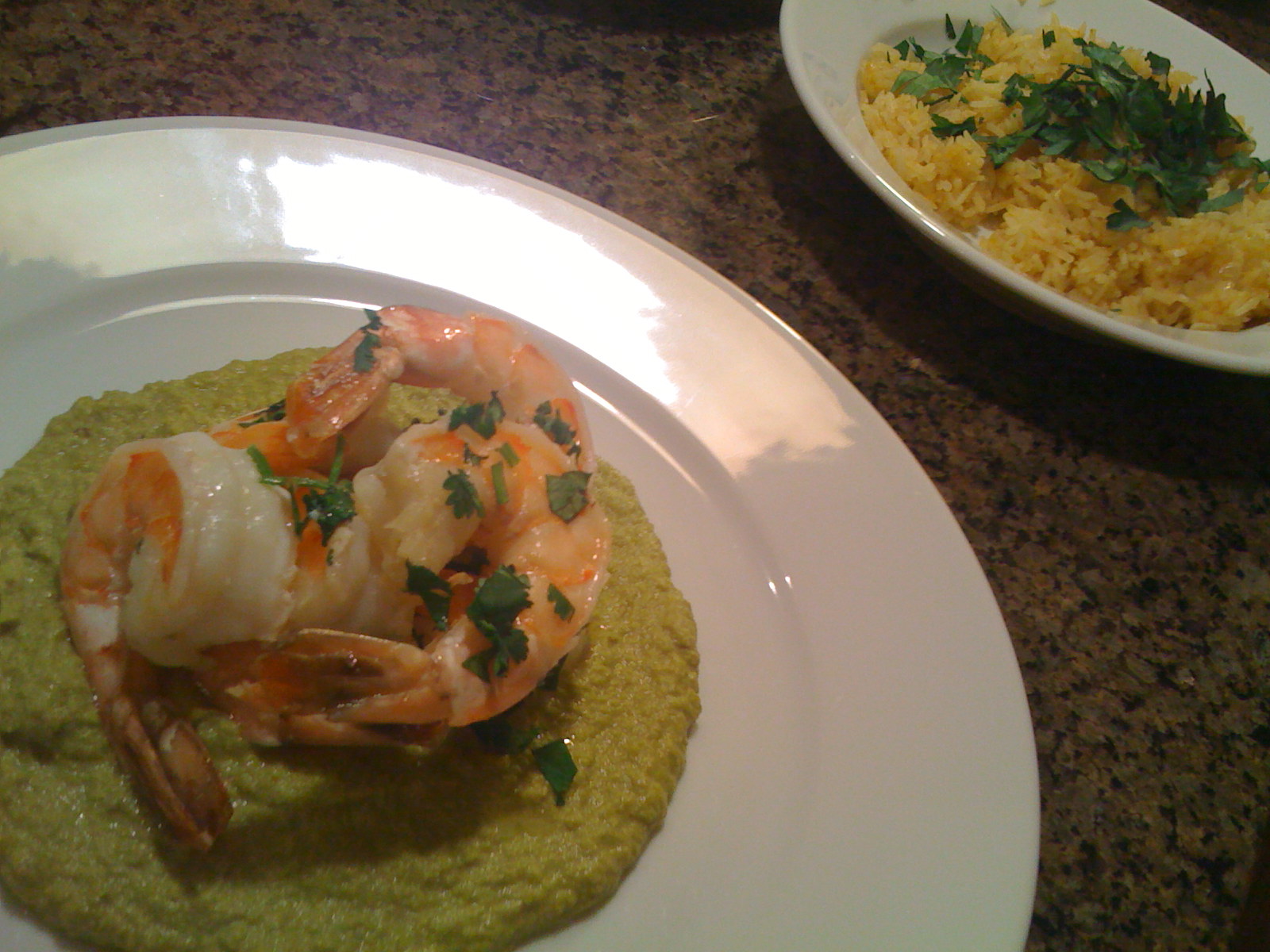
The picture is absolutely key. Think of your cookbooks at home. Which recipes do you most often cook? Its the ones with the beautiful photos in the middle of the book. The photo reminds you how yummy its going to be. Wouldn’t you love to cook this tonight?
The produce section announced the availability of fresh truffles. The freezer had a great selection of gelatos and sorbets. The bakery had some pretty nice looking cakes. But all of this was erased from my memory when I got to the cheese section at the back of the aptly named Formaggio Kitchen. Cheese is where the heart (and heart trouble!) is. It was a kind of Cheese Universe contest, only without the Donald. I blushed and didn’t know where to look with so much milky pulchritude around me. I finally plucked up my courage and asked for a few nibbles. Picked up a couple of bottles of good but overpriced wine as a go with. Luckily Formaggio Kitchen is not in Brookline. The transactions costs of getting there will protect my waistline.
According to the Times:
“A 2008 firefight in eastern Afghanistan has become a template for how not to win there, and helps to explain the strategy of Gen. Stanley A. McChrystal, the new commander.”
A new study is being released of the fire-fight. Among other things it says:
“Before the soldiers arrived, commanders negotiated for months with Afghan officials of dubious loyalty over where they could dig in, giving militants plenty of time to prepare for an assault.
Despite the suspicion that the militants were nearby, there were not enough surveillance aircraft over the lonely outpost — a chronic shortage in Afghanistan that frustrated Defense Secretary Robert M. Gates at the time. Commanders may have been distracted from the risky operation by the bureaucratic complexities of handing over responsibility at the brigade level to replacements — and by their urgent investigation of an episode that had enraged the local population, the killing a week earlier in an airstrike of a local medical clinic’s staff as it fled nearby fighting in two pickup trucks.
Above all, the unit and its commanders had an increasingly tense and untrusting relationship with the Afghan people.”
As far as I see from the story in the Times, the report on the firefight examines the mistakes that were made in implementation of a strategy. There are lots nuances but basically the army unit was meant to set up an outpost and they were not given the intelligence and manpower to do their job effectively. In other words this was a failure of “operations management” or what we might call tactics. We can learn from it in terms to how not to make the same mistake again.
What we cannot learn from it is what our strategy should be in Afghanistan. A strategy here is broader than what we usually mean in game theory. It is a description of an objective function as well as a plan of how to maximize it. (The objective function for Afghanistan is part of a grander objective function for U.S. domestic and foreign policy.) It will suggest questions such as: Should we ensure a stable democracy in Afghanistan? Or should we focus on Al Qaeda? Or have we overreacted to 9/11 overall and we should leave? None of this is answered by the study of the incident in 2008. Hence, we would be wrong to extrapolate from an issue of tactics to an issue of overall strategy. Maybe we decide we do not want outposts at all. Then a counterinsurgency strategy is moot.
Remember the browser wars? Resistance to open web standards, and “best viewed in Internet Explorer.” Remember “polluted java?” Here are paragraphs that caught my eye from ars technica’s overview of Google Wave.
In September, Google released Chrome Frame, a plugin for Internet Explorer that makes it possible for Microsoft’s browser to use Chrome’s rendering engine. Microsoft was not happy about this sudden but inevitable betrayal. Google later revealed that Wave was one of the catalysts that compelled them to launch the Chrome Frame project.
The developers behind the Wave project struggled to make Wave work properly in Microsoft’s browsers, but eventually determined that the effort was futile. Internet Explorer’s mediocre JavaScript engine and lack of support for emerging standards simply made the browser impossible to accommodate. In order to use Wave, Internet Explorer users will need to install Chrome Frame.

While we are on the subject I highly recommend the ars technica piece on Google Wave. In addition to lots of detail on the technology and implementation, it talks about Google’s commitment to open standards, open source, and decentralization. I came away less worried.
I have not been invited yet to try the beta.
Via kottke, here is a paper proposing A Unified Theory of Superman’s Powers. The abstract reads as follows.
Since Time immemorial, man has sought to explain the powers of Kal-El, a.k.a. Superman. Siegel et al. Supposed that His mighty strength stems from His origin on another planet whose density and as a result, gravity, was much higher than our own. Natural selection on the planet of krypton would therefore endow Kal El with more efficient muscles and higher bone density; explaining, to first order, Superman’s extraordinary powers. Though concise, this theory has proved inaccurate. It is now clear that Superman is actually flying rather than just jumping really high; and His freeze-breath, x-ray vision, and heat vision also have no account in Seigel’s theory.
In this paper we propose a new unfied theory for the source of Superman’s powers; that is to say, all of Superman’s extraordinary powers are manifestation of one supernatural ability, rather than a host. It is our opinion that all of Superman’s recognized powers can be unified if His power is the ability to manipulate, from atomic to kilometer length scales, the inertia of His own and any matter with which He is in contact.
The paper goes on to show how the theory can explain Superman’s super strength, ability to fly, super senses, and even his heat vision and freeze breath. It’s an elegant theory but the analysis has one significant gap. It is not enough to find a simple principle from which all of Superman’s powers follow. It is necessary to also show that the principle would not imply powers that Superman does not have.
If we do not insist on the latter, then there is an even simpler theory that does the trick: Superman can do everything. (Although that comes with its own difficulties.)
Austan Goolsbee does not sugarcoat the message.
Senator Baucus said he could not vote for the public option amendments as they would not get 60 votes in the Senate. That is, whatever his own narrowly defined preferences, he also has a preference for voting for the winning bill and, in fact, the latter component of his utility swaps the former.
This leads to the obvious issue: on what basis are the Senators Baucus canvassed saying they will not vote for the bill? If they vote like Baucus, they are also basing their votes on what will pass or not. The situation is ripe for coordination failure: even if sincere voting based on individual preference would lead to adoption of the public option amendments, the expectation that it will not pass causes people not to vote for it and guarantee that it will not pass.
If this is really as issue, supporters of the pubic option have to create momentum for it and convince Senators it will pass. They they will vote for the public option and it will pass. A self-fulfilling prophesy.
Steve Levitt links to his paper with Sudhir Venkatesh documenting some stylized facts about street prostitution in Chicago. It’s definitely worth a read, and one part is fodder for theory:
Prostitutes in their sample report using condoms 90 percent of the time, compared to only 25 percent in our sample for vaginal sex, and 21 percent for anal sex. Among their Mexican prostitutes, condom use is the default from which customers must bargain away, potentially inducing large increases in prices. In contrast, in our sample no condom appears to be the default choice, perhaps making it harder for the prostitute to credibly argue for a higher price if no condom is used. Moreover, in an equilibrium in which condom use is infrequent, infection rates among prostitutes are likely to be extremely high, so that the primary value of condoms to women may be protecting the women from becoming pregnant and hygiene, rather than the spread of disease. Indeed, one would expect that the johns would likely gain more in disease reduction from condoms than the prostitutes.
SOME DISCUSSION OF HOW CONDOM USE VARIES ACROSS PROSTITUTES IN OUR SAMPLE. SOME QUOTES ABOUT WHY THEY DON’T USE THEM. SOME FACTS ABOUT AIDS RATES AMONG JOHNS AND PROSTITUTES FROM MEDICAL LITERATURE.
(hmmm, it appears they are not quite done with the paper 🙂 ) They focus on the cost to the prostitute due to increased infection and the like, but there is already some unusual aspects to the demand side.
A John values unprotected sex over protected sex but even moreso if he is the only John, or among very few, who get that privelege. Holding fixed her frequency of unprotected sex, there is a downward sloping demand for unprotected sex as a function of the price premium over condom-clad. But that frequency is not verifiable, except insofar as it can be inferred from the price. Thus, as an equilibrium response the demand curve itself shifts with adjustments to the price.
This means that the prostitute cannot just choose any price. The price must be such that x% of Johns are willing to pay that price when they assume that x% of other Johns are having unprotected sex. Typically there will be just a few values of x that satisfy this fixed-point relationship.
So a cross-section of pricing patterns will exhibit a bang-bang (quiet down Beavis) or bi-modal (Beavis!) histogram with high prices and low prices and none in-between. The high prices correspond to the equlibria in which few Johns have unprotected sex so Johns are willing to pay a lot, and the low prices correspond to the equilibria in which many Johns have unprotected sex and Johns place lower value on it.
It could even happen that the price premium is for protected sex. In fact it could even be profit maximizing to distort downward the price of unprotected sex in order to signal how risky that would be, enabling the prostitute to raise the price of protected sex.
 Cheap Talk