Defamation is the making of a false statement that creates a negative image of another person.  At a superficial level the point of anti-defamation laws are to prevent such false statements.  But false statements by themselves are not damaging unless they do harm to the subject’s reputation.  For that, the statement must be credible.

If the direct effect of an anti-defamation law is to reduce the number of false statements made, an indirect effect is to enhance the credibility of all of the false statements that continue to be made.  Because a member of the public who cannot assess the veracity of a given statement will begin with the presumption that the statement is more likely to be true since a larger fraction of all statements made are true.  This of course encourages more false statements, undermining the original direct effect of the law.

Indeed it is impossible to eliminate false damaging statements without making them even more damaging.

Nevertheless, in equilibrium the net effect of an anti-defamation law is to increase the truthfulness of public discourse.  The marginal slanderous statement is the one which is just damaging enough to compensate for the expected cost of a lawsuit.  When that cost is higher, the previously marginal statement is crowded out.

But that just says that the proportion of statements that are false goes down.  Another effect anti-defmation laws are to reduce the number of truthful statements.  Even a truthful statement has a chance of being judged false and damaging.  There will overall be fewer things said.

Furthermore, since a defamatory statement must be proven to be false and some falsehoods are easier to demonstrate than others, the incidence of anti-defamation laws on various types of lies must be considered.   A libelous claim will be made if and only if the cost of the potential lawsuit is outweighed by the value of making it.  For statements whose explicit intention is to defame, that value increases as the overall credibility of public discourse increases.  Among those statements, the ones that are hardest to prove false will actually be said more and more often.

In fact as long as the speaker is creative enough to think of a variety of different ways to defame, the main effect of anti-defamation laws will be to substitute away from verifiable lies in favor of statements which are more difficult to prove false.  This will be so as long as a sufficiently large segment of the public cannot tell the difference between statements that can be verified and statements that cannot.

57 pages and not a single mention of me.   Via Ryan Lizza, with a story here.

We believe that $600 billion in stimulus over two years would create 2.5 million jobs relative to what would happen in the absence of stimulus. However, this falls well short of filling the job shortfall and would leave the unemployment rate at 8 percent two years from now. This has convinced the economic team that a considerably larger package is justified.

Faced with a morally ambiguous choice, you are sometimes torn between conflicting motivations. And it can get to the point where you can’t really figure out which one is really driving you. Are you calling your old girlfriend because only she can give you the right advice about your sick cat, or because you just want to hear her voice? Are you recommending your colleague for the committee because he’s the right guy for the job or because you don’t want to do it yourself? Do you write a daily blog because it’s a great way to hash out new ideas or because you just love the attention?

From a conventional point of view its hard to understand how we could doubt our own motivations. At the moment of decision we can articulate at a conscious level what the right objective is. (If not, then on what basis would we have to be suspicious of ourselves?) And we should evaluate all the possible consequences of the action that tempts us in light of that objective and make the best choice.

So self-doubt is a smoking gun showing that this conventional framework omits an important friction. Here’s my theory what that friction is.

Information comes in millions of tiny pieces over time. It is beyond our memory and our conscious capacity to recall and assemble all of those data when called upon to make a decision that relies on it. Instead we discard the details and just store summary statistics. When it comes time to make a decision, the memory division of our decision-making apparatus steps up and presents the relevant summary statistics.

The instinctive feeling that “I should do X” is what it feels like when the reported summary statistics point in favor of X. It has an instinctive quality because it is entirely pre-conscious. Conscious deliberation begins only after that initial inclination is formed.

At that stage your task is to verify whether the proposed course of action is consistent with your current motivation and the specific details of the situation you find yourself in. But that decision is necessarily made with limited information because you only have the summary statistics to go on.

Any divergence between your present frame of mind and the frame of mind that you were in when you recorded and stored those summary statistics can give you cause for doubting your instincts.

That suggests an interesting behavioral framework. The decision maker is composed of two agents, an Advisor and a Decider. The Advisor has all of the information about the payoffs to different actions and he makes recommendations to the Decider who then takes an action. The friction is that the Advisor and Decider’s preferences are different and the difference fluctuates over time. Thus, at any point in time the Decider must resolve a conflict between his own objective and the unknown objective of the Advisor.


  1. Johnny Depp reads letters sent to him by Hunter S. Thompson
  2. Charlie Trotter is closing up shop and heading to grad school.
  3. What does Bjork smell like?
  4. Everything I know about Economics I learned from Dungeons and Dragons.

My family have decided that I am too sarcastic.  I concurred.  So, I agreed to sign an anti-sarcasm contract :

“Under pain of having to donate $1 toward Lego for every infraction, I hereby declare my intention to eschew sarcasm.”

The kids were making $8/day for the first few days till I learned a little self-control. So far so good.

Then, weird little things started happening. A child would ask innocently: “Can we have  second dessert?” Or “Can I skip homework today?” etc. I would unfortunately respond with sarcasm.

I realized that the attempt to deal with my sarcasm by giving me incentives had created another incentive problem. I tried to change the contract so the money goes to charity but my kids refused to renegotiate….Is there some corollary of the Holmstrom moral hazard in teams model that says our it is impossible to implement optimal incentives with budget balance?

And for some reason they always seem to go up at exactly those times when you want to buy.  Like Taxis on New Year’s Eve.

Mr. Whaley was using Uber, a service that allows people to order livery cabs through a smartphone application. On New Year’s Eve, Uber, a start-up in the city, adopted a feature it called “surge pricing,” which increases the price of rides as more people request them.

Although New Year’s Eve was very profitable for Uber, customers were not happy. Many felt the pricing was exorbitant and they took to Twitter and the Web to complain. Some people said that at certain times in the evening, rides had spiked to as high as seven times the usual price, and they called it highway robbery.

Informing passengers only ex post may not be the ideal way to implement it though.

Uber’s goal is to make the experience as simple as possible, so customers are not shown their fare until the end of the ride, when it is automatically charged to their credit card. While the app does not show the total fare in dollars when customers book a ride, Uber did show a “surge pricing” multiple to customers booking rides for New Year’s Eve.

The article is an interesting read if for no other reason than the quotes from Dirk Bergemann and Liran Einav.  Thanks to Toomas Hinnosaar for the pointer.

He is the editor of the Quarterly Journal of Economics.

Once a paper is allocated the assigned editor typically reads the paper within 1 day and decides whether to send the paper out to referees or to “desk reject” it. Since we receive over 1,400 submissions and only publish around 40 to 44 papers a year, we need to be tough in the initial screening and only send a paper out to referees if it has great promise to be a significant contribution. This past year we desk rejected 62 percent of the new submissions (which still means that over 500 were sent to referees). I am the “softy” among QJE editors desk rejecting “only” 47 percent of new submissions vs. 70 percent by my co-editors. I also try to provide authors with some brief feedback on their papers and the rationale for the decision even in the case of desk rejections.

The full interview is here.  Thanks to Econjeff for the pointer.


I write all the time about strategic behavior in athletic competitions.  A racer who is behind can be expected to ease off and conserve on effort since effort is less likely to pay off at the margin.  Hence so will the racer who is ahead, etc.  There is evidence that professional golfers exhibit such strategic behavior, this is the Tiger Woods effect.

We may wonder whether other animals are as strategically sophisticated as we are.  There have been experiments in which monkeys play simple games of strategy against one another, but since we are not even sure humans can figure those out, that doesn’t seem to be the best place to start looking.

I would like to compare how humans and other animals behave in a pure physical contest like a race.  Suppose the animals are conditioned to believe that they will get a reward if and only if they win a race.  Will they run at maximum speed throughout regardless of their position along the way?  Of course “maximum speed” is hard to define, but a simple test is whether the animal’s speed at a given point in the race is independent of whether they are ahead or behind and by how much.

And if the animals learn that one of them is especially fast, do they ease off when racing against her?  Do the animals exhibit a tiger Woods effect?

There are of course horse-racing data.  That’s not ideal because the jockey is human.  Still there’s something we can learn from horse racing.  The jockey does not internalize 100% of the cost of the horse’s effort.  Thus there should be less strategic behavior in horse racing than in races between humans or between jockey-less animals.  Dog racing?  Does that actually exist?

And what if a dog races against a human, what happens then?

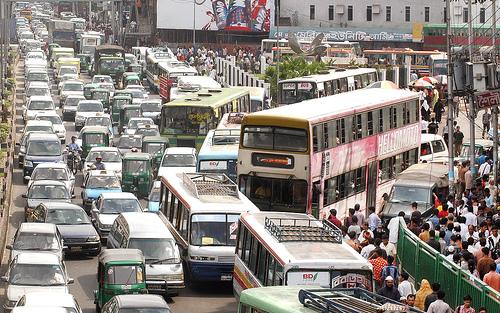
From a NYT Q&A about a trip to Bangladesh:

WASSIM RAGAB: How do you overcome the corruption in Bangladesh and still run successful projects?

MELINDA: It’s unfortunate and true that Bangladesh is perceived to be one of the world’s most corrupt countries. The Bangladeshis I have met have told me that they feel this in small ways on a fairly regular basis. Because the problem is systemic, it’s hard for them to go against the tide. One doctor I met with yesterday told me that nobody pays attention to traffic lights since you can buy your way out of a ticket for a small fee and because if you don’t run the red light, “everyone else will and you’ll never get to your destination.” Obviously, these unnecessary surcharges on everyday life and other forms of corruption are a major impediment to faster economic growth and it’s something the government and others must address.

Because everyone else is running a red light, a best response is to run it yourself. For some people, a best response to everyone not running the red light is to not run it yourself.  This is a coördination game logic. Actions are strategic complements: I am more willing to run the red light if you are running it.

Corruption can be thought of in two ways.  First, it is a sunspot that makes the running lights equilibrium focal.  Second, there are heterogeneous costs (or benefits) to running a red light.  Suppose there is no corruption.  Then, there is a threshold equilibrium where people run the red light if and only if their cost is below the threshold.  Corruption lowers the costs of running the right and shifts the threshold up: More people run red lights.  By strategic complements this creates a spiral where yet more people run red lights etc.


(Regular readers of this blog will know that I consider that to be a good thing.)

A father wants to encourage his daughter to take on a challenging new piece for the piano. Both father and daughter agree that it would be worth the effort if she could be expected to succeed but the daughter is pessimistic about her abilities. The father isn’t sure either but, having taught her older sister to play that piece, he knows a little more than the daughter about the difficulties involved and he is optimistic. How can he encourage her?

He has a problem because she sees through his cheap talk. She knows that he wants her to give it a try and so she knows that he would say whatever it would take to boost her confidence, even if he was really just as pessimistic as she.

However, things are different if she has reference-dependent utility. In particular suppose that, perhaps because of the way she has been raised, once her own expectations have been lifted she would stubbornly persist, even in the face of failure, for fear of falling below those expectations. (Indeed this might be why she was reluctant to take on the challenge at the beginning.)

Paradoxically, this behavioral quirk solves the father’s credibility problem. Because the last thing he wants is for his daughter to drive herself to tears in a futile attempt to learn a too-difficult piece. Now if he really thinks she’s not good enough, he won’t want to create any illusions. He wouldn’t even suggest it. So when he does suggest it and he does encourage her, she knows that he really believes in her. And he should know, so she tries.

That’s the idea in the job market paper of Edoardo Grillo from Princeton.

Doctors sometimes resist prescribing costly diagnostic procedures, saying that the result of the test would be unlikely to affect the course of treatment.  But what we know about placebo effects for medicine should have implications also for the value of information, even when it leads to no objective health benefits.

I have a theory of how placebos work.  The idea is that our bodies, either through conscious choices that we make or simply through physiological changes, must make an investment in order to get healthy.  Being sick is like being, perhaps temporarily, below the threshold where the body senses that the necessary investment is worth it. A placebo tricks the body into thinking that we are going to get at least marginally more healthy and that pushes above the threshold triggering the investment which makes us healthy.

The same idea can justify providing information that has no instrumental value.  Suppose you have an injury and are considering having an MRI to determine how serious it is.  Your doctor says that surgery is rarely worthwhile and so even if the MRI shows a serious injury it won’t affect how you are treated.

But you want to know.  For one thing the information can affect how you personally manage the injury.  That’s instrumental value that your doctor doesn’t take into account.

But even if there were nothing you could consciously do based on the test result, there may be a valuable placebo reason to have the MRI.  If you find out that the injury is mild, the psychological effect of knowing that you are healthy (or at least healthier than you previously thought) can be self-reinforcing.

The downside of course is that when you find out that the injury is serious you get an anti-placebo effect.  So the question is whether you are better off on average when you become better informed about your true health status.

If the placebo effect works because the belief triggers a biological response then this is formally equivalent to a standard model of decision-making under uncertainty.  Whenever a decision-maker will optimally condition his decision on the realization of information, then the expected value of learning that information is positive.

  1. Best drum solo ever.
  2. Haute cannibalism.
  3. Kim Jong-Il dropping the bass.
  4. The digital divide part 2.
  5. I feel much better now.

Via WSJ:

The White House’s top economist on Thursday said income inequality in the U.S.  has reached the point where the “middle class has shrunk.” He said the development was “causing an unhealthy division in opportunities, and is a threat to our economic growth,” according to prepared remarks…

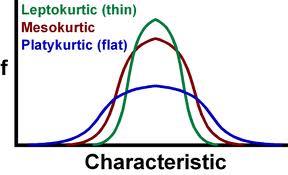
The consequence of a shrinking middle class, Mr. Krueger said, was “more families falling into either end of the distribution, and fewer in the middle. The statistical word for this is ‘kurtosis.’ I can see why the term polarization has caught on.”

Comedians are loath to follow a better act.  But musicians not so much.  Definitely not academics.  Why?

  1. Comedy is more vertically differentiated.  It’s really funny, just a little funny, or not funny.  The subject matter adds another dimension but that’s not so important for the ultimate impact.  Music is more horizontally differentiated.  So the opening act can be really good at what they do, but you can still please the audience if you’re not quite as good but do something different.  On this score academics are more like musicians.
  2. Laughs are physical.  You only have so many of those to give in a night. Wheras good music has the effect of putting you in a mental state that makes you more receptive to even more music.  Here academic talks are more like comedy.  The audience gets taxed.
  3. Headlining musicians always degrade the quality of the opening act by giving them less stage space and limited lighting and other effects.  In large conferences academics do the same thing by distinguishing the “plenary” talks from the rest.  (Get this:  in Istanbul this summer I am giving a semi-plenary talk.)  There is no obvious way to do this for comedy.
  4. Music is played by groups, comedians are always solo.  Somehow the head-to-head comparison is less exact for groups.  Solo singers are probably more reluctant to follow better singers than groups are when following other groups.  Academics get to blame their backstage co-authors.

If you buy something online using PayPal and upon delivery it turns out to be not what was advertised, PayPal might refund your payment and require you to destroy the item:

I sold an old French violin to a buyer in Canada, and the buyer disputed the label.

This is not uncommon. In the violin market, labels often mean little and there is often disagreement over them. Some of the most expensive violins in the world have disputed labels, but they are works of art nonetheless.

Rather than have the violin returned to me, PayPal made the buyer DESTROY the violinin order to get his money back. They somehow deemed the violin as “counterfeit” even though there is no such thing in the violin world.

PayPal required the buyer to photograph the remains to prove it was destroyed.  (How else can you prove to PayPal that the item wasn’t worth the money?) Glengarry glide:  Eitan Hochster.


Alex Madrigal endorses this game:

“Don’t Be A Di*k During Meals With Friends.”

The first person to crack and look at their phone picks up the check.

Our (initial) purpose of the game was to get everyone off the phones free from twitter/fb/texting and to encourage conversations.

Rules:

1) The game starts after everyone has ordered.

2) Everybody places their phone on the table face down.

3) The first person to flip over their phone loses the game.

4) Loser of the game pays for the bill.

5) If the bill comes before anyone has flipped over their phone everybody is declared a winner and pays for their own meal.

The problem with this implementation is that once one person cracks, she’s paying for the meal regardless of what happens next and so all the incentive power is gone.  It’ll be a twitter/fb/texting free-for-all.

A more sophisticated approach is to make the last person who uses their phone pay for the meal.  Its subtle:  no matter how many people have used their phone already, everybody else has maximal incentives not to be the next one.  Because by backward induction they will be the last one and instead of a free meal they will pay for everyone.

But even that has its problems because the first guy has no incentives left.  So you could do something like this:  At the beginning everyone is paying their own meal.  The first one to use their phone has to pay also for the meal of one other person.  The next person who uses their phone, including possibly if the first guy does it again, has to pay for all the meals that the previous guy had to pay for plus one more.

It would take a lot of mistakes to run out of incentives with that scheme but even if you do you can start paying for the people in the table next to you.

Barretina bump:  Courtney Conklin Knapp

You are managing a small team. You are meant to make sure they work hard. Monitoring is costly and you would like to shirk your responsibilities. But your monitoring is observable to the worker bees. They incur no costs to observe your effort. If you shirk your duties, there will be payback from the workers. There is always the possibility that they turn you in to your supervisor.  This could be a deliberate act. More likely, it is inadvertent because “loose lips” that sink ships. So, you are left with no choice but to monitor. And since you are monitoring, the workers are left with no option but to work. Everyone is worse off. If only the workers could keep their mouths shut and the manager could shirk.

Some topics evolve by occasional big news events interspersed by long periods of little or no news. The public reacts dramatically to the big news events and seems to ignore the slow news.

For example, a terrorist attack is followed by general paranoia and a tightening of security. But no matter how much time passes without another attack, there never seems to be a restoration of the old equilibrium. News is like a ratchet with each big reaction building directly upon the last, and the periods in-between only setting the stage for the next.

The usual way to interpret this is an over-reaction to the salient information brought by big news events, and a failure to respond to the subtle information conveyed by a lack of big news. We notice when the dog barks but we don’t notice when it doesn’t.

But even a perfectly rational and sophisticated public exhibits a news ratchet. That’s because there is a difference between big news and small news in the way it galvanizes the public. Large changes in policy require a coordinated movement by a correspondingly large enough segment of the population motivated to make the change. Individuals are so motivated only if they know that they are part of a large enough group. Big events create that knowledge.

During the slow news periods all of these individuals are learning that those measures are less and less necessary. But that learning takes place privately and in silence. Never will enough time pass that everyone can confidently conclude that everyone else has confidently concluded that …. that everyone has figured this out. So there will never be the same momentum to undo the initial reaction as there was to inflame it.

It pays $72,000 per year and comes with only two requirements, one is flexible and one is not:

At first glance, Robert Kirshner took the e-mail message for a scam. An astronomer at King Abdulaziz University (KAU) in Jeddah, Saudi Arabia, was offering him a contract for an adjunct professorship that would pay $72,000 a year. Kirshner, an astrophysicist at Harvard University, would be expected to supervise a research group at KAU and spend a week or two a year on KAU’s campus, but that requirement was flexible, the person making the offer wrote in the e-mail. What Kirshner would be required to do, however, was add King Abdulaziz University as a second affiliation to his name on the Institute for Scientific Information’s (ISI’s) list of highly cited researchers.

As you read on, ask yourself whether a chaired professorship endowed by King Abdulaziz would survive the various criticisms.  I thank Ryan McDevitt for the pointer.

I hadn’t watched American football in many years but around Christmas time I watched a little bit with my son who is getting old enough to pay attention to it.  What struck me was how many pointless rules there are in football.  I asked myself which of the many pointless rules is the most pointless.  Some candidate

1.Holding

2. Illegal motion

These two are basically rules that establish a conventional way to play the game.  If you dropped these rules you would still have a game that makes sense but aesthetically you could argue the game is less attractive.  Players grabbing each others uniforms, offensive players running around before the snap.  It’s a matter of taste but the deadweight loss is the subjective element of enforcement.  Bottom line:  artificial rules but not totally pointless.

3. Intentional grounding.  This rule has a point but its a stupid point.  The quarterback can’t throw the ball just anywhere, he has to throw it near somebody who could legally catch it. Or he can throw it out of bounds, it seems.  But if he can’t do any of those he has to get mowed down by a charging defender.

But here’s the most pointless rule I could come up with:

4. Ineligible Receiver Downfield.  There are only certain players on the offense who are designated as eligible to catch a pass.  If anybody else catches a pass then it doesn’t count.  Now that by itself is pretty artificial.  Those players, and their counterparts on the defense are basically added to the game just to offset one another.  You could remove them from both sides and it would be a wash.  But even more pointless:  an ineligible player is not allowed to advance down the field when a pass is thrown, even if it is thrown to somebody else.  These rules essentially provide job security for giant, immobile humanoids whose only function is to stand in the way of somebody else.  They take away the possibility of having a team of 10 perfectly substitutable athletes plus a quarterback.  I can’t see how that would not be a more interesting game.

Is there any more pointless rule than that?

Yesterday I made a prediction but I want to keep the prediction a secret until the uncertainty is resolved so I encrypted it as an SHA1 hash:

7c6d61820d512c87789bf13a5fd16876da6d7004

I will reveal it sometime before the Summer Solstice.  For background see here.

(Regular readers of this blog will know I consider that a good thing.)

Why did Apple enter an exclusive partnership with AT&T?  Michael Sinkinson has a nice theoretical model that shows how vertical exclusivity can soften competition.  A smartphone requires an accompanying wireless service in order to be useful.  While smartphones are differentiated goods, wireless service is pretty homogenous.  The market for wireless service is therefore perfectly competitive while the market for smartphones is oligopolistic.

Suppose smartphone manufacturers allow their phones to operate on any wireless network.  Then service plans for the iPhone and for the Blackberry would be priced perfectly competitively, at the marginal cost of providing service.  That means that the total price of an iPhone bundled with wireless service will be equal to the wholesale price that Apple charges the wireless providers.  In other words, Apple’s price increases are passed on dollar-for-dollar to the consumer.

At an equilibrium Apple raises its price for the iPhone up to the point where the revenues from additional price increases are offset by reduced sales (due to higher prices.) Blackberry does the same.

Now, suppose that Apple goes exclusive with AT&T.  That makes AT&T the monopoly retail supplier of the iPhone.  They will act like a monopoly and raise prices.  AT&T views Apple’s wholesale price as an input cost and we know from basic price theory that increases in input costs are passed on less than dollar-for-dollar to consumers.  The strategic effect for Apple is that now when Apple increases the wholesale price of the iPhone, sales fall off by less than they did in the non-exclusive arrangement.  It’s as if the demand curve has gotten steeper.  Relative to the non-exclusive arrangement Apple raises prices, and in fact as a response Blackberry also raises prices which has a secondary benefit for Apple.

Of course some of these new profits go to the retailer, AT&T.  No problem.  Forseeing all of this Apple and AT&T agreed to a large up-front transfer from AT&T to Apple equal to that amount.

My colleaque, political scientist Tim Feddersen, says he does not understand recent U.S. elections. He understood Bill Clinton, Dick Morris and triangulation. He understood George W Bush and “compassionate conservatism”. These are all consistent with the logic suggested by the median voter theorem: politicians should adopt policies that will win the support of the median voter (forget the fact that the politicians will renege on their promises as soon as they get in office!).  But George W Bush was not a compassionate conservative in 2004.  And for some reason, Tim can’t rationalize how President Obama got elected via the median voter theorem.

So there is a competing theory which is less well worked out, the ideological voter theory.  In this theory, it is the extremes that determine elections so the candidate must play to them.  One version of the theory would include turnout as a second dimension of voting strategy as well as how the citizen actually votes once she gets in the voting booth.  Extremists have lower costs of turning out so the payoff to motivating them at the cost of alienating independents is greater than the benefit to motivating independents at the cost of not motivating extremists.  This theory would say Santorum is the biggest threat to Obama.  Watching Santorum’s speech the other night, I was moved by his story about his grandfather’s life as a coal-miner while I found Romney’s speech formulaic and artificial.  So, I have some sympathy for this theory. (Of course, Jon Stewart has yet to fully explain to me what Santorum’s policy positions are  If they are as extreme as my preliminary google search suggests, I might switch back to the median voter theory.)

So, the ideological voter theory suggests that Santorum is Obama’s most potent adversary.  This implies Obama supporters should hope that Romney comes out alive from the Republican primaries.  (I have yet to incorporate Larry Kotlikoff’s candidacy in my world view though I completely endorse Jeff’s fulsome praise.  I visited BU Econ a couple of years ago and it has a great “corporate culture” that I too attribute to Kotlikoff.)  But Romney has plenty of money so no need to bankroll him.  Just give it to Obama.

Fracking.  Water is pumped into mines at high pressure to fracture the rock and release natural gas.  There is some controversy associated with how the water is disposed of when the fracking is done.  In Ohio the water is deposited in deep waste-water wells which happen to be near tectonic fault lines.  Probably not coincidentally there have been many earthquakes nearby over the past year.  These earthquakes have been small, the largest being about a 4.0 on New Year’s Eve.

The controversy is whether the waste water disposal is causing the earthquakes and whether this externality is properly accounted for in the fracking calculus.  Bear in find that it’s not the fracking itself that causes the earthquakes.

An earthquake is a release of pressure.  The theory here is that the water in the deep wells lubricates the fault line and allows the release of the pressure built up along fault lines.  Fracking, and the associated disposal, adds only negligibly to the total pressure built up over time.  That pressure is caused by the geological processes in the Earth.  That is, the total quantity of earthquakes over the lifetime of the Earth is a constant, independent of fracking.

What fracking does is re-allocate that supply of earthquakes toward the present, and possibly toward specific locations. If the disutiliy of earthquakes was linear in the timing and quantity of earthquakes, there would be no aggregate welfare effects.

But probably that disutility is convex.  Many small earthquakes are preferred to one large one.  The disposal of water in deep wells releases pressure sooner and avoids the buildup that would cause a large earthquake.  Under this theory the externality from fracking is positive.

They should start fracking in California.

I have known Larry since the time I was on the junior job market and he was winding down a spectacular term as chairman of the BU economics department, having built a top-ten department out of nothing.  Eight years later I spent a year as a faculty member at BU and again Larry was chairman. Everybody who has spent any time with Larry in a professional capacity agrees that he is a natural-born leader.  He just has this quality that draws people from all sides to his.  And he knows how to make an organization work.  On top of all that he is great economist with world-leading expertise on the topics that would be most important for a President right now to know. I honestly can’t think of anybody I know personally who would make a better President than Larry.  I might even vote for him.

Here’s his campaign web page. Via Tyler Cowen on Twitter.

Suppose you think centrist, independent voters decide elections.  This is the median voter theory of elections.  If you believe this theory, then Mitt Romney is the biggest threat to Obama.  He is probably a moderate, like the father he hero-worships.  He is responsible for Romneycare, the model for Obamacare etc.  So, Obama supporters fear Romney as the Republican candidate.  They should seek to weaken him as much as possible in the primaries or even try to ensure another candidate is left standing at the end of the primaries.

The strategy of Obama supporters who subscribe to this theory is simple: Give money to Newt Gingrich.  He is promising to help Santorum and fight Romney. At worse, he will weaken Romney and at best, given Gingrich’s efforts, Santorum may squeak through.

An n-candidate election in which the electorate views n-1 of the candidates as equivalent alternatives to the nth.  But they need to solve the coordination problem of which one to vote for.  A prediction market allows speculators to drive up the price of any one of them, convincing the voters that he is the focal point and winning, or conversely to jam the signal by equalizing their share prices while at the same time going long on the nth.  Of course the voters know this, but they may not know that all of the voters know (etc) this.

How informative can prediction markets be in such a scenario?  I think Justin Wolfers might be interested in the answer.

See Rajiv Sethi for related thoughts.

For those of you coming to Chicago this weekend, here is Elie Tamer’s Chicago restaurant map . Elie is your kind of foodie: very good taste, unswayed by hype. And he has been to every restaurant in the greater Chicago area, so he knows what’s good. The center of mass is slightly North of the conference cetner but there are many options close by. I asked him for some recent recommendations and he wrote to me:

all good places, but less my style:

in that area there. recently been to: Ria and balsan (in the elysian hotel… really nice and $$$), girl and the goat, publican, purple pig… all good but very flashy….
for out of towners, mexican here is amazing and they can try xoco(lunch sandwich)/frontera/topo there next to the AEA on clark and salpicon in old town,
and mercat a la planxa (spanish inspired on south michigan) also if people are interested in steak, there are a ton there (gibsons on rush (you might run into the kardashians here it is so hip) and gene and georgettis on franklin are two examples) and of course avec is always good -really good.

I would echo his Mexican recommendations. They mostly tilt toward the high end, but you can’t go wrong. Another addition is Big Star Tacos, which Emir Kamenica recently turned me on to. Topolobampo is the best of course but good luck getting a reservation. There is the bar/cafe attached called Frontera Grill which does not take reservations but my urgent insider advice is not to go there. Especially not Saturday night around 8.

Update: Xoco/Frontera/Topo all closed through Jan 9.

Someone you know is making a scene on a plane. They don’t see you. Yet.  As of now they think they are making a scene only in front of total strangers who they will never see again.  It might be awkward if they knew you were a witness.  Should you avert your eyes in hopes they won’t see you seeing them?

If they are really making a scene it is highly unlikely that you didn’t notice. So if eventually he does see you and sees that you are looking the other way he is still going to know that you saw him. So in fact it’s not really possible to pretend.

Moreover if he sees that you were trying to pretend then he will infer that you think that he was behaving inappropriately and that is why you averted your eyes. Given that he’s going to know you saw him you’d rather him think that you think that he was in fact in the right.  Then there will be no awkwardness afterward.

However, there is the flip side to consider.  If you do make eye contact there will be higher order knowledge that you saw him. How he feels about that depends on whether he thinks his behavior is inappropriate.  If he does then he’s going to assume you do too.  Once you realize you can’t avoid leaving the impression that you knew he was behaving inappropriately, and the unavoidable mutual knowledge of that fact, the best you can do is avoid the higher-order knowledge by looking the other way.

So it all boils down to a simple rule of thumb: If you think that he knows he is behaving inappropriately then you should look away. You are going to create discomfort either way, but less if you minimize the higher-orders of knowledge. But if you think that he thinks that in fact he has good reason to be making a scene then, even if you know better and see that he is actually way out of line, you must make eye contact to avoid him inferring that you are being judgmental.

Unless you can’t fake it.  But whatever you do, don’t blog about it.

From a science fiction writer, who should know.

So, yeah: In a film with impossibly large spiders, talking trees, rings freighted with corrupting evil, Uruks birthed from mud (not to mention legions of ghost warriors and battle elephants larger than tanks), are we really going to complain about insufficiently dense lava? Because if you’re going to demand that be accurate in a physical sense, I want to know why you’re giving the rest of that stuff a pass. If you’re going to complain that the snowman flies, you should also be able to explain why it’s okay to have it eat hot soup.

Read on for the Flying Snowman theory.