You are currently browsing the category archive for the ‘economics’ category.
To Be or Not To Be, That is the Question…
A hard question to answer in a business school professor’s teaching life. Am I just teaching common sense? Is This Material Too Simple? Existential questions. And then comes evidence that actually rather basic knowledge is quite helpful. Witness the startling article “Real-Life Lessons in the Delicate Art of Setting Prices” in the NYT.
Lesson 1: Inelastic Demand
‘About three years ago a computer error caused all of the prices on Headsets.com to be displayed at cost rather than retail. With the lower prices on display for a weekend, Mike Faith, the chief executive, expected sales to soar. Instead, the increase was marginal. “It was a big lesson for us,” Mr. Faith said’
Lesson 2: Vertical Differentiation and Market Power
(1) Math tutor Kronenberg:
‘I learned it’s a misconception that if you raise prices too much, you’ll have no business,” Mr. Kronenberg said. “There are many customers who shop based on quality, not lowest price.’
(2) Headsets.com:
‘[Mike Faith] realized that sales for his company, which is based in San Francisco, were far less dependent on price than on what he now says differentiates his business: customer service. “Every call we get is answered by a human being within four rings,” he said, “and our reps are well trained and know a lot about the headsets.”
Since the incident, Mr. Faith has raised prices once, by 8 percent and without much fanfare, although regular customers were told in advance. The result? Revenue rose about 8 percent as well.’
(3) Artisan wheat flour producer:
`Naomi Poe, founder of Better Batter Gluten Free Flour near Altoona, Pa., learned that it is important to try to understand how your customers value your product.
In the food industry, Ms. Poe said, customers generally look for the cheapest price, but because her flour and baking mixes contain no gluten, they cost more to manufacture. She initially tried to compete with products that contain gluten on price but lost money on every sale. To raise prices, she had to convince customers her products offered added value. “In blind taste tests on regular people — not just those who are gluten-free — we heard consistently that our cakes were superior,” she said. “We also offer an unconditional guarantee as well as education and counseling.”
Her first year in business, 2008, she raised prices 20 percent, increasing her gross profit margin — the profit on each item she sells — about 11 percent and increasing sales revenue 25 percent, she said.“This helped us cover our expansion costs in 2008,” Ms. Poe said. After that, the business grew about 250 percent year to year.’
(3) Lesson 3: Price Discrimination
‘Last year [Footsyrolls, a company producing roll-up flat shoes] changed their offerings, going to two tiers of products and pricing. The Everyday Collection sells for $20 a pair and a higher-end category, Lux, for $30 a pair. “We actually have had the most interest in our higher-priced shoes,” Ms. Caplan said.
Because they brought one line down $5 and another up $5, the average price per unit remained about the same, but the impact was immediate. “We introduced the Lux line in summer 2010 and had a 100 percent increase in revenue,” she said. “We actually ran out of stock.”’
Lesson 4: These people need more lessons.
(1) Mike Faith: ‘The truth about pricing is it’s an art with a little bit of science, rather than a science with a little bit of art.’
No, Mike! It’s the other way round.
(2) Naomi Poe: ‘In January she raised prices an additional 10 percent, this time to cover broker and distributor fees as well as the rising cost of fuel and ingredients. Far from losing customers, she saw her revenue double and her gross margins leap to about 36 percent from 20 percent.’
Revenue is not the same as sales. Sales can go down when you raise price and revenue go up. If this happens, your price is in “negative marginal revenue” territory so your pricing strategy is horribly wrong. Perhaps a short exec ed course at the Kellogg School of Management taught by me for a large but well worth it fee will help you learn what marginal revenue means and make you hundreds of thousands in profits.
 What impact does trade between a developing and a developed country have on inequality in the developing country?
A plausible version of the canonical Hecksher-Olin model of trade would say that inequality decreases in the developing country. The Hecksher-Olin model studies the impact of different factor endowments on trade, taking technology as given across countries. Suppose there is only one consumer good and suppose the ratio of skilled to unskilled labor is higher in the developed country. Then the wage of skilled workers in the developing country is higher than that of skilled workers in the developed country and the wage of unskilled workers is higher in the developed country vs the developing country. Allow trade in factors of production so factor prices are equalized across countries. Skilled workers will migrate from the developed to the developing country and unskilled workers the reverse. The wages of skilled workers in the developing country will go down and the wage of unskilled workers will go up. Inequality in the developing country – where developing is identified with a particular ratio of factor endowment – will go down with trade.
Apparently, the stylized facts on trade and inequality do not fit this story. Kremer and Maskin offer a different theory based on complementarities in worker skill levels in production. Suppose the only consumer good is produced by a manager and a worker. The skill level of the manager has a bigger impact on output than the skill level of the worker: output is the square of the skill of the manager times the skill of the worker. Hence it is more efficient to assign a high quality worker to the manager’s task than the worker’s task. Suppose there are skill levels A and B in the developed country and C and D in the developing country where we assume A>B>C>D. Suppose there is an abundance of C workers in the developing country. Before globalization, some C workers are matched with each other producing CCC and some are matched with D workers producing CCD. The wage of the C-workers must be CCC/2 to maintain zero profits and this pattern of matching in equilibrium.
Now allow movement of labor across countries or equivalently production across borders. Then the following is possible: C workers move to the developed country for a higher wage w’. The D workers who are low skill and hence unattractive partners for production in the developed country, stay in the developing country. They may still be matched with C workers but getting lower wages CCD-w’ as C workers now must earn more to stop them working for the developed country. Or if all C workers now work for the developed county, D workers end up matched with each other producing and splitting only DDD and hence with lower wages. In either case, globalization increases inequality in the developing country.
This is the main idea. Many extension and other parameter configurations are discussed. A useful literature review identifies Hecksher-Olin models where globalization can also increases inequality.
It was really fun to read this paper. It is simple and clever. It generates externalities in wages from matching patterns. The implications are subtle and have provocative implications.
Linda Tesar, mild-mannered Chair of Michigan Economics Department by day, movie set owner by night:
As you walk down the long brick walkway toward the prominent front porch of Joe and Linda Tesar‘s home, built in 1910, it is easy to spot in the front garden the gallon jug container filled with a red substance and labeled “blood.” This is not the type of item you would normally see on this Burns Park block a full two months before Halloween. But then, the Tesars’ home is far from ordinary: For the past three-and-a-half weeks, it’s been a primary filming location for “Scream 4.”

Grant Achatz is trying an innovative pricing system at his new restaurant Next. There is a set menu and instead of taking reservations and bringing a check at the end of the meal, Next is selling tickets. The ticket sales save on labor costs of employees taking reservations, distributing checks and running credit cards at the end of the meal. The restaurant sells tickets through its own website so it does not share revenue with opentable. The price of the ticket varies by day and time. This is classic profit-maximizing price-discrimination. At times where demand is high, charge a high price; when demand is low charge a low price and keep the restaurant busy when all the lights are on and chefs are in the kitchen. So far, so good.
All the excitement is coming from the explosion in the resale market for Next tickets. Resale is allowed by the restaurant. They seem to think that it is impossible to stop so why not make it above board and monitor it carefully so there is no sale of fake tickets? Also, if someone manages to get a ticket for a particular time or day and then finds they cannot make it, they have the opportunity to sell the tickets. It seems tickets for two with a face value of $170 are selling for $1000. If Achatz and his partner Kokonas thought they were going to give impecunious Alinea fans a better deal, they were mistaken, at least at the opening of Next. Plus all the revenue generated by resale is being handed over to people who were lucky enough to get into the start of the queue. These might be true Achatz fans now but at the next round they will morph into the kind of ticket scalpers we see at Cubs games. Achatz should redesign the ticket pricing to capture some of the revenue from the resale market. At the very least he can take home more money; at best he can make the restaurant bigger and increase capacity till ticket prices fall to reasonable levels.
There a solution that gets Achatz and Kokonas more revenue: an auction. The Cheap Talk team is clearly the obvious crew to consult on the auction. Roger Myerson won a Nobel Prize for his work on auctions, Jeff has dabbled and so have I. I know I’d be willing to work for a table for two at either Next or Alinea and I bet Jeff would too. Roger, I can’t speak for, but in my experience he is always willing to try new things and experiment. So, how about it? We are just up the road and can pop down anytime.

An unusual coalition has developed at New York Times op-ed meetings – sworn enemies libertarian Tyler Cowen and socialist Paul Krugman have banded together to oppose the new NYT paywall. Cowen and Krugman could not be further apart philosophically.
An ardent believer in the esoteric “Coase Theorem”, Cowen opposes all government intervention except to enforce property rights.  He believes everything else can be “left to the market” and “rational agents will negotiate their way to the efficient frontier”. Krugman is now a behavioral economics fanatic. To Krugman, rational agents are some hypothetical ideal that is never seen in the “real world”. If people make mistakes, a government or a super-intelligent being – as Krugman believes himself to be – can make decisions on their behalf. Hence, the Nobel Prize winner thinks consumers, firms, banks, investors, in fact pretty much anybody should be pushed not nudged into making good decisions. Indeed, Krugman is writing a new book “Shove” to act as a counterpoint to the milder forms of intervention proposed by the Chicago School of Behavioral Economics.
Naturally, op-ed meetings were quite lively with these two extremists in the same virtual room via Skype. But NYT Editor Bill Keller and owner Arthur Sulzberger are looking back at those meetings with misty eyed nostalgia now Cowen and Krugman have ganged up. Both commentators are hopping mad about the paywall but for quite different reasons.
Libertarian Cowen thinks his column belongs to him and that the NYT has violated his property rights by making money from his columns without compensating him. Also, he and Alex Tabarrok have a highly successful website, Marginal Revolution, which is free. Cowen makes money from the advertising the site carries as well as from speaking gigs his fame generates. His free-up-till-now column for the NYT was another part of this business model.
Krugman has quite different motives. Most importantly, he simply wants his radical message to get out to as wide an audience as possible. A paywall might stop that. Second, Krugman is obsessed with the size of his readership. In the internal impact ratings followed at newspapers, the newspaper equivalent of Google Scholar, Krugman is number one. But the paywall might allow his archenemy George Will at the (free-after-you-register) Washington Post to leap ahead.
So, Cowen and Krugman are planning a Twitter-murder of the NYT paywall. Each will link to NYT articles in Twitter messages and send them to vast legions of loyal followers. These links are free and subvert the entire logic of the paywall. They may overwhelm traffic at the NYT. If Twitter can get rid of a dictator in Egypt, surely it can tear down a paywall.

The TV channel AMC has a huge critical hit, the show “Mad Men”, on its hands. It’s never been clear how much money they make of the show – a critical hit is not necessarily an audience hit. They are trying to make more money by cutting the budget and the length of the show and putting in ads. The show’s creator Matt Weiner is having none of it. Both sides have dug in their heels and there is a war of attrition. Inside reports suggest:
“Weiner may just walk away from the show and the AMC execs are threatening to go ahead with Mad Mean without Weiner”
Neither side has a fully credible threat. Weiner loves his show too much to walk way from it and AMC needs the show as it put the channel on the map.
Both sides need to work on their outside options. Weiner should talk to HBO which is kicking itself for turning down the show years ago. AMC has an option on the show for one more year but then all bets are off. Who knows how ambiguous AMC’s option on Mad Men is. Maybe the show’s name can be changed and the whole thing can move with a new name to HBO.
Negotiating advice is harder to offer to AMC. Do they have great shows right now or in the planning stage they can slot into the Mad Men time slot? They can threaten to do the show without Weiner but if the actors and writer/director leave, is it really going to draw in an audience or the critics?

The New York Times paywall has gone up. Many people I know are disgusted by the idea of paying for something that they’ve gotten used to getting for free. Does the paywall make economic sense for the NYT?
A newspaper makes money both from paying customers who buy the paper (print or online) and from advertising revenue. There is a tension between the two: If the newspaper charges customers, this reduces readership and hence advertising revenue. It may make sense to give away the newspaper for free, maximize readership and extract profits from advertising. In this scenario, the paywall might be a mistake, driving away readers and hence advertisers.
Online dissemination of news has other ramifications. Many HuffPo “articles” are simply links to the NYT with some salacious or provocative headline pasted on. People clicking through from HuffPo generate yet more readers and hence advertising revenue. This gives the NYT extra incentive to produce interesting news stories go generate more links and profits. But HuffPo also gets more readers and revenue because people know they can go there to get aggregated information from lots of sources. HuffPo does not have to hire John Burns or David Sanger to go to dangerous places and do actual reporting. They are free-riding off the work done by NYT reporters. The NYT does not internalize the positive externality it exerts on HuffPo and other sites. This effect leads to underinvestment in journalism by the NYT.
Should the NYT charge HuffPo to link to its stories? If the extra readership and advertising revenue compensates the NYT for the positive externality it exerts on HuffPo, there is no issue. But if not, a payment from HuffPo to the NYT can increase profits for both firms by encouraging jointly optimal story production. It is hard to tell if anything like this is part of the plan but it seems not?
We are entering a new world and we will see if it all collapses or changes the equilibrium.

Eighty percent of the carrots in the US are produced by Bolthouse and Grimmway Farms. It is a billion dollar business. Moving from one duopoly to another, the new CEO of Boltway, Jeff Dunn, is a former Coke executive. Life is sunny and profitable in a duopoly but every business has its cloudy days in the current recession. The declining sales of baby carrots are blocking out sunshine in the carrot duopoly.
“Baby” carrots are just adult carrots whittled down to baby size. A farmer can plant more seeds per acre and get more yield growing baby carrots. They also sell better so demand is higher. Baby carrots are the “cash cow” of carrots. It turns out they are a “normal good”: demand declines as income declines. Regular carrots on the other hand seem to be an “inferior good”: demand is stable or even increases during a recession. But they are less profitable.
How should the farms reshuffle sales back towards baby carrots? To a Coke executive the idea comes easily: market them like junk food and de-emphasize the health benefits. So,
Display ads, printed up for supermarkets, presented baby carrots as “the original orange doodle,” and billboards suggested never fear carrots and beer. Maybe most provocatively, Bolthouse installed baby-carrot vending machines, wrapped in eat ’em like junk food graphics, at a pair of high schools.
For this and more read a great article in Fast Company.
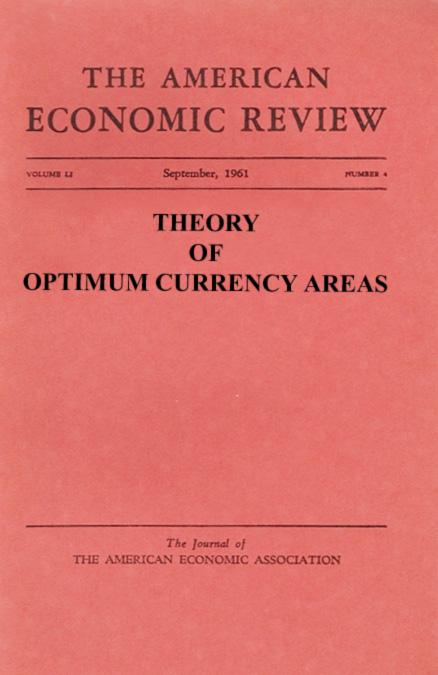
The AER has been going for a hundred years. (Some scholars who sent in papers at AER’s inception are still going through the “revise and resubmit” process.)
To mark the anniversary, a distinguished panel has picked the Top 20 articles published in the last 100 years. Peter Diamond has three articles on the list and Joseph Stiglitz has two. We can now start the debate of what should be on the list. To fully account for the value added, if an article is proposed, the proposer should also identify which article should be knocked off the current list. To get the ball rolling, I propose Shapiro-Stiglitz to replace the Cobb-Douglas production function. A functional form does not deserve a place on this list, even if the form is canonical. Shapiro-Stiglitz actually have an idea, a theory of involuntary unemployment. More broadly, they provide a simple model of the principal agent model under moral hazard with limited liability, a fundamental model.
But to drop the science and get to the nub of the matter: What is a publication in AER actually worth in terms of salary? Bob Margo estimates the impact of AER articles in his contribution to the anniversary volume. In passing, Bob mentions an article which estimates the salary impact of an AER publication. The author Raymond Sauer finds:
“The full return to a 10-AEQ-page article in the top journal is thus estimated to be a 3.8 percent increase in salary.” (AEQ means the article is adjusted for page size to correspond to AER page length.)
Sauer’s article would not survive the “structural estimation” or “instrumental variation” schools of thought. But he does give us an idea of the payoff to learning the magic taught by the wizards and witches at these schools.
Grading still hangs over me but teaching is done. So, I finally had time to read Kiyotaki Moore. It’s been on my pile of papers to read for many, many years. But it rose to the top because, first, my PhD teaching allowed me to finally get to Myerson’s bargaining chapter in his textbook and Abreu-Gul’s bargaining with commitment model and, second, because Eric Maskin recommends it as one of his key papers for understanding the financial crisis. So, some papers in my queue were cleared out and Kiyotaki-Moore leaped over several others.
I see why the paper has over 2000 cites on Google Scholar.
The main propagation mechanism in the model relies on the idea that credit-constrained borrowers borrow against collateral. The greater the value of collateral “land” , the greater the amount they can borrow. So, if for some reason next period’s price of land is high, the greater is the amount the borrower can borrow against his land this period. Suppose there is an unexpected positive shock to the productivity of land. This increases the value of land and hence its price. This capital gain increases borrowing. An increase in the value of land increases economic activity. It also increases demand for land and hence the price of land. This can choke off some demand for land. The more elastic the supply of land, the smaller is the latter dampening effect. So there can be a significant multiplier to a positive shock to technology.
(Why are borrowers constrained in their borrowing by the value of their land and rather than the NPV of their projects? Kiyotaki-Moore rely on a model of debt of Hart and Moore to justify this constraint. While Hart-Moore is also in my pile, I did not finally have time to read it. I did note they have an extremely long Appendix to justify the connection between collateral and borrowing! The main idea in Hart Moore is that an entrepreneur can always walk away from a project and hold it up. As his human capital is vital for the project’s success, he will be wooed back in renegotiation. The Appendix must argue that he captures all the surplus above the liquidation value of the land. Hence, the lender will only be willing to lend up to value of collateral to avoid hold up.)
But how do we get credit cycles? As the price of land rises, the entrepreneurs acquire more land. This increases the price of land. They also accumulate debt. The debt constrains their ability to borrow and eventually demand for land declines and its price falls. A cycle. Notice that this cycle is not generated by shocks to technology or preferences but arises endogenously as land and debt holdings vary over time! I gotta think about this part more….

The forward looking agent forecasts trends in consumer demand, spots market opportunities and readies his organization for a great leap forward. But any decision is plagued with unforeseen contingencies. By necessity, any agent must also be backward looking, putting our fires as they appear. This sucks attention from looking forward and the organization may atrophy and lose its edge.
These two extremes manifest themselves in different ways at different points in an organization’s history. A firm that is just starting out will be forward looking by definition. There is no history, no fires to put out. Either the young firm dies – its products are unpopular – or it succeeds. That’s when the trouble starts. Success also breeds emergencies and crises large and small. Now attention is diverted. A young organization that reaches middle age it may not survive into old age. If optimization of extant decisions is the main activity, there is no time left to prepare for the next wave of technology, consumer demand…etc.
If the organization reaches old age, it is because it has learned to deal with unforeseen contingencies. It has set up frameworks, codes of practice and procedures that can simply be activated when a fire appears. This creates room for forward looking strategy analysis.
To summarize, a young organization is more forward-looking than a middle-aged organization. An old organization may also be more innovative than a middle-aged organization. We do not have a way to rank young and old organization with this bare-bones theory. There are, of course, many other theories. The “replacement effect” is one obvious alternative.
Non-state actors with extreme agendas try to influence state actors. This class overviews a potpourri of models that explore why a player might join a non state organization, the logic of non state actor strategy and the costs and benefits of torture.
Iannaccone has a classic paper on religious sects and their purpose and strategy. It has been applied to terrorism by Eli Berman. Such organizations provide public goods (healthcare, childcare etc) which are non-rival and excludable. They are club goods. And individual who joins such an organization is tempted to free-ride and and use his labor on privately productive secular activities. A religious sect might then prohibit secular activities and will require sect members to wear some kind of uniform to make monitoring easier. Also, a sect would like to admit members who have bad outside options to minimize the free-rider problem. Requiring a sacrifice, a costly signal, can help to identify the ideal member.
There are many theories for the logic of non state actor strategy. The simplest is that terrorists seek to impose large costs on some “occupier” and drive them out. Another is the opposite: terrorists seek to inflame a perceived enemy (a secondary audience). This in turn influences a primary audience whose support is necessary to achieve the non state actor’s ends. This is in effect a three player game where the extremist inflames a primary audience by changing the behavior of a secondary audience. This is only worth doing if the primary audience is suggestible. It might for example signal that the chances for peace are good if only extremism could be ignored.
Finally, what if a potential terrorist is in custody and may have valuable information that can save lives? He might break under torture. A cost-benefit analysis, a favorite of moral philosophers, recommends torture if the value of lives saved is large even though torture is morally reprehensible. But the same cost-benefit calculation subverts the process of torture. If the suspect starts talking, the value of his remaining information outweighs the costs of torture. If he is silent and probably innocent, it recommends stopping. But this undercuts the rationale for torture: the terrorist should stay silent as this is his best hope of escape. But then the value of torture is minimal as information is unlikely to be conceded.
Here are the slides.
“When two dynamite trucks meet on a road wide enough for one, who backs up?” asks Schelling in his classic essay on bargaining. There are multiple equilibria. How can the solution be made determinate?
If one side can make a commitment, Schelling points out a easy solution:
“When one wishes to persuade someone that he would not pay more than $16,000 for a house that is really worth $20,000 to him, what can he do to take advantage of the usually superior credibility of the truth over a false assertion? Answer: make it true…..But suppose the buyer could make an irrevocable and enforceable bet with some third party, duly recorded and certified, according to which he would pay for the house no more than $16,000, or forfeit $5,000.”
But what if both sides can make a commitment? He says:
“Each must now recognize this possibility of stalemate, and take into account the likelihood that the other already has, or will have, signed his own commitment.”
And it is possible there is incomplete information, further complicating the issue.
In this class, I discuss two player bargaining models whether players can commit to demands. If a demand is rejected or joint commitments are incompatible, there is a chance of bargaining breakdown or costly delay till an agreement is reached.
First, I begin with complete information. The classic paper is by Rubinstein and it uses discounting to derive a unique equilibrium. Since, we want to study commitment, I instead followed Myerson’s analysis in his textbook. In his model, if a proposer’s demand is accepted, the game ends but if it is rejected, the game ends with probability p. If the game survives till the next period, the responder in the previous round becomes the proposer. The risk of breakdown acts as a discount factor. The risk of breakdown is a measure of commitment: the higher is p, the higher is the commitment to the demand. Myerson shows there is a unique equilibrium which is a function of p.
Second, suppose that with a small probability one player might be an r-insistent type who demands r and rejects any smaller offers. Then, Myerson shows that even if this player is not the r-insistent type, he can guarantee himself r in any equilibrium. If he demands r repeatedly, the opponent will give up rather than fight forever as he might be facing the r-insistent type. The rational player then knows he can get r eventually by pretending to the the r-insistent type. After a few rounds of haggling, his opponent is forced to give this to him. This solution does not depend on p. Hence, by adding a small probability that a player might be an r-insistent type, we have changed the equilibrium dramatically from the complete information model. In some sense, the player with an r-insistent type has a first-mover advantage. The bound on this player’s payoff varies with r so the equilibrium is not robust in the type that was added to the game.
What happens if both players can commit? Abreu and Gul study this issue. They show that essentially all bargaining games devolve into a war of attrition where rational players either pretend to to be r-insistent types at incompatible demands or reveal their rationality and concede, like in the Myerson game. In equilibrium, the probability that players are r-insistent types must reach one simultaneously. Otherwise, if say it reaches 1 for player 1 first, the rational type of player 2 must still be dropping out after he knows player 1 will not concede. But it is better for player 2 to deviate and give in earlier and get surplus rather than waste time. This idea pins down a property of an endpoint to the war of attrition. And other arguments can then be used to derive the unique equilibrium.
It is surprising the equilibrium is unique: bargaining games and games with incomplete information typically have multiple equilibria. The equilibrium is still sensitive to the r-insistent types. I believe this issue is resolved in later papers by Kambe and Abreu and Pearce. But I did not get to them. Here are my slides

Lagers like Stella Artois are bottom-fermented while classical Belgian beers are top-fermented. Lagers are more transparent and look “cleaner” in a transparent glass. Perhaps because of this, demand shifted to lagers. The share of lager beers in Belgium went from 15% before WW1 to 70% after WWII.
Bottom fermentation requires more equipment to cool the beer during fermentation and maturation. Hence, it gains from greater scale. Greater demand plus cost economies led to the market shifting towards a few large breweries. These set a lower price than smaller breweries and drove them out of business. Add to this the costs of advertising and scale advantages multiply….
For this and and more on Lambics and Abbey beers see Belgian Beers: Where History Meets Globalization
Suppose there are players and each has private information about how tough they are. The two toughness parameters together determine the probability of winning should there be a war. If the parameters are common knowledge, it is possible to avoid war by making a transfer that makes war pointless. By making a transfer, the target has less resources to capture and the challenger has more to lose and an appropriate transfer can create the right balance to avoid war. But if there is incomplete information, a player might start a war.
Is it possible to set up transfers to completely prevent inefficient war? Myerson and Satterthwaite asked this question in a classical model of trade with incomplete information. We can use similar techniques to answer a similar question in a conflict scenario. In other words, we can use the revelation principle and ask whether it is possible to design transfers as a function of reports to guarantee peace in all circumstances. Players’ types – their toughness parameters – directly affect their payoffs only if there is war. Since there is no war in equilibrium, it is impossible to separate out different types and transfers must be constant as a function of reports. The constant payoff each player then receives must be enough to dissuade his toughest type from starting a war. If this is impossible to guarantee for both players’ toughest types simultaneously, there must be war. Here are the slides.

When a pet owner decides to give up a pet for adoption or breed more pets, he is callously ignoring the implications for other potential pets. The pet he gives up for adoption crowds out a home for another animal. The pet exerts a negative externality on other potential pets. The decision-maker – i.e. the pet owner – does not take this externality into account and there is overproduction of pets. Excess pets are euthanized.
When a tomato farmer sells more tomatoes, he is callously ignoring the welfare of other tomato farmers. The tomatoes he sells crowd out a home for other tomatoes. But we think the market for tomatoes in principle works quite well.
Why of your fat cat couch potato not like a tomato? In a new publication, Coate and Knight answer this question. In the tomato market, there is a market price for tomatoes. Each tomato producer is small and his output does not affect the price. But there is a market price for pets and neither buyers nor sellers of pets affect the price. So what’s the big difference?
Tomatoes you are bored with or cannot support financially do not have to be euthanized. Stray tomatoes do not wander the city, scavenging rotten meat from trash cans. Pet euthanasia imposes an external cost that the pet owner does not pay. Stray pets must be caught by public services. There is no easy way to charge the pet owner for these costs. If there were, pets would be like tomatoes. But pet owners can avoid euthanasia fees by dumping unwanted pets as strays. Coate and Knight argue that this “moral hazard” problem makes it impossible to effectively deal with the externality created by pet owners. Hence, there is overproduction of pets.
What is to be done? Taxation of pet ownership is one solution. Subsidies for spaying are another. Dog licenses act as a tax. But cat owners face no government imposed barrier to acquisition of a furry friend. There must be serious overproduction of cats. We all know cats generate more allergies than dogs – another negative externality. This is serious
Obama has made an effort to improve healthcare. Hopefully he or whoever replaces him will take up pet – particularly cat – overpopulation in the next term.
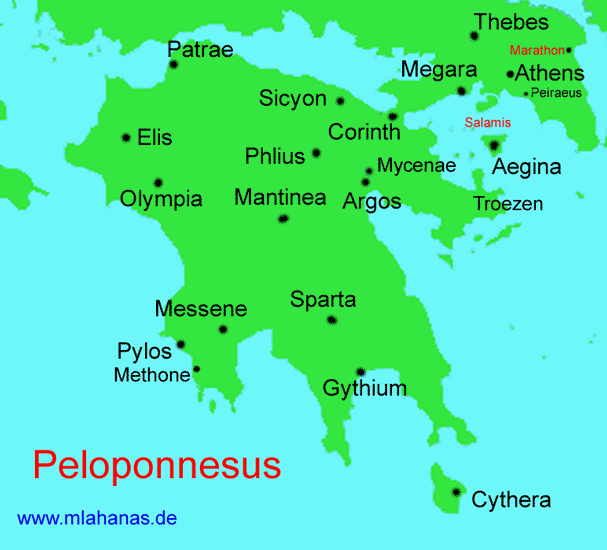
This week I switched to models of conflict where each player puts positive probability on his opponent being a dominant strategy type who is hawkish/aggressive in all circumstances. This possibility increases the incentive of a player to be aggressive if actions are strategic complements and decreases it if actions are strategic substitutes. The idea that fear of an opponent’s motives might drive an otherwise dovish player into aggression comes up in Thucydides (“The growth of Athenian power and the fear this caused in Sparta, made war inevitable.”) and also Hobbes. But both sides might be afraid and this simply escalates the fear logic further. This was most crisply stated by Schelling in his work on the reciprocal fear of surprise attack (“[I]f I go downstairs to investigate a noise at night, with a gun in my hand, and find myself face to face with a burglar who has a gun in his hand, there is a danger of an outcome that neither of us desires. Even if he prefers to leave quietly, and I wish him to, there is a danger that he may think I want to shoot, and shoot first. Worse, there is danger that he may think that I think he wants to shoot. Or he may think that I think he thinks I want to shoot. And so on.”). Similar ideas also crop up in the work of political scientist Robert Jervis.
Two sided incomplete information can generate this kind of effect. It arises in global games and can imply there is a unique equilibrium while there are multiple equilibria in the underlying complete information game. But the theory of global games relies on players’ information being highly correlated. Schelling’s logic does not seem to rely on correlation and we can imagine conflict scenarios where types/information are independent and yet this phenomenon still arises. In this lecture, I use joint work with Tomas Sjöström to identify a common logic for uniqueness that is at work for information structures with positively correlated types or independent types. Our sufficient conditions for uniqueness can be related to conditions that imply uniqueness in models of Bertrand and Cournot competition.
With these models in hand, we have some way of operationalizing Hobbes’ second motive for war, fear. I will use these results and models in future classes when I use them as building blocks to study other issues. Here are the slides.
There is pressure for filibuster reform in the Senate. Passing the threshold of sixty to even hold a vote was hard in the last couple of years when the Democrats had a large majority. It’s going to be near impossible now their ranks are smaller. Changing the rules has a short run benefit – easier to get stuff passed – but a long run cost – the Republicans will use the same rules to pass their legislation when Sarah Palin is President. Taking the long view, the Democrats decided not to go this route.
By the same token, the kind delaying tactics that did not work in the lame duck session are an efficiency loss – they had little real effect on legislation but delayed the Senators taking the kind of long holidays they are used to. Some movement on delaying tactics is mutually beneficial. And so according to the NYT:
“Mr. Reid pledged that he would exercise restraint in using his power to block Republicans from trying to offer amendments on the floor, in exchange for a Republican promise to not try to erect procedural hurdles to bringing bills to the floor.
And in exchange for the Democratic leaders agreeing not to curtail filibusters by means of a simple majority vote, as some Democratic Senators had wanted to do, Senator Mitch McConnell of Kentucky, the Republican leader, said he would refrain from trying that same tactic in two years, should the Republicans gain control of the Senate in the next election.”
I am teaching a new PhD course this year called “Conflict and Cooperation”. The title is broad enough to include almost anything I want to teach. This is an advantage – total freedom! – but also a problem – what should I teach? The course is meant to be about environments with weak property rights where one player can achieve surplus by stealing it and not creating it. To give some structure, I have adopted Hobbes’s theories of conflict to give structure to the lectures. Hobbes says the three sources of conflict are greed, fear and honour. The solution is to have a government or Leviathan which enforces property rights.
Perhaps reputation models à la Kreps-Milgrom-Roberts-Wilson come closest to offering a game theoretic analysis of honour (e.g. altruism in the finitely repeated prisoner’s dilemma). But I will only do these if I get the time as this material is taught in many courses. So, I decided to begin with greed.
I started with the classic guns vs butter dilemma: why produce butter when you can produce guns and steal someone else’s butter? This incentive leads to two kinds of inefficiency: (1) guns are not directly productive and (2) surplus is destroyed in war waged with guns. The second inefficiency might be eliminated via transfers (the Coase Theorem in this setting). This still leaves the first inefficiency which is similar to the underinvestment result in hold-up models in the style of Grossman-Hart-Moore. With incomplete information, there can be inefficient war as well. A weak country has the incentive to pretend to be tough to extract surplus from another. If its bluff is called, there is a costly war. (Next time, I will move this material to a later lecture on asymmetric information and conflict as it does not really fit here.)
These models have bilateral conflict. If there are many players, there is room for coalitions to form, pool guns, and beat up weaker players and steal their wealth. What are stable distributions of wealth? Do they involve a dictator and/or a few superpowers? Are more equitable distributions feasible in this environment? It turns out the answer is “yes” if players are “far-sighted”. If I help a coalition beat up some other players, maybe my former coalition-mates will turn on me next. Knowing this, I should just refuse to join them in their initial foray. This can make equitable distributions of wealth stable.
I am writing up notes and slides as I am writing a book on this topic with Tomas Sjöström. Here are some slides.
My old college friend Arasan Aruliah has been radicalized by the financial crisis. If he were an American, perhaps he would be a member of the Tea Party? But radicalism in the U.K. is different than in the U.S. Arasah has decided to vent his frustrations in cartoon form in a series Ripped-Off Britons in the Guardian and in a theraputic blog. Here is a recent cartoon:

The WSJ Ideas Market blog has a post by Chris Shea about my forthcoming paper with David Lucca (NY Fed) and Tomas Sjöström. (Rutgers) Some excerpts:
Full democracies are unlikely to go to war with one another. That’s axiomatic in political science. Yet a new study offers an important caveat: Limited democracies may, in fact, be even more bellicose than dictatorships…….
The authors end with a twist on President George W. Bush’s contention that “the advance of freedom leads to peace”: “Unfortunately,” they say, “the data suggests that this may not be true for a limited advance of freedom.”
Here is another article in Kellogg Insight about the paper.
As the junior job market rears it ugly head, there are many deep questions: How good are the candidates’ papers? If the papers are so-so, do the candidates show signs of promise and potential for good work in the future? Is there a forgiving, omniscient God? I digress but you get the picture – I have no easy answers for the deep questions. But I do have trite answers for shallow questions.
So, let us turn to “job market meal,” the mating dance that usually ends the visit.
Let us first consider dinner planning. If I am in charge of organizing the visit, I find it is imperative to have my ducks lined up before hand, i.e. get the dinner party and restaurant fixed ahead of the visit. Otherwise, there can be a nightmare scenario where the candidate visit is a disaster, no-one else wants to go to dinner and you are stuck as a silent, unromantic twosome at a pizza joint close to work.
The now planned-ahead restaurant choice is a delicate matter. Like a date, you are sending a signal about how much you care via the restaurant choice. You might like the pizza joint and the very fact you are going to dinner with a spouse and kids at home is a costly signal of your interest. But the people you are interviewing are young and have no knowledge of spouses and kids. Your signal has to be more obvious so you have to go to an (obviously) good restaurant.
There is another dangerous mistake you can make at this step: choosing a restaurant that is too good. This carries a double risk. First, you are sending a confused signal: Is this dinner really signaling your interest in the candidate or in an expensive meal subsidized by your university? Second, and in my experience more pertinently, you are subject to the wonderful but confusing impact of the melting pot that is the American job market for economists. Students from all over the world get into PhD programs at American universities and if their papers are good, they can get a job anywhere. As one of the melty bits in the pot, I can’t help but celebrate this but it does lead to some confusion at the dinner table. Is some hardworking nerd from a land-locked country really going to appreciate the raw seafood at the Temple to Sushi you decide to go to? Chances are that they have been stuck in front of a computer eating toast and processed cheese for the last five years and, before that, they’d never heard of high or low grade tuna.
Play it safe: a good Italian or French restaurant is the best choice.
 Liberal commentators bemoan the demise of the old John McCain they thought they knew and loved. Joe Klein wonders what happened to the guy who originally sponsored the Dream Act to allow children of illegal immigrants to become citizens. Think Progress points out that he is now supporting the tax cuts to the rich he vilified in 2000-2004. What has happened to John McCain? Have his preferences changed?
There is one obvious theory that seems to make his positions consistent: McCain had to run to the right to beat off a primary challenger in Arizona. But, as Joe Klein points out, “he recently won reelection and doesn’t have to pretend to be a troglodyte anymore.” So this theory is flawed.
There is another obvious theory. In this one, you have to identify an outcome a person supports or opposes not just by the policy itself but also by the the other person who supports it. So you have outcomes like “tax policy opposed by Obama,” “tax policy supported by Bush,” “tax policy supported by Obama,” “tax policy opposed by Bush” etc. Then, it is quite consistent for McCain to support a 35% tax on the rich when Bush opposes it but to oppose a 35% tax on the rich when Obama proposes it. Essentially, if McCain loses to someone in a Presidential election or primary he opposes their policies whatever they are.
A sophisticated model along these lines is offered by Gul and Pesendorfer. It allows one person’s preferences to depend on the “type” of the other person, e.g. is the opponent selfish or generous? In principle, this model allows us to determine whether a person is spiteful using choice data. McCain certainly has some behavior that is consistent with spitefulness. Is he ever generous? We would need to know his choices when facing someone he beat in a contest or someone he has never played. Or is he just plain mean? Joe Klein leans towards spite based on the available data:
“He’s a bitter man now, who can barely tolerate the fact that he lost to Barack Obama. But he lost for an obvious reason: his campaign proved him to be puerile and feckless, a politician who panicked when the heat was on during the financial collapse, a trigger-happy gambler who chose an incompetent for his vice president. He has made quite a show ever since of demonstrating his petulance and lack of grace.
What a guy.”
If choice with interdependent preferences can be utilized in empirical/experimental analyses, we can investigate the soul of homo economicus using the revealed preference paradigm.

In a perfectly competitive market, the price of a product is given by its minimum average total cost of production. The lower this is, the lower the price. Technological advances have reduced the costs of operating a fridge, air conditioner, washing machine etc… etc…. Consumers will buy more of them and consume more electricity and produce more greenhouse gases. How much more depends on the elasticity of demand. If elasticity is high, energy consumption may go up so fast that it results in greater resource depletion with greater energy efficiency. This is basic economics and was known in the nineteenth century. It is known as the Jevons paradox and is the topic on an article in the New Yorker (subscription required):
In 1865, a twenty-nine-year-old Englishman named William Stanley Jevons published a book, “The Coal Question,” in which he argued that the bonanza couldn’t last. Britain’s affluence and global hegemony, he wrote, depended on its endowment of coal, which the country was rapidly depleting. He added that such an outcome could not be delayed through increased “economy” in the use of coal—what we refer to today as energy efficiency. He concluded, in italics, “It is wholly a confusion of ideas to suppose that the economical use of fuel is equivalent to a diminished consumption. The very contrary is the truth.”
Jevons is now known more as a utilitarian and one of the founders of mathematical economics. Who knew he combined the practical with the theoretical?
One activity can equally be done by Division A or Division B of a firm but, for historical reasons, Division A has control of it right now. This gives the managers of Division A lots of power to hire and they like having a little empire. But the CEO comes up with a plan: Since both divisions are in theory up to the job, have them compete for the activity.
The best way to do this is pretty obvious: If Division A screws up, give the job to Division B. But of Division A does a good job let them keep it. This gives Division A good incentives to work hard to do a good job.
In practice it is hard to measure the quality of output so it is hard to implement this simple scheme. Quality is evaluated by subjective judgements and rhetorical arguments. Perversely, the better the job Division A is doing, the more incentive Division B has to try to steal the job. This is because a job well done generates lots of slots. If Division A is doing a bad job, the activity does not look worth stealing.
So, in practice, having the divisions compete for the activity can lead to destruction of incentives. Better to give one division the property right over the activity and intervene only when outcomes are objectively poor.
We dress like students, we dress like housewives
or in a suit and a tie
I changed my hairstyle so many times now
don’t know what I look like!
Life during Wartime, Talking Heads
Mr C. is the new C.E.O. of your firm, Firm C. He was head of operations at one of your competitors Firm A. He was passed over for promotion there and had to exit to get to the C Suite. You wonder about the wisdom of your Board: Why would they choose someone who rejected for the top job by their own company? You subscribe the “Better the Devil you know, than the Devil you don’t” principle. If your firm appoints an internal person to the top job, at least you know their flaws and can adapt to them. This principle also applies at Firm A. So, if they rejected the Devil they know, he must be a really terrible Devil or, to put it in tamer economic terms, a “lemon.”
But you are also aware of the counter argument: Real change can only be achieved by an outsider. Mr C said some smart things in the interview process and so you are happy to give him the benefit of the doubt. You are expecting Mr C. to define a mission for Firm C, a mission that everyone can sign on to. Of course, to persuade everyone to work hard on the vision it has to be a “common value” – something everyone agrees is good – not a “private value” – something only a subgroup agrees is good. In this regard, Mr. C surprises you – he makes a big play that Operations are the most important thing in a successful firm. “Look at H.P. and Amazon,” he says. “They don’t actually make anything, just move stuff around efficiently and/or put in together from parts they buy from other firms. We need innovation in Operations not fundamental innovation in our product line.”
You are shocked. Your firm has R and D Department that has produced amazing, fundamental innovations. Innovative ability is sprinkled liberally throughout your firm in – it is famous for it. It is a core strength of Firm C. Why would anyone want to destroy that and focus on Operations? What should do you do? In times of trouble, you have a bible you turn to – Exit, Voice and Loyalty by Albert Hirshman
Should you give voice to your concerns? The last CEO ignored you and the new CEO might give you more attention so you had thought that you might talk to him. But your first impressions are bad and something you might say might be misinterpreted and lead to the opposite conclusion in the mind of the new CEO. Talking is dangerous anyway. You might be identified as a troublemaker and given lots of terrible work to do. Better to keep quiet and blend in with the crowd.
Is loyalty enough to keep you working hard anyway? Your firm is not a non-profit and, given the CEO plans to quash innovation, it is basically going to produce junk. Why should anyone be loyal to that?
You are drawn inexorably to Hirshman’s last piece of advice: exit. This is hard during the Great Recession – there are few jobs going around. You will be joined by all those who can exit from your sinking ship C so you have to move fast….
As junior recruiting approaches, we cannot help but speculate on the optimal way to compare apples to oranges – candidates across different fields (e.g. micro vs macro) and across universities. I speculated a while ago that a “best athlete” recruiting system across fields is prone to gaming. Each field might simply claim its candidate is great. To stop that happening, you might have to live with having slots allocated to fields and/or rotating slots over time.
It turns out that Yeon-Koo Che, Wouter Dessein and Navin Kartik have thought about something much more subtle along these lines in their paper “Pandering to Persuade“. They consider both comparisons across fields and across candidates from different universities. I’m going to give a rough synopsis of the paper.
Suppose the recruiting committee in an economics department is deciding whether to hire a theorist or a labor economist. There is only one labor economist candidate and her quality is known. There are two theorists, one from University A and one from University B. The recruiting committee would like to hire a theorist if and only if his quality is higher than the labor economist’s. Also, the recruiting committee and everyone else believes that, on average, candidates from University A are better than those from University B. But of course this is only true on average. Luckily some theorists can read the paper and help fine tune the committee’s assessment of the theory candidates. They share the committee’s interest in hiring the best theorist but they are quite shallow and hence uninterested in research outside their own field. In particular, theorists do not care for labor economics and always prefer a theorist at the end of the day.
So, the recruiting committee must listen to the theorists’ recommendation with care. First, the theorists have huge incentives to exaggerate the quality of their favored candidate if this carries influence with the committee. Hence, quality evaluations cannot be trusted. All the theorists can credibly do is say which candidate is better but not by how much. But there is a further problem: if the theorists say candidate B is better, given the committee’s prior, they might think better of candidate B and yet prefer to hire the labor economist! Being theorists, the sender(s) can do backward induction and they know the difficulty with their strategy if it is too honest. The solution is obvious to the theorists: extol the virtues of candidate A even when candidate B is a little better. Hence, in equilibrium, the candidate from the ex ante better university gets favored. But candidate B still has a shot: if they are sufficiently good, the theorists still recommend them. The committee may with some probability still go with the labor economist so it is risky to make this recommendation. But if candidate B is sufficiently good, the theorists may want to run this risk rather than push the favored candidate A. I refer you to the paper for the full equilibrium(a) but, as you can see, the paper is fun and interesting.
There are some extensions considered. In one, the authors study delegation to the theorists. Sometimes the department will lose out on a good labor economist but at least there is no incentive for the theorists to select the worst candidate. This is the giving slots to fields solution I wondered about and it is derived in this elegant model.
Advice before tenure is some variation around a cliché: Publish or Perish! Some universities may assess impact or make their own subjective evaluation of your work, believing that they have the taste and scientific expertise to do so. Others may have a more quantitative approach, counting papers, ranking journals and adding up citations. But if you haven’t published, basically you are going to perish.
Suppose you get tenure. You overcome your feeling of ennui and the “Is this all there is?” existential crisis. You accept the fact that you are probably going to be stuck with the same people for another 30-35 years. You publish the stuff that was in the pipeline when you came up for tenure. What do you do next?
When I have personal dilemmas of this sort, I try to find some wise women to help me out. For the post-tenure dilemma, I turned to the Committee on the Status of Women in the Economics Profession (CSWEP). Their Winter 2009 issue has lots of useful articles. This is several years after my tenure but it turns out I was instinctively following much of the advice anyway. For example, Bob Hall says in his article:
“Now that you have tenure, the number of papers you produce is amazingly irrelevant. One good paper a year
would put you at the very top of productivity. Consequently, you should generally spend your research time on the most
promising of the projects you are working on. A related principle is that you should try to maintain a lot of slack in
your time allocation, so that if a great research idea pops into your head or a great opportunity comes along in another
way—an offer of collaboration or access to a data set—you can exploit it quickly.”
He adds:
Research shows that good ideas are more likely to spring into your head when it is fuzzy and relaxed, not when you
are focused and concentrating, with caffeine at its maximum dose. Another principle is that if you get away from
a problem for a bit—say by taking a vacation or spending a weekend with your family—the answer may come to you
easily when you return to work on the problem.
Finally, Hall becomes quite practical:
To sum up, the big danger for an economist at your career stage is to get involved in so many seemingly meritorious
activities on campus, at journals, in Washington, at conferences, writing textbooks, serving clients, and the like, that
your life becomes crowded and you feel hassled. Worst of all, you find yourself starved of time for creative research. When
this happens, take out a piece of paper and write down all of the activities that fill your work day and decide which ones
to cross off. This sounds like trite self-help book advice, but it works.
His whole article is here and is definitely worth a read. One thing I would say he misses: Hall is at Stanford, a top research university. Perhaps, universities below that hallowed standard are still quantity oriented as they cannot judge quality – journalism or the endless re-labeling of the same idea again and again might be mistaken for fundamental research and lead to a pay rise or internal status. You might still just ignore that and go with Hall’s advice.
The blog is definitely helping both Jeff and me stay fuzzy and relaxed, as you can tell from our posts. But I have to sign off now, go make a list and cross some other things off….
We have a new guest-blogger: Roger Myerson.
Roger is a game theorist but his work is known to everyone – theorist or otherwise – who has done graduate work in economics. If an economist from the late nineteenth century, like Edgeworth, or early twentieth century, like Marshall, wakes up and asks, “What’s new in economics since my time?”, I guess one answer is, “Information Economics”.
Is the investment bank trying to sell me a security that it is trying to dump or is it a good investment? Is a bank’s employee screening borrowers carefully before he makes mortgage loans? Does the insurance company have enough reserves to cover its policies if many of them go bad at the same time? All these topical situations are characterized by asymmetric information: One party knows some information or is taking an action that is not observable to a trading partner.
While the classical economists certainly discussed information, they did not think about it systematically. At the very least, we have to get into the nitty-gritty of how an economic agent’s allocation varies with his actions and his information to study the impact of asymmetric information. And perfect competition with its focus on prices and quantities is not a natural paradigm for studying these kind of issues. But if we open the Pandora’s Box of production and exchange to study allocation systems broader than perfect competition, how are we even going to be able to sort through the infinite possibilities that appear? And how are we going to determine the best way to deal with the constraints imposed by asymmetric information?
These questions were answered by the field of mechanism design to which Roger Myerson made major contributions. If an allocation of resources is achievable by any allocation system (or mechanism), then it can be achieved by a “direct revelation game” DRG where agents are given the incentive to report their information honestly, told actions to take and then given the incentives to follow orders. To get an agent to tell you his information, you may have to pay him “information rent”. To get an agent to take an action, you may have to pay him a kind of bonus for performing well, “an efficiency wage”. But these payments are unavoidable – if you have to pay them in a DRG, you have to pay them (or more!) in any other mechanism. All this is quite abstract, but it has practical applications. Roger used these techniques to show that the kind of simple auctions we see in the real world in fact maximize expected profits for the seller in certain circumstances, even though they leave information rents to the winner. These rents must be paid in a DRG and hence if an auction leaves exactly these rents to the buyers, the seller cannot do any better.
For this work and more, he won the Nobel Memorial Prize in Economics in 2007 with Leo Hurwicz and Eric Maskin. Recently, Jeff mentioned that Roger and Mark Satterthwaite should get a second Nobel for the Myerson-Satterthwaite Theorem which identifies environments where it is impossible to achieve efficient allocations because agents have to be paid information rents to reveal their information honestly. This work also uses the framework and DRG I have described above.
Over time, Roger has become more of an “applied theorist”. That is a fuzzy term that means different things to different people. To me, it means that a researcher begins by looking at an issue in the world and writes down a model to understand it and say something interesting about it. Roger now thinks about how to build a system of government from scratch or about the causes of the financial crisis. How do we make sure leaders and their henchmen behave themselves and don’t try to extract more than minimum rents? How can incentives of investment advisors generate credit cycles?
These questions are important and obviously motivated by political and economic events. The first question belongs to “political economy” and hints at Roger’s interests in political science. More broadly, Roger is now interested in all sorts of policy questions, in economics and domestic and foreign policy.
Jeff and I are very happy to have him as a guest blogger. We hope he finds it easy and fun and the blog provides him with a path to get his analyses and opinions into the public domain. We hope he becomes a permanent member of the blog. So, if among the posts about masturbation and Charlie Sheen’s marital problems you find a post about “What should be done in Afghanistan”, you’ll know who wrote it.
Welcome Roger!
If a tree falls in a forest and no one is around to hear it, does it make a sound?
This old philosophical conundrum can be mapped into the dilemma facing the aging academic:
If I publish a paper and nobody reads it, teaches it or cites it, can it ever be a truly great paper?
As with all questions with no Platonic certitude, economists say: Let the market speak and tell us the answer.
Glenn Ellison has studied a more serious version of my question in his paper “How Does the Market Use Citation Data? The Hirsch Index in Economics.” The Hirsch index for an author is the highest number h such that the author has h papers with at least h citations. So, an index of 5 means you have five papers with at least five citations and that you do not have six papers with at least six citations etc.
Glenn points out that the Hirsch index doesn’t do a great job at ranking economists. Nobel prize winner Roger Myerson’s Hirsch index is a mere 32. But he has a few papers with over a thousand citations. Seminal papers in economics tend to get a huge number of citations but most only get a few. So, the plain vanilla Hirsch index needs to be re-evaluated.
Glenn turns to the market to guide his measure. He studies an index of the form h is the highest number such that the author has at least h papers with at least a times h to the power b citations. The plain vanilla Hirsch index sets a=b=1. Glenn estimates a and b in various ways. In one method, he looks at the NRC department rankings and finds the variables a and b that best predict the NRC rank of a (young) economist’s department. To cut a long story short, a=5 and b=2 come out as the best predictors. With this estimation in hand, we can perform various comparisons – Which fields are highly cited? Which economists are highly cited? Etc..
Here are some tasty morsels of information. International finance, trade and behavioral economics are highly cited fields (Table 6). Micro theory and cross-sectional econometrics are the worst and IO does not do too well either. These facts mean Yale and NU, which are strong in these three areas, are under-cited economics departments. But basically one gets the picture that an economists citations are closely connected to the rank of the university where s/he is employed.
Ranking young economists, it is pretty obvious who is going to come out on top: Daron Acemoglu with an index of 7.84 (Table 7). This means Daron has 7.84 papers with roughly 300 citations. Ed Glaeser and Chad Jones are close behind. Once you adjust by field, more theorists start to rank highly: Glenn, Ilya Segal, Stephen Morris and Susan Athey pop up. Also, my friend Aviv Nevo gets a shout out as an underplaced guy.
A few comments:
Most of these people are tenured well before their citations go crazy. Expert opinion not data-mining leads to their tenure. This tells you how well expert opinion predicts citations. Also, to the extent that citations take time, expert opinion will always play a role in tenure decisions. There is a difference between external opinion and internal opinion. The same few people always get asked to write letters and they will do a good job. But internal opinions may be more noisy and depend on the quality of the department. Then, Glenn’s field-adjusted citation measure gives you some idea of a candidate’s quality and might be a valuable input into the tenure decision.
Finally, there are citations and citations. A paper getting regular cites in top journals is better than a paper getting cites in lower tier journals. This can be dealt with by improving the citation index.
At another extreme, some papers may be journalistic, not academic, and then their citations mean less. For example, Malcom Gladwell gets high citations for the Tipping Point but he did not do any of the original scientific research on which his book is based. Of course he writes wonderfully and comes up with amazing examples and he is clearly an intellectual. I bet Harvard would love to have him an as an adjunct professor but they will not give him a tenured professorship.
Despite these caveats, the generalized Hirsch index is an interesting input for academic decision-making.
 Cheap Talk