
You are currently browsing the monthly archive for May 2011.
A buyer and a seller negotiating a sale price. The buyer has some privately known value and the seller has some privately known cost and with positive probability there are gains from trade but with positive probability the seller’s cost exceeds the buyers value. (So this is the Myerson-Satterthwaite setup.)
Do three treatments.
- The experimenter fixes a price in advance and the buyer and seller can only accept or reject that price. Trade occurs if and only if they both accept.
- The seller makes a take it or leave it offer.
- The parties can freely negotiate and they trade if and only if they agree on a price.
Theoretically there is no clear ranking of these three mechanisms in terms of their efficiency (the total gains from trade realized.) In practice the first mechanism clearly sacrifices some efficiency in return for simplicity and transparency. If the price is set right the first mechanism would outperform the second in terms of efficiency due to a basic market power effect. In principle the third treatment could allow the parties to find the most efficient mechanism, but it would also allow them to negotiate their way to something highly inefficient.
A conjecture would be that with a well-chosen price the first mechanism would be the most efficient in practice. That would be an interesting finding.
A variation would be to do something similar but in a public goods setting. We would again compare simple but rigid mechanisms with mechanisms that allow for more strategic behavior. For example, a version of mechanism #1 would be one in which each individual was asked to contribute an equal share of the cost and the project succeeds if and only if all agree to their contributions. Mechanism #3 would allow arbitrary negotation with the only requirement be that the total contribution exceeds the cost of the project.
In the public goods setting I would conjecture that the opposite force is at work. The scope for additional strategizing (seeding, cajoling, guilt-tripping, etc) would improve efficiency.
Anybody know if anything like these experiments have been done?
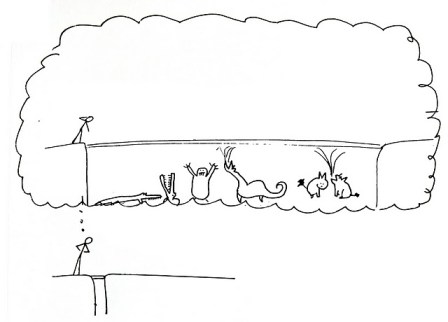
Its a recent development that economists are turning to neuroscience to inform and enrich economic theory. One controversial aspect is the potential use of neuroscience data to draw conclusions about welfare that go beyond traditional revealed preference. It is nicely summarized by this quote from Camerer, Lowenstein, and Prelec.
The foundations of economic theory were constructed assuming that details about the functioning of the brain’s black box would not be known. This pessimism was expressed by William Jevons in 1871:
I hesitate to say that men will ever have the means of measuring directly the feelings of the human heart. It is from the quantitative effects of the feelings that we must estimate their comparative amounts.
Since feelings were meant to predict behavior but could only be assessed from behavior, economists realized that, without direct measurement, feelings were useless intervening constructs. In the 1940s, the concepts of ordinal utility and revealed preference eliminated the superfluous inter- mediate step of positing immeasurable feelings. Revealed preference theory simply equates unobserved preferences with observed choices…
But now neuroscience has proved Jevons’s pessimistic prediction wrong; the study of the brain and nervous system is beginning to allow direct measurement of thoughts and feelings.
There are skeptics, I don’t count myself as one of them. I expect that we will learn from neuroscience and economics will benefit. But, I think it is helpful to explore the boundaries and I have a little thought experiment that I think sheds some light.
Imagine a neuroscientist emerges from his lab with a theory of what makes people happy. This theory is based on measuring activity in the brain and correlating it with measures of happiness and then repeated experiments studying how different activities affect happiness. For the purposes of this thought experiment be as generous as you wish to the neuroscientist, assume he has gone as far as you think is possible in measuring thoughts and feelings and their causes.
Now the neuroscientist approaches his first new patient and explains to him how to change his behavior in order to achieve the optimum level of well-being according to his theory, and asks the patient to give it a try. After a month of trying it out, imagine that the patient comes back and says “Doctor, I did everything you prescribed to the letter for one whole month. But, with all due respect, I would prefer to just go back to doing what I was doing before.”
Ask yourself if there is any circumstance, including any imaginable level of neuroscientific sophistication, under which after the patient tries and rejects the neuroscientist’s theory, you would accept a policy which over-rode the patient’s wishes and imposed upon him the lifestyle that the neuroscientist says is good for him.
If there is no circumstance then I claim you are fundamentally a revealed preference adherent. Because the example (again, I am asking you to be as charitable as you can be to the neuroscientist) presents the strongest possible case for including non-choice data into welfare considerations. We are allowing the patient to experience what the neuroscientist’s theory asserts to be his greatest possible state of well-being and even after experiencing that he is choosing not to experience it any more. If you insist that he has that freedom then you are deferring to his revealed preference over his “true” welfare.
That’s not to say that you must reject neuroscience as being valuable for welfare. Indeed it may be that when the patient goes his own way he does voluntarily incorporate some of what he learned. And so, even by a revealed preference standard could say that neuroscience has made him better off. But we can clearly bound its contribution. Neuroscience can make you better off only insofar as it can provide you with new information that you are free to use or reject as you prefer.
Drawing: Anxiety or Imagination from www.f1me.net
Hamlet: Do you see yonder cloud that’s almost in the shape of a camel?
Polonius: By the mass, and ’tis like a camel, indeed.
Hamlet: Methinks it is like a weasel.
Polonius: It is backed like a weasel.
Hamlet: Or like a whale? Polonius: Very like a whale.-William Shakespeare, Hamlet, Act 3, Scene 2
For most of your career, you have toiled away getting bonuses, stock options and the like. Your CEO believes in pay for performance and the data says you have performed so you have been paid. You are so successful that promotion beckons – the CEO appoints you to a senior position, advising her on key investments your firm must make to expand. She has her eye on building a new factory in Shanghai and she asks you to look into it. The investment might be good or bad. Your hard work collecting data on potential demand and costs will help to inform the decision. But there is a key difference. In your old job, your hard work led to higher measurable profit and you were paid for performance. In your new job, information acquisition might as well lead to a signal that the investment is bad as to signal that it is good. In other words, a bad signal does not signal that you did not collect information while bad performance is your old job was a signal that you were not working hard. How can the CEO reward pay for performance in your new job?
Since there is no objective yardstick, the CEO must rely on a subjective performance measure. Your pay will depend on a comparison of your report with the CEO’s own signal. The problem arises if you get a noisy signal of the CEO signal. Then you have a noisy assessment of what she believes and hence a noisy signal of how your report will be judged and hence renumerated. In equilibrium, you will condition your report not only on your signal but also on your signal of the CEO’s signal. You are a “yes man”. The yes man phenomenon arises not from a desire to conform but from a desire to be paid! Prendergast uses this idea as a building block to study many other topics including incentives in teams. The greater the level of joint decision-making, the problematic is the yes man effect. He points out that if the CEO asks you to back up your opinion with arguments and facts, this mitigates the yes man effect. Plus he has the great quote above at the start of his paper.
The daring raid on Osama Bin Laden’s Pakistani hideout has deeply embarrassed the Pakistani military and secret service ISI. American helicopters were able to fly in undetected, kill the world’s most wanted man and leave with his body. We might speculate about the consequences for Al Qaeda and the possible acceleration of withdrawal of American troops from Afghanistan. Instead, I thought I would talk about the implication of the American attack on Pakistan.
First, if Navy Seals were able to fly in and steal Osama Bin Laden, might they be able to steal Pakistan’s nuclear materials? A much more difficult and perhaps impossible enterprise with weapons at different locations, some of them mobile. But the Abottabad adventure was highly improbable too. Therefore, one result of the death of OBL is that the Pakistanis will guard their nuclear weapons with more diligence. This is good for the rest of the world as it reduces the chances of a WMD falling into the hands of extremists. It is bad to the extent that the rest of the world (i.e. the US!) has plans to capture Pakistani WMDs in some emergency scenario.
Second, the Pakistani military does not come out of this incident looking good. Either they are incompetent, unknowingly allowing OBL to live in an army town, or they are complicit, deliberately harboring a terrorist where he might be least likely to be found. In either scenario, Pakistan might think that the American action emboldens India. India now has cover to adopt a more aggressive stance against Pakistan. This in turn implies that Pakistan might adopt a more aggressive stance itself to counteract any reputational fallout from its perceived ineptitude. Some kind of cross-border incident in Kashmir is an obvious move for Pakistan to engineer. There is some distance between Pakistani politicians and the military and some kind of “confidence-building” move by India might help to forestall any increase in tension. Such a move unfortunately is politically difficult given the huge suspicion of the Pakistani military and ISI following on the heels of the discovery of OBL living safely in Abottabad.
Kobe Bryant was recently fined $100,000 for making a homophobic comment to a referee. Ryan O’Hanlon writing for The Good Men Project blog puts it into perspective:
- It’s half as bad as conducting improper pre-draft workouts.
- It’s twice as bad as saying you want to leave the NBA and go home.
- It’s just as bad as talking about the collective bargaining agreement.
- It’s twice as bad as saying one of your players used to smoke too much weed.
- It’s just as bad as writing a letter in Comic Sans about a former player.
- It’s just as bad as saying you want to sign the best player in the NBA.
- It’s four times as bad as throwing a towel to distract a guy when he’s shooting free throws.
- It’s four times as bad as kicking a water bottle.
- It’s 10 times as bad as standing in front of your bench for an extended period of time.
- It’s 10 times as bad as pretending to be shot by a guy who once brought a gun into a locker room.
- It’s 13.33 times as bad as tweeting during a game.
- It’s five times as bad as throwing a ball into the stands.
- It’s four times as bad as throwing a towel into the stands.
- It’s twice as bad as lying about smelling like weed and having women in a hotel room during the rookie orientation program.
- It’s one-fifth as bad as snowboarding.
That’s based on a comparison of the fines that the various misdeeds earned. The “n times as bad” is the natural interpretation of the fines since we are used to thinking of penalties as being chosen to fit the crime. But NBA justice needn’t conform to our usual intuitions because this is an employer/employee relationship governed by actual contract, not just social contract. We could try to think of these fines as part of the solution to a moral hazard problem. Independent of how “bad” the behaviors are, there are some that the NBA wants to discourage and fines are chosen in order to get the incentives right.
But that’s a problematic interpretation too. From the moral hazard perspective the optimal fine for many of these would be infinite. Any finite fine is essentially a license to behave badly as long as the player has a strong enough desire to do so. Strong enough to outweigh the cost of the fine. You can’t throw a towel to distract a guy when he’s shooting free throws unless its so important to you that you are willing to pay $250,000 for the privilege.
You can rescue moral hazard as an explanation in some cases because if there is imperfect monitoring then the optimal fine will have to be finite. Because with imperfect monitoring the fine cannot be a perfect deterrent. For example it may not possible to detect with certainty that you were lying about smelling like weed and having women in a hotel room during the rookie orientation program. If so then the false positives will have to be penalized. And when the fine will be paid with positive probability even with players on their best behavior you are now trading off incentives vs. risk exposure.
But the imperfect monitoring story can’t explain why Comic Sans doesn’t get an infinite fine, purifying the game of that transgression once and for all. Or tweeting, or snowboarding or most of the others as well.

It could be that the NBA knows that egregious fines can be contested in court or trigger some other labor dispute. This would effectively put a cap on fines at just the level where it is not worth the player’s time and effort to dispute it. But that doesn’t explain why the fines are not all pegged at that cap. It could be that the likelihood that a fine of a given magnitude survives such a challenge depends on the public perception of the crime . That could explain some of the differences but not many. Why is the fine for saying you want to leave the NBA larger than the fine for throwing a ball into the stands?
Once we’ve dispensed with those theories it just might be that the NBA recognizes that players simply want to behave badly sometimes. Without that outlet something else is going to give. Poor performance perhaps or just an eventual Dennis Rodman. The NBA understands that a fine is a price. And with the players having so many ways of acting out to choose from, the NBA can use relative prices to steer them to the efficient frontier. Instead of kicking a water bottle, why not get your frustrations out by sending 3 1/2 tweets during the game? Instead of saying that one of your players smokes too much weed, go ahead and indulge your urge to stand out in front of the bench for an extended period of time. You can do it for 5 times as long as the last guy or even stand 5 times farther out.
Not surprisingly, all of these choices start to look like real bargains compared to snowboarding and impoper pre-draft workouts.
Nonsense?
For Shmanske, it’s all about defining what counts as 100% effort. Let’s say “100%” is the maximum amount of effort that can be consistently sustained. With this benchmark, it’s obviously possible to give less than 100%. But it’s also possible to give more. All you have to do is put forth an effort that can only be sustained inconsistently, for short periods of time. In other words, you’re overclocking.
And in fact, based on the numbers, NBA players pull greater-than-100-percent off relatively frequently, putting forth more effort in short bursts than they can keep up over a longer period. And giving greater than 100% can reduce your ability to subsequently and consistently give 100%. You overdraw your account, and don’t have anything left.
Here is the underlying paper. <Painfully repressing the theorist’s impulse to redefine the domain to paths of effort rather than flow efforts, thus restoring the spiritually correct meaning of 100%>
Cap curl: Tim Carmody guest blogging at kottke.org.

As the UK votes on voting, a Guardian article explains:
A theorem (proved by Allan Gibbard and Mark Satterthwaite) tells us about elections designed to find a single winner, as is the case when a constituency elects its MP. The theorem says that, if there are three or more candidates, any voting system which is not a dictatorship and which allows the possibility of any candidate winning, is susceptible to tactical voting (where voters have an incentive to vote in a way that doesn’t reflect their personal preferences).
You can follow the list here, including Tom Hubbard, David Besanko, Eran Shmaya, and Josh Rauh. No Sandeep yet.

Or is it chronostasis?
Real luxury is now the ability to stop time. This week Luc Perramond, chief executive of Hermes’s watch division, presented the “temps suspendu” (suspended time) model, starting at 18,000 Swiss francs, which stops time at the press of a button and brings it back again.
For 240,000 Swiss francs you can pick up an Hublot watch whose time can be slowed or sped up and another which is all black, making it difficult to tell the time at all.
That luxury can set you back upwards of 15,000 Swiss francs.
“The value of a watch is not to give you time,” Hublot Chief Executive Jean-Claude Biver told Reuters.
“Any five dollar watch can do that. What we are offering is the ability for example to stop time or make it disappear… Time is a prison and people want to get out of it sometimes.”
In case you might still want to know whether it is day or night you can always wear this one on your other wrist.
(via Gizmodo)
There is a study by some economists and statisticans on the correlation between the price of a wine and ratings in blind tastings by tasters who are not informed of the price. The headline result in the paper is that higher priced wines don’t get higher ratings. If anything they get lower ratings. It is typically used in the first paragraph of blog posts to set up various theories about how people use price information to tell themselves what they should and shouldn’t like. (For example, here’s Jonah Lehrer.)
But why should we expect higher priced wine to get higher ratings in tastings? Suppose there are 100 different styles of wine and for every different style there is a group that likes that style and only that style. There will be a lot of variation in the price of different styles because the price will depend on the supply of that style and the size of the group that likes that style. Now ask a person to taste a randomly selected wine and rate it. There will be no correlation between price and ratings.
There are many styles of cheese with different prices. Would we expect the price of cheese to predict ratings in blind tastings?
Here’s another variation on the same idea. Suppose there are just two styles of wine, subtle and not-so-subtle. Some people appreciate the subtlety but most don’t. Suppose that the supply of subtle wine is lower so that its price is higher. Then again a study like this will produce an overall negative correlation between price and ratings.
And indeed if you read past page 3 of the paper you see that an effect like this is in the data.
Our data also indicates that experts, unlike non-experts, on average assign as high – or higher – ratings to more expensive wines. The coefficient on the expert*price interaction term is positive and highly statistically significant. The price coefficient for non-experts is negative, and about the same size as in the baseline model. The net coefficient on price for experts is the sum of these two coefficients. It is positive and marginally statistically significant.
The linear estimator offers an interpretation of these effects. In terms of a 100 point scale (such as that used by Wine Spectator), the extended model predicts that for a wine that costs ten times more than another wine, non-experts will on average assign an overall rating that is about four points lower, whereas experts will assign an overall rating that is about seven points higher.
When I need career advice, I turn to the newsletter of the Committee on the Status of Women in the Economics Profession. How should your research strategy change after tenure? Bob Hall has a great article in a recent newsletter and I mentioned it in a previous post.
Next up: What is the AER looking for when it publishes paper? Who better than recent Editor Robert Moffitt to tell us in the Spring 2011 issue (yet to be uploaded on the CSWEP website).
Here are some key points Moffitt makes:
1. You always need to think carefully about the journal you submit to, and you need to research the kinds of papers that have been published there; whether the journal seems to be open to your type of work; who the editor is and what his or her orientation is; and who the associate editors are, because they are likely to be referees for your paper.
2. Now let me say a few things about the all-important question of what editors look for (aside from, to repeat,strong content). I will list three characteristics: (1) the importance of the question and of the main results; (2) the clarity, organization, and length of the paper; and (3) its degree of novelty in either method or data. 3. Editors always read the introduction to a paper first to see what the paper is about and to make a judgment about the importance of the question and how interesting the findings are….. One of the implications of this fact is that you should work very hard on your introduction. The introduction is absolutely key to a paper’s success. You have to grab the attention of the editor and the referees. You have to be a good “salesman” for your work. It has to be well-written, succinct, and to the point (as an editor, I have always disliked long, windy introductions that explain in exhausting detail the background literature, what the paper does, etc.—I just want a simple summary). You should expect to write and rewrite your introduction repeatedly. Many papers get sent back to the authors without refereeing right at this stage—the question does not seem that important for the journal they edit.
4. Novelty in method or data is particularly important at the top journals, where novelty is given more weight than at lower-ranked ones. Nevertheless, it gets positive weight at all journals. If a paper has this kind of contribution, it needs to be emphasized in the introduction and should be one of the selling points of the paper.
5. I should also say a word about citations. As an editor, I was always annoyed if a paper was coming out of a fairly large literature yet the citation list was minimal. That made me think that the author was playing games and citing only people the author thought would be friendly to the paper. You should never play games like that, because the editor will often notice that some important papers aren’t cited and will immediately send the paper to one of the authors of such papers to referee.
6. Most papers are rejected, even those authored by the top economists in the profession..One rule I have is, (almost) never, never complain about a decision. Most rejections are made not just on the basis of the factual objections of the referees, but by their “feeling” about the paper as well as the editor’s.
The sources in this report say yes. These reporters look again and conclude no. I don’t believe any of them. The basic fact is that we have no good data on the costs and benefits of torture and we never will.
Once you have decided whether you or not you believe the practitioner/advocates of torture when they say that torture gets results then these stories contain no new information, and here’s why: all of the information comes from them. There is no independent source.
If you already believed that torture works then you came to that belief because they told you and today they are just telling you the same thing again. On the other hand, if you didn’t believe it that’s because you don’t trust them when they say it works and today you are just hearing another ex-post rationalization by people with dirty hands.
In tennis, a server should win a larger percentage of second-serve points compared to first-serve points; that much we know. Partly that’s because a server optimally serves more faults (serves that land out) on first serve than second serve. But what if we condition on the event that the first serve goes in? Here’s a flawed logic that takes a bit of thinking to see through:
Even conditional on a first serve going in, the probability that the server wins the point must be no larger than the total win probability for second serves. Because suppose it were larger. Then the server wins with a higher probability when his first serve goes in. So he should ease off just a bit on his first serve so that a larger percentage lands in, raising the total probability that he wins the point. Even though the slightly slower first serve wins with a slightly reduced probability (conditional on going in) he still has a net gain as long as he eases off just slightly so that it is still larger than the second serve percentage. Indeed the lower probability of a fault could even raise the total probability that he wins on the first serve.

The members of a firm must work together on a big joint project. There are many ways the project could be implemented. One obvious procedure is dictatorial: the CEO simply choses her favorite option and demands that everyone follow her orders. This is sometimes called directive or narcissistic leadership. Another procedure is more participative: The CEO asks everyone their opinion and a decision is made. Everyone might vote so the decision is made democratically or at the very least the CEO makes everyone’s opinions into account before making the decision herself.
In an emergency situation where decisions need to be made quickly, dictatorial leadership makes sense. If you are in the middle of capturing Bin Laden, there is no time to mess around with participative leadership. One person gives orders and everyone follows.
But in many other situations, it is wise to ask everyone’s opinions before embarking on a joint project. The obvious rationale is that information is dispersed and communication might help to aggregate information. The less obvious reason (to economists!): If people do not feel they “buy into” the decision, they are not going to work hard. There may be no information to aggregate but the mere fact that everyone votes means that even the minority who voted against the decision feel committed to it.
The opening gambit of the book is surprisingly simple: If you were sentenced to five years in prison but had the option of receiving lashes instead, what would you choose? You would probably pick flogging. Wouldn’t we all?
I propose we give convicts the choice of the lash at the rate of two lashes per year of incarceration. One cannot reasonably argue that merely offering this choice is somehow cruel, especially when the status quo of incarceration remains an option. Prison means losing a part of your life and everything you care for. Compared with this, flogging is just a few very painful strokes on the backside. And it’s over in a few minutes. Often, and often very quickly, those who said flogging is too cruel to even consider suddenly say that flogging isn’t cruel enough. Personally, I believe that literally ripping skin from the human body is cruel. Even Singapore limits the lash to 24 strokes out of concern for the criminal’s survival. Now, flogging may be too harsh, or it may be too soft, but it really can’t be both.
The article is an excellent example of how considering an alternative (flogging replacing prison) which despite being non-serious still makes you think about the status quo in a new way.
If we could calibrate the number of lashes so as to create an equal disincentive but at a tiny fraction of the cost that should be a Pareto improvement right? Somehow that doesn’t seem right. I think the thought experiment reveals that one important part of incarceration is just to prevent the criminal from committing more crimes.
If N lashes is just as unpleasant as 1 year in prison what exactly does that mean? It says that N lashes plus whatever I decide to do during the next year is just as unpleasant as being shut in for a year. It will quite often be that the pivotal comparison is between prison and N lashes plus another year worth of crime. In that case we certainly don’t have a Pareto improvement.
(hoodhi: The Browser.)
You know the show Iron Chef? Someone should organize Iron Blogger. You are the chairman, you assemble your Iron Bloggers, and each week you invite a challenger blogger. The “secret ingredient” is a topic for the challenger and his chosen Iron Blogger to write about. You appoint judges to evaluate the writing according to content, style, and originality.
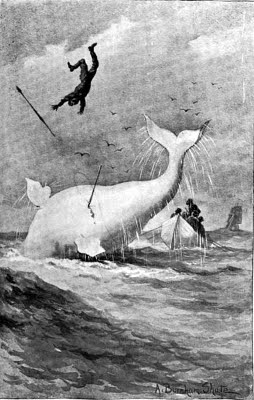
A firm is thinking about making a huge new investment. After consultation and deliberation, the CEO and the employees unanimously decide the project should go ahead and initial investment begins. As time passes more and more members of the organization realize that the investment is not a good idea after all. It is better to cut and run. Some costs are sunk and the NPV looking forward is negative.
The CEO is in charge of the continuation decision but his incentives are not aligned with the organization’s. Privately, he was actually reluctant to pursue the project. Publicly, he boasted about the investment, how great it was all going to be, how great the firm would be when the investment paid off. The CEO cannot go back on his word. The market will judge him purely on whether the investment is made and whether it pays off. He cannot cancel the project and instead he forces it through. If it pays off, his career takes off; if it fails, his career is a shambles but is is also in a tailspin if he cancels the project. The employees watch anxiously. They will give him a year and if nothing works, they will look for opportunities elsewhere.

Seth Godin writes:
When two sides are negotiating over something that spoils forever if it doesn’t get shipped, there’s a straightforward way to increase the value of a settlement. Think of it as the net present value of a stream of football…
Any Sunday the NFL doesn’t play, the money is gone forever. You can’t make up for it later by selling more football–that money is gone. The owners don’t get it, the players don’t get it, the networks don’t get it, no one gets it.
The solution: While the lockout/strike/dispute is going on, keep playing. And put all the profit/pay in an escrow account. Week after week, the billions and billions of dollars pile up. The owners see it, the players see it, no one gets it until there’s a deal.
There are two questions you have to ask if you are going to evaluate this idea. First, what would happen if you change the rules in this way? Second, would the parties actually agree to it?
Bargaining theory is one of the most unsettled areas of game theory, but there is one very general and very robust principle. What drives the parties to agreement is the threat of burning surplus. Any time a settlement proposal on the table it comes with the following interpretation: “if you don’t agree to this now you better expect to be able to negotiate for a significantly larger share on the next round because between now and then a big chunk of the pie is going to disappear.” Moreover it is only through the willingness to let the pie shrink that either party can prove that he is prepared to make big sacrifices in order to get that larger share.
So while the escrow idea ensures that there will be plenty of surplus once they reach agreement, it has the paradoxical effect of making agreement even more difficult to reach. In the extreme it makes the timing of the agreement completely irrelevant. What’s the point of even negotiating today when we can just wait until tomorrow?
But of course who cares when and even whether they eventually agree? All we really want is to see football right? And even if they never agree how to split the mounting surplus, this protocol keeps the players on the field. True, but that’s why we have to ask whether the parties would actually accept this bargaining game. After all if we just wanted to force the players to play we wouldn’t have to get all cute with the rules of negotiation, we could just have an act of Congress.
And now we see why proposals like this can never really help because they just push the bargaining problem one step earlier, essentially just changing the terms of the negotiation without affecting the underlying incentives. As of today each party is looking ahead expecting some eventual payoff and some total surplus wasted. Godin’s rules of negotiation would mean that no surplus is wasted so that each party could expect an even higher eventual payoff. But if it were possible to get the two parties to agree to that then for exactly the same reason under the old-fashioned bargaining process there would be a proposal for immediate agreement with the same division of the spoils on the table today and inked tomorrow.
Still it is interesting from a theoretical point of view. It would make for a great game theory problem set to consider how different rules for dividing the accumulated profits would change the bargaining strategies. The mantra would be “Ricardian Equivalence.”
 Cheap Talk