
You are currently browsing jeff’s articles.
He has a new book of aphorisms.
What’s the difference between a tweet and an aphorism?
A line like “what if hot dogs were the cut off horns of meat unicorns” can be interesting on Twitter because in Twitter it will burst into your feed like a surprise, it’ll be free, and there won’t by any high-minded literary expectation waiting for it in you. But copied & pasted into the literary form of the book and it becomes much more boring (at least to me) especially if it’s a book I’ve paid for, because while briefly interesting, its central juxtaposition doesn’t target anything I more than superficially care about.
The process:
I’d overhear someone use the verb ‘carom’ or something… and the little sweatshop in my head would get to work thinking, okay, that’s a strange-yet-familiar verb… what could carom?… death caroms… life caroms… time caroms… okay… off what… time caroms off life… off death… poetry caroms off death… no… more sound… character caroms off time…. okay a context… when does it do this… in death our character caroms off… grief… wait… what does that even mean… I can’t see it… start over… more visceral… laughter caroms off… laughter cannons off… laughter is a cannon fired by…” and so on. Often I would get to something that look and sounded right but wasn’t actually true. Or was true and wasn’t interesting. Basically cycling through until I gave up or found something that pleased all the gods. Sometimes it would be that clinical. Other times it would just come out. I would be writing something else or talking about a movie and an aphorism would erupt like a turd or Minerva in perfect form.
Comedy verus tragedy:
I tend to find more meaning in narrative and monologue, in broader emotional or psychological arcs, than in individual words, or the ephemeral joke-arc of a non sequitur. I think humor depends on depth of tension. There is just so little tension in randomness. Or in a pattern that is only available to the speaker. The first random thing that happens — pig-ponies! — can be funny for a second. But the next time it happens, it’s less funny because you’re ready for it. The listener has less anxiety about the end of the poem because the listener knows anything can happen. But if the joke is stripped of all non sequitur and pushed, relentlessly, along a path of logic which is blatantly available to both listener and speaker, both can have anxiety about where it will end up, and what it will ultimately mean. Maximizing this anxiety and then, at the last second, shattering it, is a key trope of humor. Part of keeping on that path is not breaking. It’s like how if someone told you that The Matrix was the best movie in the world, and then winked, that’s lame comedy. That to me parallels the flat effect of jokey poetry. But if they told you The Matrix was the best movie in the world and just stared into your eyes without blinking… until you blinked, that’s a tragedy so unbearable you have to laugh. You have to say that’s absurd. But this buffoon thinks it’s real? That’s impossible. Because that buffoon is a human like me. The irreconcilability of that wedges into us and leaves a giant triangle of anxiety. We survive by laughing. Otherwise we would simply kill that person. It feels good to laugh. Laughter is the orgasm of fear.
Digitopoloy.org: Josh Gans, Erik Brynjolfsson, and Shane Greenstein. Should be good.
I was born on Jan. 31, but I’ve always wanted a summer birthday. I set my Facebook birthday for Monday, July 11. Then, after July 11, I reset it for Monday, July 25. Then I reset it again for Thursday, July 28. Facebook doesn’t verify your birthday, and doesn’t block you from commemorating it over and over again. If you were a true egomaniac, you could celebrate your Facebook birthday every day.
He noted that for July 11th, he received 119 birthday wishes via Facebook. Four close friends were confused, but “most of them attributed the confusion to their own faulty memories.” When July 25th came around, he received another 105 birthday wishes. The number of people suspecting something was up was nine. The really stunning thing:
Of the 105 birthday wishes, 45 of them—nearly half—came from people who had wished me a Facebook happy birthday two weeks earlier.
On July 28th, just three days later, when it was his birthday again, he still ended up with 71 birthday wishes.
Casquette cast: Mallesh Pai.
This looks like a big deal.
Prestigious US academic institution Princeton University will prevent researchers from giving the copyright of scholarly articles to journal publishers, except in certain cases where a waiver may be granted.
The new rule is part of an Open Access policy aimed at broadening the reach of their scholarly work and encouraging publishers to adjust standard contracts that commonly require exclusive copyright as a condition of publication.
I would guess that the waiver would be given routinely, but this is a step in the right direction. via Andrea Ortolani.
Close your eyes. Apparently your opponent will have an increased tendency to imitate your move increasing the chance of a draw. At least that is what is reported in this study. A blindfolded player played RSP against a sighted player and their outcomes were compared to a control treatment in which two blindfolded players played.
A draw was achieved almost exactly 1/3 of the time when the two blindfolded players met, but that rate increased to 36.3% in the blind-sighted treatment, a statistically significant difference. The authors attribute this to a sub-conscious tendency to imitate the actions of others. In particular, when the blind player completed his move more than 200 miliseconds prior to the sighted player, the sighted player had an increased tendency to play the same move.
200 miliseconds is too fast for conscious reaction but still within the time necessary for the visual signal to be sent to the brain and an impulsive response signal to be sent to the hand.
If this is true then you should be able to increase your chance of winning in RSP by holding rock until the very last opportunity and then throw paper. You will sometimes trigger an automatic imitation of your rock and win with your paper.
Are there even more draws when both players have their eyes open?
(Fez float: Not Exactly Rocket Science.)
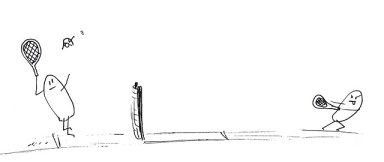
A lot of economic theory is empirically empty. Most of what is “under the hood” in an economic model makes no difference whatsoever from the point of view of the “empirical implications.” Here is an example to illustrate what I mean.
There are two ways I could present to you the standard theory of bidding behavior. The first way, and the way we actually do it, starts with some primitive hypotheses and derives the theory from them. So I might start by specifying the rules of the auction, then state some assumptions like that the bidders have certain payoff functions, they are maximizing utility, they have some specific information, and they play an equilibrium. All of these assumptions together tell you what bids you can expect.
The second way is simpler. I just write down the bids you can expect. That is my theory. I hypothesize a certain (joint distribution of) bidding behavior. Now, this theory is incredibly boring. But from an empirical point of view; i.e. in terms of the observable predictions it makes, it is equivalent to the first version of the theory.
(You might be thinking that the first theory makes more hypotheses and these hypotheses can be tested independently of their joint implications. I have two responses. A) that’s probably not true. Utilities, information, optimization, and equilibrium are all separately vacuous assumptions. They have implications only in conjunction with each other. B) from the empirical point of view that’s only a stronger argument that the simpler theory is preferred. If we can match the data on bids, does it matter whether the underlying hypotheses are rejected?)
If the point of economic theory was to generate empirical predictions, most of economic theory would be a waste of time. But it’s not the point.
There is value in a theory that describes the route from parameters to conclusions even if those parameters could never even be measured. And that is because the users of economic theory have a source of data that is unavailable to empirical researchers, and would not be permissible anyway: personal experience and intuition.
If you are about to compete in an auction, you look around you and see your competitors, the context, and the object up for sale. This is a unique situation because every situation is unique. You have a sense that one guy is an insider, one guy is bankrolled, and one guy is his competitor. You know that all of these things matter for how you should bid but you want to know how they matter. A theory is a recipe for translating your completely subjective description of the situation into an educated hypothesis about what is going to happen.
(Drawing: Summer Off-site from www.f1me.net)
This joke has been internetting for the past week. (Karakul kick: Noam Nissan)

Here’s the game theorists’ version: Three game theorists with identical preferences but asymmetric information walk into a bar. The server asks “Does everyone want a beer?” They respond in sequence:
- Game Theorist #1: “Yes!”
- Game Theorist #2: “Yes!”
- Game Theorist #3 “I don’t know.”
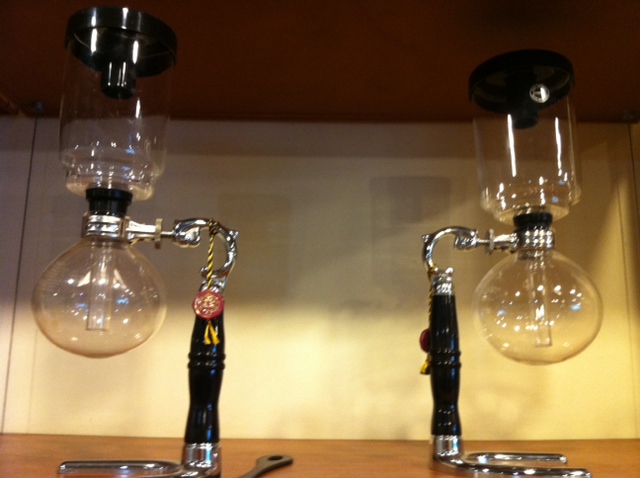
Two radio stations compete for advertisers. They run ads during 10 minute slots that they can locate anywhere within a given hour of air time. They know that listeners don’t like ads and will switch to another station to avoid them. Will their commercial times be disjoint, overlapping or will they exactly coincide?
Whatever they do, the listeners will adjust their behavior. Disjoint advertising intervals would mean that listeners, regardless of which station they are currently tuned to, will switch as soon as the ads start and always be listening to music. So that’s not an equilibrium.
Suppose they overlap. Radio station B is trying to be clever by starting its ads just a minute later than A. Those listening to radio station A switch to B when the ads start to get an extra minute of music. But when the ads start on B, the listeners know that the music will begin sooner on radio station A. But since you don’t know exactly when the ads will end, and in the meantime you have ads on either station, the time to switch to A is now. That’s not an equilibrium either.
If the ad intervals exactly coincide then listeners learn there is no point in switching. And if listeners aren’t switching then the stations can do no better than to have their ad intervals coincide. So that’s the equilibrium.
This paper by Andrew Sweeting shows empirically that stations coordinate their advertising intervals and explores the motives.
My simple model omits NPR. What programming runs on public radio during the ad intervals on commercial radio? Do commercial radio stations change their behavior during NPR pledge drives?
It’s hard to measure media bias in general because bias is hard to quantify. Movie reviews are one way forward, a cool idea in a new paper by DellaVigna and Kennedy. Here’s the abstract:
Fueled by the need to cut costs in a competitive industry, media companies have be- come increasingly concentrated. But is this consolidation without costs for the quality of information? Concentrated media companies generate a conflict of interest: a media outlet can bias its coverage to benefit companies in the same group. We test empirically for bias by examining movie reviews by media outlets owned by News Corp.–such as the Wall Street Journal–and by Time Warner–such as Time. We find a statistically significant, if small, bias in the review score for 20th Century Fox movies in the News Corp. outlets. We detect no bias for Warner Bros. movies in the reviews of the Time Warner outlets, but find instead some evidence of bias by omission: the media in this group are more likely to review highly-rated movies by affiliated studios. Using the wealth of detail in the data, we present evidence regarding bias by individual reviewer, and also biases in the editorial assignment of review tasks. We conclude that reputation limits the extent of bias due to conflict of interest, but that nonetheless powerful biasing forces are at work due to consolidation in the media industry.
Tubeteika toss: Josh Gans.
Al Roth starts a list of comparative advantages of the new electronic parking meters relative to old school coin-fed.
In Brookline, where I live, one can already begin to catalog some of the relative advantages and disadvantages of the old and new technologies, aside from those mentioned above, regarding credit cards in particular.
Waiting time and queues: old meters took your quarters immediately (if they were working well enough to take them at all); new meters take some time even if you are first in line, and since they serve multiple spots, you may have to wait while they take that time for the people ahead of you.
Parking at 7:45am: old meters made you start paying even if you rolled up to the curb before payment was required; new meters know that you don’t have to pay until e.g. 8am, and so can sell you parking until 8:30 without charging you for the first 15 minutes until 8.
Adding time to the meter: old meters let you add another quarter to add time, e.g. if you glanced in at the coffee shop after you had already put money in the meter and noticed that there were no vacant tables, so you would have to go across the street, and wouldn’t be back by 8:30. New meters print a receipt for you to put on your dashboard, and don’t let you add time to the end of the time interval you have already bought.
To which I would add: No Free Riding. There is no more hope of rolling into a space with time still left on the meter from the last guy.
And a spinoff list of disadvantages of both systems. Pre-payment. The meter forces me to bear the risk associated with my own uncertain parking duration. I pay in advance and hope I don’t pay too much or too little. If I pay ex post I am insured against that risk and I am willing to pay a higher per-minute rate. (What is the effect on my incentive to park for longer? With ex-post payment I bear a constant cost per minute I stay. With pre-payment that incremental cost is zero up until the meter expires and from there increases with the probability that the meter maid turns up.)

This article in The New Yorker about Federer’s loss to Djokovic in the US Open Semi-final is absolutely worth a read. You don’t have to care about tennis as long as you have a personal stake in the deep question of what style of perfection really wins.
http://www.newyorker.com/online/blogs/sportingscene/2011/09/roger-federer-novak-djokovic.html
But I have a slightly different take.
All Fed-Heads knew right away when he won the second set to go up 2-0 that nevertheless was going to lose the match. The tragedy of that match, and of Roger Federer in general is not that perfection failed. He was never perfect or anything close to it. The irony is that, by comparison to Nadal and Djokovic, especially Nadal, Roger Federer is so much more like the rest of us mortals.
Nadal has pure animal fighting spirit branded onto his DNA. Yes, his tennis is wrong, but that doesn’t matter because he is the one who has the aura of invincibility, not Federer. You can count on Roger to make impeccable shots. To play like an artist. But you can count on Nadal to win.
Federer is not like a superhero who just effortlessly deploys his superpower and watches the results roll in. When you watch him long enough you start to see how tightly wound he is at every moment, mustering every ounce of concentration to keep himself in that groove. If he is a master of anything he is a master of trying.
What you learn from watching his matches the last year is just how unstable that groove is. And what makes his decline so depressing is how it reminds us that if you have to try you are not a master. He carried the banner for all of us who have nothing going for us except the will to try, and even he The Master Tryer, the man who tried so hard that he was Perfect, can’t beat those guys whose strokes are hacker strokes next to his, but who were born winners.
And that is why this particular match was really his most tragic. Match point against Djokovic. After tanking sets 3 and 4 and then pulling himself together to go up a break and serve for the match in the fifth set, we still knew he was going to lose. It was just a matter of how.
Djokovic is not Nadal. He does not win by sheer will. A lot of trying went in to his streak this year. And to Federer fans, Djokovic is something of an interloper. You look at his game and there is no real reason he should be pushing Roger out of the top 2. He is super solid. But we want our iconic battle between Mr. Made-Perfect against Mr. Passion. Djokovic doesn’t belong.
But when Federer had Djokovic match point down, Djokovic did something that made a total mockery of everything about Federer’s game. He took a blind swing on a service return and hit it for a stinging winner. He became Nadal for a single shot. You are not supposed to be able to become Nadal. That is not something you can try to do. And indeed there was no trying involved whatsoever. He just did it.
Federer could never, ever do that.
- Second-sourcing. You are a monopolist selling a durable good that requires periodic upgrades. Think enterprise software. The monopoly price extracts the lifetime user-value of the product. To maximize the lifetime user-value of the product you should set the price for future upgrades at cost. The problem is that your users don’t trust you. They foresee that at the time of the upgrade, when the original purchase price of the software is a sunk cost you are not going to set upgrade prices at cost. Indeed you will again try to extract the (remaining) lifetime user-value of the product with the upgrade price. You need a device to commit yourself not to try to exploit your customers in the future so that you they will submit to your exploitation today. By spinning off a division of your company you can create a competitor for upgrades. This competition guarantees that you cannot act like a monopolist for upgrades and the upgrade price will be competitively priced at cost.
- Pre-emption. You are currently a monopolist in an industry that can accommodate at most two firms. It is inevitable that there will be an entrant eventually and your monopoly profits will turn into duopolist profits. Since you are going to have a competitor anyway why not create your own competitor? You could sell half of your company to the highest bidder. He will be willing to pay up to the duopolist profits and then he will compete with you driving the profits of your remaining half down to the duopolist profits. In total your profits are equal to the sum of the two duopolist’s profits rather than just a single duopolist profit. That’s necessarily less than the monopoly profit but that wasn’t going to last anyway.
Ethan Iverson has the rundown. Some highlights:
6) My Old Man (Joni Mitchell): “Blue”, a masterpiece, turned me upside-down when it came out in 1971. Her lyrics, way with harmony, her chord progressions and the uniqueness of her voice are unsurpassed. She is one of the great setters of text of all time. I had a hard time trying to figure out these chords as a high-schooler!
11) If I Were A Bell (Miles Davis): This is the record (“Live at the Blackhawk”) that made me want to play jazz as my life’s work. Wynton Kelly’s comping under Miles’ and Hank Mobley’s solos, his energy and time feel and the live-ness of the recording are still great to listen to today – so direct and swinging.
12) 1 X Love (Charles Mingus): This is the record that made me want to be a jazz composer. It sounds like Ellington on acid.
15) Old Devil Moon (Ahmad Jamal): This trio (with Israel Crosby and Vernel Fournier) is one of the two greatest of all time (the other being Bill Evans, Scott LaFaro and Paul Motian). Ahmad had the most beautiful sound and touch of any jazz pianist – and his sense of drama and arrangement is unsurpassed.
19) Serpentine (Earth, Wind and Fire): My favorite soul/R&B band had the most killing grooves – and many of their songs carried social messages as well. Played by real musicians, not machines.
27) Nancarrow: Study for Player Piano #1: He became frustrated that live musicians couldn’t play the complex rhythms he imagined, so he composed for the player piano. His off-kilter – yet tonal – style really appeals to me. I wish I could play like this!

If you think about pain as an incentive mechanism to stop you from hurting yourself there are some properties that would follow from that.
When I was pierced by a stingray, the pain was outrageous. The puncture went deep into my foot and that of course hurts but the real pain came from the venom-laden sheath that is left behind when the barb is removed. Funny thing about the venom is that it is protein based and it can be neutralized by denaturing the protein, essentially changing its structure by “cooking” it as you would a raw egg.
How do you cook the venom when it is inside your foot? You don’t pee on it unless you are making a joke on a sitcom (and that’s a jellyfish anyway.) What you do is plunge your foot is scalding hot water raising the internal temperature enough to denature the venom inside. Here’s what happens when you do that. Immediately you feel dramatic relief from the pain. But not long after that you begin to notice that your foot is submerged in scalding hot water and that is bloody painful.
So you take it out. Then you feel the nerve-numbing pain from the venom return to the fore. Back in. Relief, burning hot water, back out. Etc. Over and over again until you have cooked all the venom and you are done. In all about 4 hours of soaking.
A good incentive scheme is reference-dependent. There’s no absolute zero. Zero is whatever baseline you are currently at and rewards/penalties incentivize improvement relative to the baseline. When the venom was the most dangerous thing, the scalding hot water was painless. Once the danger from the venom was reduced, the hot water became the focus of pain. And back and forth.
Second Observation. After three weeks of surfing (minus a couple of days robbed by my stingray friend) I came away with a sore shoulder. Rotator cuff injuries are common among surfers, especially over the hill surfers who don’t exercise enough the other 11 months of the year. The interesting thing about a rotator cuff injury is that the pain is felt in the upper shoulder, not at the site of the injury which is more in the area of the shoulder blade. It’s referred pain.
In a moral hazard framework the principal decides which signals to use to trigger rewards and penalties. Direct signals of success or failure are not necessarily the optimal ones to use because success and failure can happen by accident too. The optimal signal is the one that is most informative that the agent took the appropriate effort. Referred pain must be based on a similar principle. Rotator cuff injuries occur because of poor alignment in the shoulder resulting in an inefficient mix of muscles doing the work. Even though its the rotator cuff that is injured, the use of the upper shoulder is a strong signal that you are going to worsen the injury. It may be optimal to penalize that directly rather than associate the pain with the underlying injury.
(Drawing: Scale Up Machine Fail, from www.f1me.net.)
Pennsylvania is considering a change in how it allocates electoral votes in Presidential elections. Currently, like nearly all other states, Pennsylvania’s electoral votes are up for grabs in a winner-take-all contest. All 20 of its votes go to the candidate who receives the largest share of the popular vote in the state. The state’s Republican party, currently in control of the legislature and the governor’s office, is considering a switch to a system in which each of the 18 congressional districts in the state would award a vote to the winner in that district. (I believe the remaining two would be decided by state-wide popular vote.)
There are a number of ways to think about the incentives to switch between these two systems. One way is to ask how it will effect the overall flow of campaign dollars/favors to the state. On this score, in a state like Pennsylvania, the proportional-vote system is clearly better.
Only one Republican Presidential candidate has carried the state in the last 25 years. The cost of increasing Republican vote share by a few percentage points would be wasted in a state where Democrats begin with such a large advantage. But in a proportional system such an investment can pay off. The Republican party will now spend to compete for the marginal vote and Democrats will likely spend to defend it.
Of course the real question is how a state with a strong Democratic leaning could be expected to vote to switch to a system that will not only channel money to Republican districts but also help the Republican Presidential candidates.
Note that the opposite ranking holds in a more competitive state. If the two parties are on equal terms in a state, then a winner-take-all system gives a huge reward to a party who invests enough to gain a 1% advantage in vote-share. By contrast a proportional system offers at most a single vote in return for that same investment. Such a state maximizes its electoral spoils by sticking with winner-take-all. And with no majority party these economic incentives should dominate.
Taking stock of both of these two cases, it is not surprising that almost all states use a winner-take-all system. Indeed, Nebraska, one of the few states with a proportional system may soon switch to winner-take-all.
Registration for the 2012 Allied Social Sciences Meetings has just opened up today. The ASSA meeting is the annual “winter meeting” in which hordes of economists descend on a rotating list of cities to spend a weekend shuffling papers around and stiffing cab drivers.
It was by sheer luck that last night I noticed that today would be the first day to register. And so this morning I was one of the first to login to the ASSA hotel registration system and reserve one of the better suites (we will be in the Fairmont) in one of the more central conference hotels where Northwestern Economics will conduct its job market interviews. (New PhD recruitment is one of the main, perhaps the main, activity at the ASSA meetings.) Had I been just a few hours later we would have been relegated to a remote hotel making it harder for interviewers and interviewees to get to and from the interviews.
(If that happened to you, you can follow @ASSAMeeting on Twitter to wait for announcements of new suites opening up. But wouldn’t you rather follow me? Sandeep?)
It’s funny that a conference run by economists uses a qeueing/rationing system to allocate scarce hotel space. The system doesn’t even allow ex post exchanges between departments which would undo inefficient misallocations. If MIT gets stuck in the Embassy Suites and Podunk U is in the Hyatt Regency, then tough luck MIT (maybe Podunk can build a stronger theory group, ha ha ha.)
The problem is that ASSA negotiates discounted rates for the suites by reserving them in bulk. Obviously that is good for everyone. But the discounted rate is below market clearing and therefore there will be excess demand for the best hotels. It would seem that the resulting inefficiency is the price we have to pay for our monopsony power.
Indeed it would not work to have ASSA negotiate hotel space at discount rates and then turn around and use an efficient auction internally to allocate it. The reason is somewhat subtle. Here’s one way of seeing it. An efficient auction for a single suite is (essentially) a second-price auction. It works efficiently becuase when I know that I will have to pay the second highest bid then I will bid exactly my willingness to pay. Therefore the winner will be the bidder who values the suite the most. However, because ASSA bought the suite at a rate that is below market clearing, the second highest bid for a suite is going to be more than ASSA paid for it.
That means ASSA makes money. Sounds good right? No. In fact it is a problem precisely because we all benefit from ASSA making money (we get lower registration fees, lower journal subscription fees, etc.) You see I internalize the benefits of ASSA’s revenue which essentially means that I get back some of the price I pay when I win the auction. In other words I am not really paying the second highest bid, I am paying something less. And because of that I no longer want to bid my true willingness to pay, and the mechanism breaks down. In the jargon, the efficient auction is no longer incentive compatible.
But there is a solution. The basic mistake ASSA is making is to negotiate discounted suites. Why does it do that? Well, it has monopsony power and it has different hotels in the area compete with one another for the business. Since we are buying hotel space it seems natural to make hotel discounts the currency of that competition. But we saw the problem with that. Instead ASSA should ask for lump sum cash bids from the hotels. The highest bidding hotel gets the right to auction off their suites to ASSA members using an efficient auction. The hotel keeps all revenues from the auction.
That way I don’t internalize any of the revenues from the auction. The mechanism is incentive compatible again and therefore gives an efficient allocation. The hotels make some money. And the amount of money they can expect to earn is exactly how much they are willing to pay to ASSA in advance for that right. So in fact ASSA comes away with their monopsony rents without having to sacrifice efficiency.
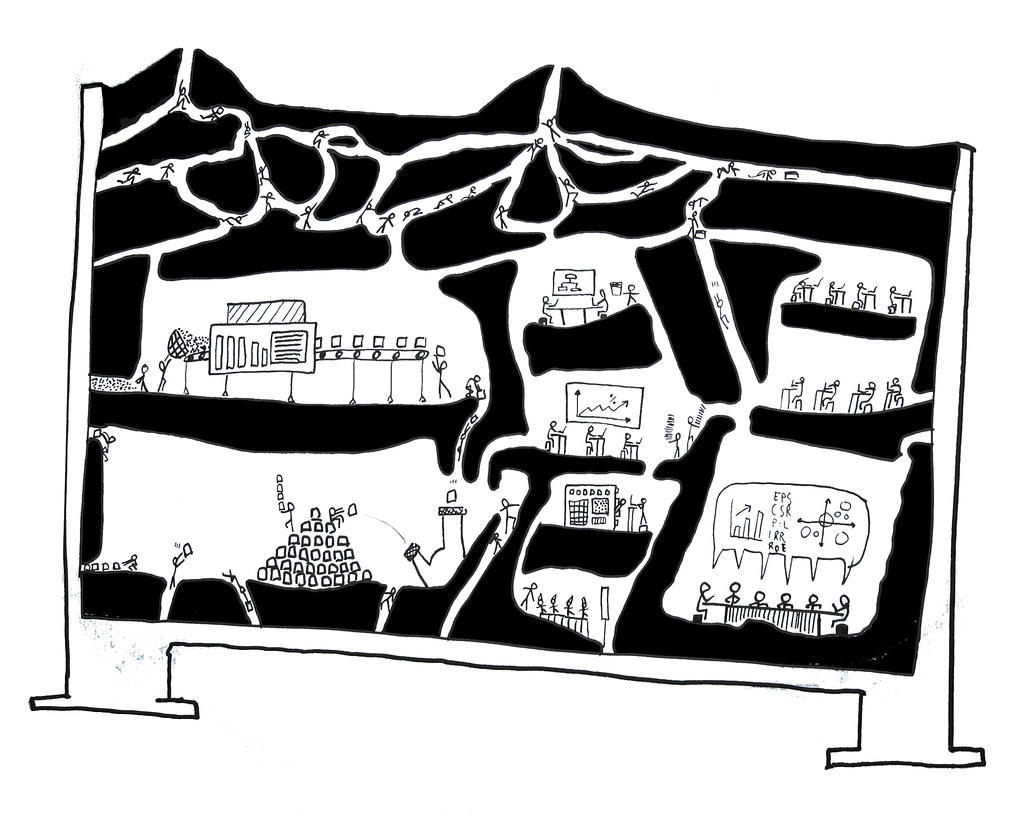
In the movie Inside Job, George Soros makes an analogy that made an impression on me. He talks about how oil tankers have partitions in their hulls with their oil divided across the compartments. That way when the seas are rough the oil sloshes around within its own restricted space rather than the entire cargo splashing forward and back the full length of the ship, as would happen if there were no partitions. This obviously makes the tanker more stable.
The analogy is to financial markets and regulation. Erecting partitions to make the market less liquid should improve stability. At first you say, oh that’s a nice piece of rhetoric but financial markets aren’t anything like oil tankers. At least I said that.
But let’s take it for a spin. Let’s analyze the partitioned tanker but forget that it is a mechanical system and instead analyze it in the same way we would use equilibrium theory to analyze a market. Here goes.
There is a shock (rough seas) and the oil starts to spill to one end of the boat. But the partition stops the oil from going where it wants to go. There is a friction in the market. The oil in one compartment and the empty space in the adjacent compartment want to make a voluntary exchange. And it would be Pareto improving (otherwise they wouldn’t want to do it.) But that partition is stopping them. This is welfare-reducing.
Moreover, there is a powerful incentive for arbitrage. Any small leak in the partition would allow equilibrium to be reached by removing the friction, allowing the oil to go where it wants to go, and relieving some internal pressure. That must be welfare-improving.
If you think about it, market models pretty much stop there. Pareto improving trades should and do happen. Financial innovation brings down those partitions and that’s good. What is almost always missing is any way of talking about the hard-to-define but clearly very real externality that is the effect of these trades on the stability of the system as a whole. That’s about process and transitional dynamics, not about equilibrium.
Indeed, in equilibrium the oil in the tanker is in the same place whether or not the partitions are there.
(drawing: The Bigger Picture from www.f1me.net)

The efficient way to allocate scarce capacity on a flight is to hold an auction as close to departure time as possible. Allocating space prior to that point runs the risk that a ticketed passenger learns that his willingness to pay is lower than he expected (business meeting is cancelled, family member falls ill, etc.) Allocating space close to the time of departure ensures that passengers have resolved any uncertainty about their willingness to pay and those with the highest willingness to pay will be seated.
But with an auction the airline cedes a lot of consumer surplus to the passengers, because in an efficient auction the winner pays not his own willingness to pay, but the willingness to pay of the marginal bidder. The airline is willing to sacrifice efficient allocation in exchange for a mechanism that extracts more of the gains from trade.
The ideal for the airline would be to sell tickets to the auction and to put these tickets up for sale as early as possible, before passengers have any private information about their willingness to pay.
Here’s an extreme example to illustrate. There is a plane with one seat and two potential passengers. By the time of departure they will know their willingness to pay, but when they first enter this world they know only the probability distribution. The airline should announce that there will be a 2nd price auction at the time of departure but in order to be allowed to participate in that auction the passengers must purchase a ticket the moment they are born. The price of this ticket will be set equal to the expected value of consumer surplus from the auction. This way the airline achieves the maximal gains from trade and secures all the rents for itself.
Obviously the problem is that the airline cannot contract with every potential passenger still in the bassinet. Indeed contracting is initiated by the passenger, not the airline. Thus, in order to be able to extract consumer surplus the airline’s mechanism has to give the passengers the incentive to voluntarily contract early prior to the resolution of uncertainty.
A mechanism that accomplishes this will have two features. First, ticket prices must rise as the departure date approaches. This incentivizes early purchases. Second, flights will be oversold. This enables efficient re-allocation of seats on the basis of information realized after tickets are purchased. In particular, those with lowest realized willingness to pay will sell back their tickets in a reverse auction.
(This is ongoing research with Daniel Garrett and Toomas Hinnosaar, two NU students who will be on the job market this year.)
The ultimatum game is a workhorse for economics experiments. Subject A has 100 dollars to split with Subject B. A proposes a division and if B accepts then the division is carried out. If B rejects then both parties get nothing. In these experiments, A is surprisingly generous and B is surprisingly spiteful. A Fine Theorem makes a good point:
…I’m sure someone has done this but I don’t have a cite, the “standard” instructions in ultimatum games seem to prime the results to a ridiculous degree. Imagine the following exercise. Give 100 dollars to a research subject (Mr. A). Afterwards, tell some other subject (Ms. B) that 100 dollars was given to Mr. A. Tell Mr. A that the other subject knows he was given the money, but don’t prime him to “share” or “offer a split” or anything similar. Later, tell Ms. B that she can, if she wishes, reverse the result and take the 100 dollars away from A – if she does so, had Mr. A happened to have given her some of the money, that would also be taken. I hope we can agree that if you did such an experiment, A would share no money and B would show no spite, as neither has been primed to see the 100 dollars as something that should have been shared in the first place. One doesn’t normally expect anonymous strangers to share their good fortune with you, surely. That is, feelings of spite, jealousy and fairness can be, and are, primed by researchers. I think this is worth keeping in mind when trying to apply the experimental results on ultimatum games to the real economy.
- You smell, I stink.
- Members of Congress with metalhead names. (Economists? Angrist, Blinder, Manski…)
- New documentary using restored Ken Kesey Merry Prankster footage.
- The revolution will not be served with Tabbouleh. (The manifesto of the Vogue vegan.)
- Better than the missives from QJE.



Let’s say I want to know how many students in my class are cheating on exams. Maybe I’d like to know who the individual cheaters are, maybe I don’t but let’s say that the only way I can find out the number of cheaters is to ask the students themselves to report whether or not they cheated. I have a problem because no matter how hard I try to convince them otherwise, they will assume that a confession will get them in trouble.
Since I cannot persuade them of my incentives, instead I need to convince them that it would be impossible for me to use their confession as evidence against them even if I wanted to. But these two requirements are contradictory:
- The students tell the truth.
- A confession is not proof of their guilt.
So I have to abandon one of them. That’s when you notice that I don’t really need every student to tell the truth. Since I just want the aggregate cheating rate, I can live with false responses as long as I can use the response data to infer the underlying cheating rate. If the students randomize whether they tell me the truth or lie, then a confession is not proof that they cheated. And if I know the probabilities with which they tell the truth or lie, then with a large sample I can infer the aggregate cheating rate.
That’s a trick I learned about from this article. (Glengarry glide: John Chilton.) The article describes a survey designed to find out how many South African farmers illegally poached leopards. The farmers were given a six-sided die and told to privately roll the die before responding to the question. They were instructed that if the die came up a 1 they should say yes that they killed leopards. If it came up a 6 they should say that they did not. And if a 2-5 appears they should tell the truth.
A farmer who rolls a 2-5 can safely tell the researcher that he killed leopards because his confession is indistinguishable from a case in which he rolled a 1 and was just following instructions. It is statistical evidence against him at worst, probably not admissible in court. And assuming the farmers followed instructions, those who killed leopards will say so with probability 5/6 and those who did not will say so with probability 1/6. In a large sample, the fraction of confessions will be a weighted average of those two numbers with the weights telling you the desired aggregate statistic.
Its called Fehr Advice!
Traditional economic research assumes that managers, employees, customers, and suppliers usually make rational decisions and thus do not make systematic decision errors. Behavioral economics, however, has found numerous proofs that people make systematic decision errors that limit their own welfare and also diminish efficiency, perceived fairness, and the profitability of firms.
It was for this reason that FehrAdvice & Partners AG developed the consulting approach BEA™ that is based on empirical insights about the human tendency to make erroneous decisions. This approach systematically includes this knowledge in consulting activities. Our consultants have a “trained eye” in the area of behavioral economics, and the innovative methods of empirical research we use allow us to identify potential areas of improvement in enterprises, markets, and organizations that were previously ignored.
They have a blog (in German), they are on Twitter, and they are hiring.

Usain Bolt was disqualified in the final of the 100 meters at the World Championships due to a false start. Under current rules, in place since January 2010, a single false start results in disqualification. By contrast, prior to 2003 each racer who jumped the gun would be given a warning and then disqualified after a second false start. In 2003 the rules were changed so that the entire field would receive a warning after a false start by any racer and all subsequent false starts would lead to disqualification.
Let’s start with the premise that an indispensible requirement of sprint competition is that all racers must start simultaneously. That is, a sprint is not a time trial but a head-to-head competition in which each competitor can assess his standing at any instant by comparing his and his competitors’ distance to a fixed finished line.
Then there must be penalty for a false start. The question is how to design that penalty. Our presumed edict rules out marginally penalizing the pre-empter by adding to his time, so there’s not much else to consider other than disqualification. An implicit presumption in the pre-2010 rules was that accidental false starts are inevitable and there is a trade-off between the incentive effects of disqualification and the social loss of disqualifying a racer who made an error despite competing in good faith.
(Indeed this trade-off is especially acute in high-level competitions where the definition of a false start is any racer who leaves less than 0.10 seconds after the report of the gun. It is assumed to be impossible to react that fast. But now we have a continuous variable to play with. How much more impossible is it to react within .10 seconds than to react within .11 seconds? When you admit that there is a probability p>0, increasing in the threshold, that a racer is gifted enough to reach within that threshold, the optimal incentive mechanisn picks the threshold that balances type I and type II errors. The maximum penalty is exacted when the threshold is violated.)
Any system involving warnings invites racers to try and anticipate the gun, increasing the number of false starts. But the pre- and post-2003 rules play out differently when you think strategically. Think of the costs and benefits of trying to get a slightly faster start. The warning means that the costs of a potential false start are reduced. Instead of being disqualified you are given a second chance but are placed in the dangerous position of being disqualified if you false start again. In that sense, your private incentives to time the gun are identical whether the warning applies only to you or to the entire field. But the difference lies in your treatment relative to the rest of the field. In the post-2003 system that penalty will be applied to all racers so your false start does not place you at a disadvantage.
Thus, both systems encourage quick starts but the post 2003 system encouraged them even more. Indeed there is an equilibrium in which false starts occur with probability close to 1, and after that all racers are warned. (Everyone expects everyone else to be going early, so there’s little loss from going early yourself. You’ll be subject to the warning either way.) After that ceremonial false start the race becomes identical to the current, post 2010, rule in which a single false start leads to disqualification. My reading is that equilibrium did indeed obtain and this was the reason for the rule change. You could argue that the pre 2003 system was even worse because it led to a random number of false starts and so racers had to train for two types of competition: one in which quick starts were a relevant strategy and one in which they were not.
Is there any better system? Here’s a suggestion. Go back to the 2003-2009 system with a single warning for the entire field. The problem with that system was that the penalty for being the first to false start was so low that when you expected everyone else to be timing the gun your best response was to time the gun as well. So my proposal is to modify that system slightly to mitigate this problem. Now, if racer B is the first to false start then in the restart if there is a second false start by, say racer C, then racer C and racer B are disqualified. (In subsequent restarts you can either clear the warning and start from scratch or keep the warning in place for all racers.)
Here’s a second suggestion. The racers start by pushing off the blocks. Engineer the blocks so that they slide freely along their tracks and only become fixed in place at the precise moment that the gun is fired.
(For the vapor mill, here are empirical predictions about the effect of previous rule-regimes on race outcomes:
- Comparing pre-2003, under the 2003-2009 you should see more races with at least one false start but far fewer total false starts per race. The current rules should have the least false starts.
- Controlling for trend (people get faster over time) if you consider races where there was no false start, race times should be faster 2003-2009 than pre-2003. That ranking reverses when you consider races in which there was at least one false start. Controlling for Usain Bolt, times should be unambiguously slower under current rules.)
All uncles are weird. But being an uncle is an exogenous event independent of any quality you have, weirdness or otherwise. So statistically it looks like a monumental fluke that all the weird people turn out to be uncles.
In reality it’s the uncleness that causes the weirdness. And more than that: even totally normal people who happen also to be uncles turn onto weirdos precisely when they are around their nieces and nephews and here’s why.
An uncle is basically an anti-parent. Not anti- in the sense of anti-aircraft or anti-American. More like antimatter. Because an uncle looks at his brother or sister’s family and basically sees everything that his own family is not. Good or bad. Especially in terms of the children.
And just like boys socialize by playing up and exaggerating differences as a mechanism for toughening up each others’ weak spots, the uncle can’t help but play that same role with the nieces and their parents. Niece is too sensitive because she is too sheltered, uncle brings the missing risk to the party. Nephew thinks he’s tough because he can push around his younger sisters, uncle gives him a taste of his own medicine.
Then there’s spy mode. Uncle wants the inside scoop on his brother/sister and spouse so he asks neice/nephew strange leading questions. Your uncle is an outsider who has just enough of an inside track to feel comfortable poking around where he doesn’t belong.
But whatever mischief the uncle is up to, the actual effect is that he comes across as a weirdo to his neices and nephews.

- Stingrays hurt.
- A lot.
- I could use a pedicure.
Here is a quote from Robert Parker
“Any serious introspection of the global wine market for Bordeaux over the last two years has to include the fact that it is impossible to determine the amount of 2009 Bordeaux futures (and in a few months, 2010 Bordeaux futures) that have actually been sold to consumers. Throughout Bordeaux there is talk of the massive market in Asia, and the increasing significance of the English wine investment firms, but there are those (and I wouldn’t dismiss their opinions) who tend to think that such assertions are grossly inflated. Moreover, they argue that there is a real bubble that is in danger of bursting if the right external influences unfold. One theory is that the Big Eight (which includes all the first growths of the Médoc as well as Haut-Brion and the trifecta of unofficial first growths of the Right Bank, Petrus, Cheval Blanc and Ausone) are actually hoarding huge inventories of their wines to inflate prices. This theory also suggests that the super seconds and many of the other cherished names in Bordeaux are doing the same thing. Why? They are trying to manipulate the market price. The appearance of little or no appreciable quantities of wine from two great vintages equals higher and higher prices. Is there a falsification of the demand from Asian consumers? The fact is, no one seems to know the answer. While some 2009s have not held their initial opening prices because they were too high, many have. If much of the 2009s, as well as the 2010s, are not sold through to wine consumers, who are the true marketplace since they actually drink these wines, and then tend to replenish their stock, buttressing the marketplace, then this is a bubble. Despite huge warehouses filled with reserve stocks of great vintages, prices could be set for a major adjustment, just as we have seen in the United States with the real estate market. What, if any of this, is true?
I raise this issue only because it is a possibility. The fact that no one can (or wants to) provide the actual sales figures of how much 2009 (or over the next six months, how much 2010) is actually being sold through to consumers is astonishing. If most of the stocks of these two vintages are held by importers, négociants, wholesalers, or on paper by investment firms, then it is obvious the consumers have not purchased 2009 and eventually 2010. In any event, I think this scenario has to be raised, given the overheated marketplace and the sometimes absurd rhetoric about how popular these wines are at prices of $1000 or more a bottle.” Robert Parker, May 3rd 2011
If you are programming a robot to vacuum your floors here’s one thing you would never consider doing: endow the robot with feelings of happiness and sadness and teach it to be happy when the floor is clean and unhappy when it is dirty.
But evolution led us to a state of affairs where emotions are what motivate us to do our jobs. How could such a kludge arrive.
Here is a story. Primitive organisms are reproduction machines. They need a certain chemical in the environment, and when they can obtain that fuel they can reproduce.
So the most successful primitive organisms are those that are the best at finding fuel. Natural selection favors those that seek fuel.
Next the organisms get more complicated. They have to make decisions that involve more than just immediate reproduction. They have intertemporal tradeoffs, multi-dimensional consumption, etc.
There is infrastructure in place to simplify this transition. The organisms that have survived to this stage are the organisms that seek fuel. They have built and learned systems for doing what is necessary to get fuel. So fuel is a simple and effective incentive mechanism.
The organism could evolve a mechanism for storing and later releasing fuel. Fuel is released when the organism takes certain actions. Fuel-seeking organisms will take those actions. Natural selection will favor the organisms that release fuel for the right actions.
Now remember that fuel is the energy needed for the most primitive functions of the organism. When this fuel is released the organism gets a boost of that energy.
A boost of energy is a big part of what we call happiness.
(subject to the usual disclaimer, this is based on some conversations with Balasz Szentes.)
From Paul Kedrosky, via Mallesh Pai:
In the game of Scrabble, letter tiles are drawn uniformly at random from a bag. The variability of possible draws as the game progresses is a source of variation that makes it more likely for an inferior player to win a head-to-head match against a superior player, and more difficult to determine the true ability of a player in a tournament or contest. I propose a new format for drawing tiles in a two-player game that allows for the same tile pattern though not the same board to be replicated over multiple matches, so that a players result can be better compared against others, yet is indistinguishable from the bag-based draw within a game. A large number of simulations conducted with Scrabble software shows that the variance from the tile order in this scheme accounts for as much variance as the different patterns of letters on the board as the game progresses. I use these simulations as well as the experimental design to show how much various tiles are able to affect player scores depending on their placement in the tile seeding.
Alternatively you could just let the market prices tell you.
The right to remain silent is not necessarily a blessing to a defendant. Because having a choice is not necessarily a good thing. Unless the decision to testify is uncorrelated with guilt, that decision by itself will convey information to the jury. (I know juries are instructed not to infer anything. But that is impossible.) So for example, if those who take the fifth are more likely to be guility (as I would guess. Are there data on this?), then an innocent person’s “right” to remain silent is actually a right to partially incriminate himself
A prohibition against defendants testifying on their own behalf is worth considering. If the goal is to protect defendants from incriminating themselves, then the above benefit offsets the obvious cost.
And if that is too extreme there are middle grounds to consider. For example, since the defense puts on its case last, the defendant does not make his decision until after the prosecution has introduced evidence. A defendant might want to commit in advance of that evidence being revealed that he will not testify so that nothing can be revealed by his decision being contingent on the evidence. As far as I know this commitment is not possible under current law.
In general the earlier you commit not to testify the less can be inferred from this. So we should allow citizens to register their commitments before they are charged with any crime. When you register to vote you also check a box that says whether you or not you will testify in the event you are ever charged with a crime.
 Cheap Talk