
You are currently browsing Sandeep Baliga’s articles.
Jean Tirole gave a paper on “Laws and Norms” as his Schwartz Lecture last week. He has been working on psychology and economics for many years with Roland Benabou. The presentation was an extension of that work. Consider a game where a costly action generates a positive externality. Agents are motivated to take such an action by a monetary reward and a private value from the action. However, they also care what others think of them. How can we think about this formally and what implications does it have for contributions to the public good?
Tirole’s (and Benabou’s) first contribution is to provide a simple, tractable model of this psychological effect. Each agent’s payoff is a function of others’ expectation of his private value given his action and monetary reward. Hence if you contributed to the public good but received no monetary reward, the expectation is different that if you contributed and got paid. From this simple formulation much can be deduced. If a contribution is elicited via a monetary reward, it carries less positive information about the contributor than one when there was no monetary reward. There might be a bigger contribution if there is no monetary reward. The less observable the contribution, the smaller is the incentive to make it etc.
The contribution was twofold. First, the mathematical modeling of the psychological effect requires some art and effort. Second, the model is intuitive and simple enough that others can use it to express their own ideas. One of my colleagues is thinking about two papers based on the basic Tirole model.
The American Economic Review publishes an unrefereed conference volume, Papers and Proceedings, in May of every year. Of course, the AER also a publishes a refereed journal which rejects more than 95% of submissions. Someone with an AER P&P might be tempted to pass it off as an AER on their CV. There is a possible gain in prestige at the cost of being found out and facing a social sanction. Snyder and Zidar call this the obfuscation theory. Alternatively, perhaps these AER P&Ps have real academic value and those who describe their own such papers as real publications should also cite other such papers more. Different conventions of citation may develop among different subgroups. This is the convention model. Snyder and Zidar find support for the convention model in the data. They mention that AER P&Ps had more citations that AERs in the past and hence older economists tend to see P&Ps as real publications while younger economists do not. This should imply that younger economists should be more careful about distinguishing P&Ps from AERs on their CVs.
I have two questions/comments.
An economist who lists a P&P as a refereed publication faces dissonance. On the one hand, they would like to see themselves as good people, on the other they know they are doing something shady. One way to resolve the dissonance is to cite other researchers P&Ps more. This helps propagate the self-deception that P&Ps are legitimate pieces of refereed research and hence listing them as such is justified.
Second, another possible paper: Do P&Ps have more errors than refereed publications? One job of a referee is to catch errors after all. If so, how many cites come from people pointing out mistakes?
(Hat Tip: MR)
Michael Ostrovsky (Stanford GSB) and Michael Schwarz (Yahoo! Research) helped Yahoo! to improve its click price per ad. Yahoo! was charging 10c/click. Ostrovsky and Schwarz ran some field experiments:
Reserve prices in the randomly selected “treatment” group were set
based on the guidance provided by the theory of optimal auctions, while in the “control” group
they were left at the old level of 10 cents per click. The revenues in the treatment group have
increased substantially relative to the control group, showing that reserve prices in auctions can in
fact play an important role and that theory provides a useful guide for setting them.
It seems they made money for Yahoo!:
We conclude with a quote from a Yahoo! executive, describing the overall impact of
improved reserve prices on company revenues.
On the [revenue per search] front I mentioned we grew 11% year-over-year in the quarter
[. . . ], so thats north of a 20% gap search growth rate in the US and that is a factor of,
attributed to rolling out a number of the product upgrades we’ve been doing. [Market
Reserve Pricing] was probably the most signi cant in terms of its impact in the quarter.
We had a full quarter impact of that in Q3, but we still have the bene t of rolling that
around the world.
Sue Decker, President, Yahoo! Inc. Q3 2008 Earnings Call.
But it seems Yahoo! is eliminating the entire research group in its downsizing, including I suppose Michael Schwarz. Preston McAfee had already left for Google Research. I hope others also have a soft landing.
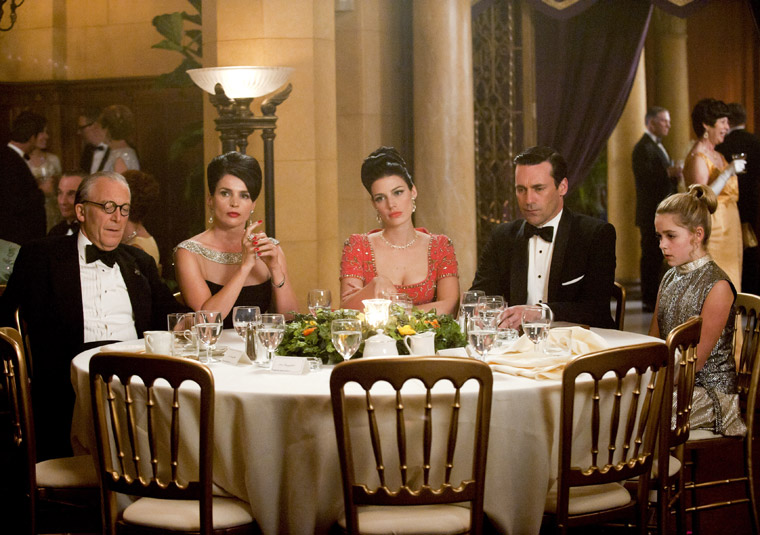
Derrick Rose is out for the season and a weekend that started badly might have ended sadly with another super dark episode of Mad Men. Instead, we got a few comedic rays of sunshine to break through the gloom – Pete tricking Megan’s pretentious father, Peggy’s mother’s surprise that Abe’s favorite dish is ham etc. Those of us looking to enliven our courses with the odd example here or there had to wait till the end.
Don is busy trying to drum up new business at his award dinner. He got the award for an anti-cancer ad he took out in the newspaper after losing the Lucky Strike cigarette account. But a colleague’s father rains on Don’s parade. He says that no-one will give Don any new business after he stabbed Lucky Strike in the back. Don signaled to the wrong audience in the last period of the Lucky Strike game. He tried to co-opt consumers by pretending to be concerned about their welfare. But consumers will not give his firm new accounts, firms selling crap to them will. And with them Don lost his reputation – will he also throw them under the bus if things turn sour? Life is an infinite horizon game with many bilateral interactions. Lose your reputation in one and, if your behavior is publicly observable, lose your reputation in all.
Went to Vera for the first time last night. It doesn’t take reservations but it was not hard to get table at 7 p.m. on a Thursday, even though Vera was on the “Best of Chicago 2012” list at Chicago Magazine. I had two companions and we managed to get through roast mushrooms, lamb pinchos, langoustines, paella, calcots, papas bravas, grilled asparagus and fried artichokes! Only the papas were generic. The wine list is quite original and the waitress made great recommendations. I’m definitely going back.
Ex CEA head Austan Goolsbee just started a new blog. His first post responds to Glenn Hubbard:
Hubbard’s numbers seem in pretty serious danger of violating the league’s substance abuse policy.
His claim that the President’s budget requires large taxincreases on the middle class to stabilize the debt is just factuallywrong. Just go look at the CongressionalBudget Office’s numbers. They examined thePresident’s budget and directly refute the central claim of the op-ed:http://www.cbo.gov/sites/default/files/cbofiles/attachments/03-16-APB1.pdf
Figure 2 on page 6 shows their forecast of debt as a shareof GDP with the President’s budget–and it’s stabilized and falling without anytaxes on the middle class. Figure 1shows similar stability on the deficit.
I just cancelled our Netflix instant streaming service because we have Amazon Prime which gives us streaming for free. Our main requirement is easy access to episodes of Pingu and Amazon carries these and also all the movies on my Netflix queue. No brainer. I wanted to switch to the DVD by mail service to get hold of all the movies that Amazon and Netflix streaming do not carry. But it turns out you can only add DVD by mail to your streaming service and cannot get it as a stand alone product. What is Netflix doing?
It seems Reed Hastings thinks streaming is the wave of the future and the DVD is old defunct technology, So, he wants to incentivize the switch (he even tried to spin off the DVD service as a separate business). But the range of movies Netflix streaming carries is not comprehensive. For example, I wanted to watch The Social Network but couldn’t find it in the streaming service. Then, my options are to drive to the video rental store or try to find it on HBO or pay per view. I prefer DVD by mail to those options. For instant streaming there is competition not only from Amazon Prime but an old streaming technology – TV! Plus there are lots of TV shows available for free in the On Demand options. Also, when had DVD by mail I would often leave the DVD sitting for weeks without watching it thereby guaranteeing Netflix a revenue stream with minimal impact on costs.
So, I think the old technology DVD has some legs yet. Movie studios like them because they have more control over pricing and can cut out the Comcast/Netflix middleman. And DVD by mail is Netflix’s most profitable business. So, while raising Netflix prices might have been a good idea with the decline of Blockbuster, the switch to streaming IMHO was not a good strategy. Maybe some Netflix insiders have a good rationalization for their strategy that I am missing?
Textbook stuff on exit, entry and shutdown decisions:
Gas rigs have been disappearing particularly fast since late October, the last time prices were above $4.
Essentially, gas is so cheap that it’s no longer profitable to drill.
“Producers typically need $5 [per 1,000 cubic feet] to break even,” says David Greely, an energy analyst atGoldman Sachs (GS). The industry hasn’t seen prices consistently over $5 since September 2010, back when there were nearly 1,000 rigs operating in the U.S. The number of gas rigs peaked near 1,600 in mid-2008, when prices peaked at $10. (The boom was effectively confirmed in June 2009, when a Colorado School of Mines report showed that U.S. natural gas reserves were 35 percent higher than previously estimated.)
Other analysts say $5 is too high and that the average gas producer can still make money with the price between $3 and $4, depending on the well because different types of wells have different cost structures. Newer, high-production wells can turn a profit even with prices below $2, while older wells that are just trickling out gas need much higher prices to make money. That’s probably why there’s been stronger demand for horizontal rigs that specialize in fracking. Even those numbers have started to diminish in the last couple weeks.
Hat Tip: Jonathan Schultz, Kellogg MBA student
I am catching up on my Mad Men viewing after a spring break trip abroad. I watched three episodes in one sitting last night. In Episode 3, copywriter Peggy interviews candidates for an open position. She likes the work of Michael Ginsburg whose portfolio is labelled “judge not, lest you be judged”. Her co-worker agrees with Peggy’s assessment of Ginsburg’s work but advises her not to hire him because, if Ginsburg turns out to be a better copywrite than Peggy, she risks losing her job to him. Later in the episode (or was in the next?), Pete humiliates Roger, taking credit for winning an account for the advertising company. Roger storms out. He says he was good to Pete when he was young, recruited him and look how he is lording it over Roger now. A portend of Peggy’s future?
Recruiting and peer review are plagued with incentive problems in the presence of career concerns. If you recruit somebody good, you risk the chance that they replace you later on. You have an incentive to select bad candidates. You have an incentive to denigrate other people’s good work (the NIH syndrome) for even deliberately promote their bad work in the hope that it fails dramatically and this allows you to leap over them in some career race. The solution in academia is tenure. If you have a job for life, you can feel free to hire great candidates. (Various psychological phenomena such as insecurity compromise this solution of course!) Peggy does not have tenure and even Roger who is a partner faces the ignominy of playing second fiddle to a young upstart. Watch out Peggy!
Daron’s buying the drinks the next time we meet.
Acemoglu’s award of the 2012 Erwin Plein Nemmers Prize in Economics is “for fundamental contributions to the understanding of political institutions, technical change and economic growth.”
He is an extremely productive economist whose work is motivated by real-world questions that arise when facts are difficult to reconcile with existing theory. Acemoglu’s research covers a wide range of areas within economics, including political economy, economic development and growth, human capital theory, growth theory, innovation, search theory and network economics and learning. His work has propelled him to the frontier of each of the variety of fields he has explored and he has been especially innovative in his most recent area of study dealing with the role of institutions in the political and economic development of nations.
Each of the prizes carries a $200,000 stipend, among the largest monetary awards in the United States for outstanding achievements in economics and mathematics. The 2012 prizes mark the 10th time Northwestern has awarded the two prizes and the fourth time the amount of the stipend has been increased.
The Nemmers prizes are given in recognition of major contributions to new knowledge or the development of significant new modes of analysis. Five out of 10 Nemmers economics prize winners have gone on to win a Nobel prize. (Those who already have won a Nobel prize are ineligible to receive a Nemmers prize.)
I am attending this conference organized by Marco Battaglini for the first time. Stream of conference blogging (and hence perhaps completely incorrect!).
Eric Weese, Efficiencies of Scale in Local Public Good Production,
If Wilmette and Winnetka become one municipality, they can combine their firefighter services and enjoy economies of scale. Each city council might vote and if both agree, they can become Willetka. How big are such efficiencies of scale? It turns out that this kind of merger scenario arose in Japan and Weese studies. The Japanese central government sought to reduce transfers to local municipalities by encouraging mergers. Before the central government intervened, there was little incentive to merge as it would lead to less transfers. You can restrict the merger model using this phase. This is work in progress so there were some preliminary estimates of the size of economies of scale. Weese can compare his estimates to central government estimates and finds they are reasonably good. The empirical methodology might be useful in other coalition formation scenarios. There are no transfers between municipalities before merger hence there is nontransferable utility. The estimation procedure accounts for this issue.
Steve Matthews, Achievable Outcomes of Dynamic Contribution Games
More general than public good contribution games but easiest to motivate the paper that way. So, suppose players are contributing to a public good. They can contribute as much as they want and as many times as they want. The game has an infinite horizon. But once they have contributed, players can only add to the contribution and not take any money away, so there is some commitment. All achievable contributions lie in the “undercore”, hence there is no Folk Theorem. Gradual contribution can help to resolve the free rider problem as each player becomes “pivotal” in public good provision. This intuition obtains from :threshold” pubic goods with zero-one production. But what about the no threshold case? Suppose an efficient contribution profile is asymmetric and involves contributions by some players but not others. Then, with gradual contribution, at some point, some player prefers not to contribute as he is contributing to other player’s utility more than his own. This prevents implementability of efficient outcomes and hence also shows he Folk Theorem does not obtain. This just one example. There are results for discounting and no discounting for general and specific settings.
Stelios Michalopoulos, Divide and Rule or Rule the Divided
How do precolonial vs post colonial institutions affect economic development? Many ethnic groups end up in different countries after European colonization. Across country within ethnicity variation is studied. And then within country across ethnicity variation. But the GDP data is crap. But there is great satellite data on light density. Lights are public goods and public good provision is highly correlated with income. Surprisingly, the same ethnic group in different countries do not display much variation. But pre-colonial ethnic institutions are the only robust correlate of economic development.
I’ll see how much energy I have to blog on day 2 given I am presenting.
You are Chair of your Department and the Department hires two people at the senior level. It is hard to hire at the senior level and many people congratulate you on your success. But the candidates were proposed by others and wooed by others. One is moving because of a divorce and the other is a lemon who is despised by his former colleagues. All you did as Chair was handle the admin stuff and yet everyone still congratulates you. If you had failed to hire, they would have blamed you, even though all that happened was that a marriage worked out and a lemon went elsewhere.
This kind of stuff happens all the time. Why?
The simplest explanation comes from the Principal-Agent model with the Chair as the Agent and the Department as the Principal. In an optimal contract, the Agent is punished for low output and rewarded for high even though in equilibrium we know he has already sunk high effort and output reflects a random shock. If we forgave the agent low output – after all it was a random shock – it would undercut the Agent’s ex ante incentive to exert effort. Similarly, the Department should venerate or denigrate the Chair based on success or failure at senior hiring. Otherwise, you would never work at all on senior recruiting.

For a much-needed Spring Break holiday, we faced the Naples FL vs “somewhere exotic yet family friendly” trip dilemma. I was firmly in the Naples FL camp but was outvoted so we ended up in Andalucia. Here are my tips for a trip with young kids.
First, do not fly Iberia across the Atlantic. They are on strike a lot of the time. Our flight out got cancelled because of a strike and we have (so far!) narrowly escaped a cancellation of our return trip. For local trips, you are stuck with Iberia or Spanish trains which can also go on strike (or you can drive).
Since we actually got here, things have gone pretty smoothly.
Granada
If you are driving in, you can avoid the city by using the ring road and access the Alhambra parking lots and deposit yourself there. You can walk down via the pedestrian walkway just outside the Alhambra walls. This walk is wonderful in itself.
Book ahead for the Alhambra and get your tickets from the machines near the entrance hall. Tickets sell out quickly each morning and people start lining up at 6 am if they forget to book ahead. I can’t do justice to the Alhambra in this brief post but can confirm that there is enough interest to satisfy young boys – the castle watchtowers are fun, all the water canals that feed the gardens are fascinating and this is enough to sustain them on the walk through the Nasrid Palace. BTW, you have to arrive at the Palace at the specific time on your ticket.
The main other activity I enjoyed was the walk up the Albayzin hill, the old Moorish quarter. You are transported to an earlier time and you traipse up winding, narrow streets up the hill to the Mirador de San Nicholas for a spectacular view of the Alhambra
We did not have a good meal. The recommended place in the guidebooks is Bodegas Castenada. We had a passable meal and had to send the bill back when we noticed that it had many items added on. We loved the gelato at Los Italianos near the cathedral.
Our trip was shortened by the cancellation of our flight so we actually ended up not staying in Granada but in the countryside at El Amparo, a kind of B&B run by a British couple, Jeff and Sally Webb. It was extremely good value and we got a two bedroom. There were many other families staying. We all loved it even thought he swimming pool was not open as the weather was pretty cold. It is a bit isolated so you can’t just pop out to pick up provisions. But Jeff was great. He is a great cook and is happy to lay on toasted sandwiches for those with tapas ennui. El Amparo is a ten minute drive to Alhama de Granada which has many nice restaurants and is spectacularly located on a gorge. We had several short hikes including ones to a Roman bridge and Moorish dungeons.
Cordoba
The main attraction is the Mezquita, the former church, then Moorish mosque, now Christian Cathedral. The majority of the interior is made up of symmetrical arches designed to resemble date trees. These are simple and starkly beautiful. In one corner, the mihrab has ornate designs but non-traditionally does not point directly towards Mecca. And yet the decorations are appropriate and do not go over the top into kitsch. It is easy to imagine the devotion the architecture might have inspired. The cathedral is plonked right in the middle and could not be more different in style. No communication between religions.
The Jewish quarter is right outside the Mezquita. We mainly encountered the tourist shops before kid tiredness drove us home.
Seville
A real city. And we arrived here in Easter Week, Semana Santa. Each church has its own procession, many in the middle of the night. We woke many times. Navigating the town was hard with processions and crowds preventing any easy route from A to B from ever being fully completed. On Easter Sunday we latched onto a procession. The drummers announced the arrival of the main float. Cloaked and hatted devotees tossed candies to kids. A band followed the float. At many points we stopped so the men carrying the float could be swapped out. Their fervor and effort signaled the strength of their belief.
The Moorish Alcazar took us back to the pre-Christian era. I must admit to the notion that I actually prefer it to the Alhambra. Less hectic, the palace being equally beautiful and the gardens magnificent. Or it could be that we had good weather in Seville finally and it rained while were in the Alhambra. Try out the simple maze and play hide and seek in the peacock-filled gardens.
We finally had a meal without fried calamari, patatas bravas or tortilla. Pacador near the Alameda de Hercules displayed a level of sophistication we had not encountered so far on our trip, at least at the tapas level. As usual, they padded the bill but we noticed despite the vino tinto we had imbibed.
Now we have a kid with the flu so we are just resting in our overpriced and under-maintained apartment. We will skip the cathedral.
I have loved the trip and we could easily spend another week in Andalucia and enjoy it more. But in Naples FL I know where the CVS is when I need ibuprofen for kids.
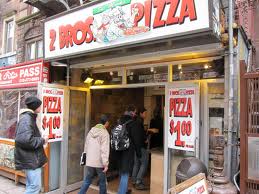

It’s best to start at $1.50 a slice.
That is what pizza was selling for about a year ago at a family business that is a combination vegetarian Indian restaurant, candy store and pizza parlor on Avenue of the Americas (also known as Sixth Avenue), between 37th and 38th Streets. It is called Bombay Fast Food/6 Ave. Pizza.
Then a Joey Pepperoni’s Pizza opened near the corner of 39th and Avenue of the Americas, offering pizza for $1, a price that has in recent years been favored by a number of New York pizza establishments.
So Bombay/6 Ave. Pizza shrank its price to $1 too.
All was good until last October, when a third player entered the drama.
A 2 Bros. Pizza, part of an enlarging New York chain of 11 shops that sell slices for a dollar, opened virtually next door to Bombay/6 Ave. Pizza. The only separation is a stairwell that leads up to a barbershop and hair salon.
Price stability at a buck all around persisted until eight days ago, when both 2 Bros. and Bombay/6 Ave. Pizza began selling pizza for the eye-catching price of 75 cents a slice, tax included — three slender quarters.
There is a sign that some parties hope things get better:
For his part, Eli Halali made it clear that 75 cents was a temporary price point. He said he could not make money at that level and eventually would return to $1. He said that if Bombay/6 Ave. Pizza went back to $1, he would as well.
But emotions may overcome reason:
If it didn’t, he said, it better watch out.
His father, Joshua Halali, who acts as a consultant to 2 Bros., said, “I suggested to my children to go to 50 cents.”
Oren Halali said, “We might go to free pizza soon.”
Eli said: “We have enough power to wait them out. They’re not going to make a fool of us.”
The brothers said they are also contemplating adding fried chicken to the Avenue of the Americas store to intensify the pressure on Bombay/6 Ave. Pizza.
Meanwhile, Mr. Patel remains intransigent. “We’re never going back to $1,” he said. “We’re going lower.”
“We may go to 50 cents,” Mr. Kumar said. Of his next-door rival, he said: “I want to hit him. I want to beat him.”
Differentiation may protect them. Yelp reviewers love the Indian items at Bombay Fast Food. The Halalis should introduce some Middle Eastern items. And perhaps Bombay Fast Food should just get out of the pizza business. This will allow pizza prices to go up. Then, pizza sales will stop cannibalizing profits from the Indian food operation.



Broccoli vs. Health Insurance
You can’t eat broccoli without paying for it. You can get health insurance without paying for it because hospitals are obligated to treat you if you turn up at the ER door. This means society is providing health insurance for free to some people. They are being subsidized by the people who pay for health insurance. There is no such issue with broccoli. Note I am using the phrase health insurance not health care as some of the justices tried to make a distinction between the two.
We can turn heath insurance into broccoli by denying care at the ER door to the uninsured. This is feasible as healthcare services are excludable. Whether society wants to do that are not is a political judgement. Hence, elections are the right mechanism to determine this issue.
Broccoli vs. Wheat
the Commerce Clause of Article I, Section 8 of the Constitution, [gives] Congress the power
To regulate Commerce with foreign Nations, and among the several States, and with the Indian tribes.
How has this been interpreted? Again, via the New Yorker:
In the famous 1942 case of Wickard v. Filburn, the Court said that the federal government’s authority extends to any activity that “exerts a substantial economic effect” on commerce crossing state lines.
The case involved Roscoe Filburn, an Ohio farmer who wanted to grow more wheat than he had been allotted under quotas introduced during the Great Depression to drive up prices. In deciding against Filburn and in favor of the Department of Agriculture, the justices pointed out that the actions of individual wheat farmers, taken together, affect the price of wheat across many states. That is what gives the federal government the power to limit their actions.
This argument can be made for any good, private or public. Hence, the externality argument made above is not necessary under this precedent. Also, Justice Scalia, Roberts etc can be forced to buy broccoli by law.
What is then the limiting principle? The commerce clause has no limiting principle, according to me, a non-lawyer. The limiting principle is the imposed by politics: any politician who seeks to regulate the broccoli market must run for election. This politician will reach the limit of his political career.
(Edit: Changed “eat” to “buy” re broccoli and “free insurance” to “care” re healthcare.)


The nationally recognized Piven Theatre Workshop would play a leading role in the revitalization of the Noyes Cultural Arts Center, occupying renovated space and a state-of-the-art theater in the building under a plan that received backing Monday from a city committee…
With past efforts to change things at the city owned building “not going as smoothly, as easily as we wanted,” the new plan seems to heading the city in the right direction, said Alderman Judy Fiske, in whose 1st Ward the building is located….
Piven Theatre officials are proposing to occupy the southern one-third of the building and would extensively renovate the area with new classrooms, rehearsal space, offices and a new theater, he said……
The building, which leases space at below-market rates to artists, faces substantial repairs, including a new roof and heating and air conditioning system.
City officials have looked at a new model for operating the center, a former school building, including asking tenants to take a greater role in the building’s upkeep.
Because of the ambiguity, Piven officials told [officials] last fall they were likely moving out of the building, and possibly out of Evanston…
Clear property rights are necessary to resolve the hold up problem.
But a battle to establish property rights can generate a war of attrition and hence the hold up problem. For the Church of thew Holy Sepulchre inthe Old City in Jerusalem:
The primary custodians are the Eastern Orthodox, Armenian Apostolic, and Roman Catholic Churches, with the Greek Orthodox Church having the lion’s share. In the 19th century, the Coptic Orthodox, the Ethiopian Orthodox and the Syriac Orthodox acquired lesser responsibilities…
Under the status quo, no part of what is designated as common territory may be so much as rearranged without consent from all communities. This often leads to the neglect of badly needed repairs when the communities cannot come to an agreement among themselves about the final shape of a project….A less grave sign of this state of affairs is located on a window ledge over the church’s entrance. Someone placed a wooden ladder there sometime before 1852, when the status quo defined both the doors and the window ledges as common ground. The ladder remains there to this day, in almost exactly the same position it can be seen to occupy in century-old photographs and engravings.
If one church fixes something, they then claim property rights over the thing they fix. Hence, all repair is vetoed
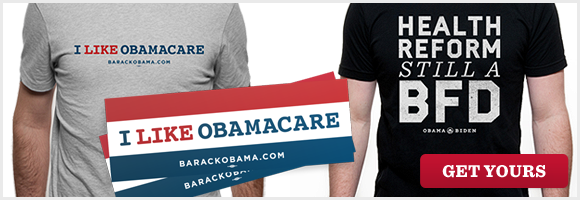

The big event of this week in the U.S. will be the Supreme Court discussion of the Affordable Care Act aka “ObamaCare”, a supposedly derogatory nickname now embraced by the Obama campaign. At the heart of the fight is the so-called individual mandate which requires everyone to purchase health insurance. A related and important argument is that additional provisions, such as requiring coverage for individuals with preexisting conditions, become prohibitively expensive without the individual mandate. This is because, without the mandate, healthy individuals will not buy insurance till they become sick and this drives up costs of insurance companies. So, if the individual mandate is struck down, the argument goes, the court should also strike down the requirement that insurance companies cover individuals with pre-existing conditions.
I am not a lawyer but the main argument for canceling the individual mandate turns on whether the federal government has the right to penalize an individual if they do NOT take a certain action. There is plenty of precedent for taxing “action” but can the federal government tax “inaction”? Many amicus briefs have been filed but there are two key ones by economists.
David Cutler, who worked in the Obama administration, has filed one with many co-signatories (including Akerlof, Arrow, Maskin, Diamond, Gruber, Athey, Goldin, Katz, Rabin, Skinner etc.). They say there is no such thing as inaction. A conscious decision to forego healthcare is an action and hence under the purview of existing law. Foregoing insurance also affects outcomes largely by shifting costs to others and hence is not a neutral decision.
The other side of the argument is filed by Doug Holtz-Eakin with co-signatories inclusing Prescott, Smith, Cochrane, Jensen, Anne Krueger, Meltzer etc.) First, they argue that if an individual does not want to buy converage it must be because the costs outweigh the benefits. Second, they argue about the numbers, claming the costs imposed by the uninsured on the insured (“cost-shifting”) are far below the $43 billion estimated by the Government Economists and are more like $13 billion.
The first part of the Holtz-Eakin argument is, to me at least, odd. Uninsured individuals can get healthcare for free in the emergency room. Hence, they can get the benefits of healthcare -or at least healthcare in extreme circumstances – without the costs. So, of course for them the benefits are outweighed by the costs because they get the benefits anyway. The argument by Holtz-Eakin presumes that the individuals are not free-riding and so their private decisions fully reflect the costs and benefits but they do not. Then, the second part of the argument which admits there is cost-shifting going on basically makes the point I am making – if there is cost-shifting, there is free-riding and then individual’s decisions do not fully internalize costs and benefits.
There has to be a better argument against the individual mandate than this. I looked at Senator Rand Paul’s brief. The precedent for this case is a 1942 case involving an Ohio farmer who was exceeding his quota of wheat production. Footnote 6 caught my eye:
So infamous is the case, it has been set to music, to the
1970s tune of “Convoy”:
“His name was farmer Filburn, we looked in
on his wheat sales. We caught him exceeding
his quota. A criminal hard as nails. He said,
“I don’t sell none interstate.” I said, “That
don’t mean cow flop.” We think you’re
affecting commerce. And I set fire to his crop,
HOT DAMN! Cause we got interstate
commerce. Ain’t no where to run! We gone
regulate you. That’s how we have fun.”
Will this convince Justice Kennedy or is it cow flop?
Dr Richard Weitz, Senior Fellow and Director of the Center for Political-Military Analysis at Hudson Institute said: “From our perspective, China should have done more in terms of security. From their perspective, they didn’t need to; they could free-ride, we were going to do it anyway. They didn’t see any point because all they would do is incur a lot of sacrifice and antagonise the Taliban and the global terrorist movement, and they’d rather let us incur that.”
Why aren’t Western countries going in there themselves?
Peter Galbraith, former deputy head of the UN mission in Afghanistan, said: “Western companies are exceptionally timid when it comes to operating in places where there is even the remotest hint that it might be a little risky, and the Chinese are not and are willing to go to these places. And the Chinese have business practices that Western countries … let’s just say that Chinese generosity towards local officials exceeds that of what Western companies are capable.”
I guess some might argue trade is good for Afghanistan and hence for us if trade leads to a stable prosperous economy. But as I have made it to Chapter 4 of Acemoglu and Robinson’s Why Nations Fail, I worry that Afghanistan will adopt “extractive political institutions” and all this trading will lead nowhere except a Swiss bank account.
Bordeaux wine producers used to release their stock en masses In the past,
“Price,” he [Chris Smith, a wine investor] says, “is a function of supply and demand, and the traditional story of wine investment is that supply of any particular wine can only reduce over time as bottles are opened and drunk.”
With prices going up over time,
the decision made by Bordeaux châteaux, more or less from the 2006 vintage onwards, to hang on to much more stock than was the case in the past (from almost nothing to a full two-thirds of a particular harvest) has changed the game…..
If all of the stock of a particular vintage, though, is either held by private investors or retained by the châteaux, the traditional narrative falls apart, and top Bordeaux ceases to be what The Wine Investment Fund calls “the only asset class with a perfect inverse supply curve”…
The ‘lower risk approach’, Smith insists, is to continue to invest in pre-2005/6 vintages within his fund’s ‘universe’ of 35 châteaux. Those are the wines which are being guzzled. Guzzling is essential.
In my search for examples for a paper, I found:
The context of our analysis is the laundry services industry because it is well suited for analyzing both
vertical integration and social networks. Each store makes two make-or-buy decisions: one for
drycleaning and another for laundry. These are the primary services offered by a store, and whether or
not they are produced in-house can easily be revealed. Furthermore, the industry has long been associated
with ethnic concentration, such that in the southern California region where we focus our analysis,
Koreans currently own more than 2,000 cleaners….The greater concentration of Koreans in Koreatown and the communication between them suggests
that “word-of-mouth” (or reputation effects) will spread faster within this area. An upstream cleaner
supplying a Korean cleaner in Koreatown recognizes that their conduct can affect their reputation
with their other Korean customers in Koreatown….Therefore, while a network of Korean cleaners outside Koreatown could yield some
network effects, we expect these to be smaller. Our analysis therefore concentrates on the network effects
of Koreatown relative to other small networks of Korean cleaners or the lack of networks.

A Generalist is good at many tasks, a Specialist only good at one. Demand for the output at each task fluctuates so it is good to have someone who can perform many tasks so “supply can match demand”. So, the Generalist is better for the firm than the Specialist.
But the Generalist’s life is hard – she is taking on a lot of risk. What will she be working on next? And she is the same rank as the specialist so she gets the same rewards. Better to coast on the tasks she likes least and work hard on one. More predictability and a better idea of what task to get better and better at performing.
So, generalists should disappear in the long run and the firm will just have specialists. Unless they can think of some way to reward generalists.

People who read e-books on tablets like the iPad are realizing that while a book in print or on a black-and-white Kindle is straightforward and immersive, a tablet offers a menu of distractions that can fragment the reading experience, or stop it in its tracks.
E-mail lurks tantalizingly within reach. Looking up a tricky word or unknown fact in the book is easily accomplished through a quick Google search. And if a book starts to drag, giving up on it to stream a movie over Netflix or scroll through your Twitter feed is only a few taps away…
“The tablet is like a temptress,” said James McQuivey, the Forrester Research analyst…. “It’s constantly saying, ‘You could be on YouTube now.’ Or it’s sending constant alerts that pop up, saying you just got an e-mail. Reading itself is trying to compete.”
My (quite old) Kindle loses battery power rapidly if you attempt to use its wireless capabilities and its browser lacks the capability to access webmail or surf the web comfortably. So, you have only one option – use it to read. Fewer options are better is you lack self control. Far sighted readers who easily fall prey to Twemptation should stick with the Kindle over the iPad.

In 1964, [W D Hamilton] submitted a pair of papers to the Journal of Theoretical Biology. The papers hinged on one simple equation: rB > C. Genes for altruism could evolve if the benefit (B) of an action exceeded the cost (C) to the individual once relatedness (r) was taken into account. Hamilton referred to his model as “inclusive fitness theory.”…[A]n ambitious entomologist named E. O. Wilson read the paper. Wilson wanted to understand the altruism at work in ant colonies, and he became convinced that Hamilton had solved the problem. By the late nineteen-seventies, Hamilton’s work was featured prominently in textbooks; his original papers have become some of the most cited in evolutionary biology. …In an obituary published after Hamilton’s death, in 2000, the Oxford biologist Richard Dawkins referred to Hamilton as “the most distinguished Darwinian since Darwin.” But now, in an abrupt intellectual shift, Wilson says that his embrace of Hamilton’s equation was a serious scientific mistake. Wilson’s apostasy, which he lays out in a forthcoming book, “The Social Conquest of the Earth,” has set off a scientific furor.
I described the Wilson et al paper in an earlier post.

Iran may be going to headlong into a pursuit of nuclear weapons. Or maybe not:
Yet some intelligence officials and outside analysts believe there is another possible explanation for Iran’s enrichment activity…. They say that Iran could be seeking to enhance its influence in the region by creating what some analysts call “strategic ambiguity.” Rather than building a bomb now, Iran may want to increase its power by sowing doubt among other nations about its nuclear ambitions. Some point to the examples of Pakistan and India, both of which had clandestine nuclear weapons programs for decades before they actually decided to build bombs and test their weapons in 1998.
What are benefits and costs of ambiguity for the party pursuing ambiguity and potential opponents? Tomas Sjöström and I investigated this issue in a paper “Strategic Ambiguity and Arms Proliferation”. The basic idea is that a policy of ambiguity can strike the right balance between creating deterrence (the party pursuing ambiguity might be armed) and minimizing escalation (the party pursuing ambiguity might not be armed). With that balance struck, there is less incentive to acquire arms and this can even help your opponents who seek to minimize proliferation. In other words, an equilibrium with ambiguity can be better for all parties than an equilibrium with transparency.
There are three divisions in a firm, A, B and C. Each makes a different kind of product. Resources are allocated from Center and the three divisions compete for them. Over time the members of each division generate ideas for new products that need funding. The ideas may be good or bad and the division members get an accurate signal of the quality of the idea. The members of other divisions get a noisy signal or no signal at all. The three divisions have to send a vote to the Center which will determine whether to fund the idea or not. The greater the number of divisions supporting an idea, the more likely it is to be funded by Center.
Division A is “honest”. They only push their ideas if they are good. They support the ideas of other divisions if and only they become convinced by objective arguments that they are good.
Division B is an “empire builder”. They push all their ideas as if they are all good. They thrash other divisions’ ideas if they feel threatened.
Division C is “honest yet strategic”. They push their ideas if and only if they are good. How should they vote on other divisions’ ideas? Division A is likely to be on their side when they push an idea. After all, Division C only support their own ideas if they have a good signal. They can then convince Division A of the strength of their case. To convince Center, it would be even better to have a unanimous decision with Division B on board. So, Division C supports Division B’s ideas. If Division A proposes an idea for funding and Division B opposes it, Division C sides with Division B. A quid-pro-quo equilibrium develops between Divisions B and C.
In the long run, Division A will die out. This is bad for Center as Division A’s good products are good for profits and Division B’s bad products are not. So perhaps Center will intervene. Or Division A may also become strategic. They should deliberately destroy some of Division C’s good potential products and persuade them to switch their support to them over Division B.

In an under-caffeinated state yesterday morning, I picked up the NYT Travel section to see where I might escape once my teaching is over in a few weeks. Nogales, Mexico, seemed easy to get to – you just go to Nogales, Arizona, and walk across the border. Good for tacos and cheap dental work.
A few hours and several coffees later, I settled down to read Why Nations Fail, Daron Acemoglu and Jim Robinson’s new book. It summarizes their many years of research (some with Simon Johnson) on political and economic institutions and their impact on economic growth. The book has no equations, graphs or tables and is aimed at a popular audience. The book begins by comparing the colonial history of Mexico and the U.S.
Mexico was settled by Spanish conquistadores who extracted as much gold and silver as possible and used the population as slave labor. The British tried to take the same approach when they arrived in Virginia. But there was no gold or silver and the population density was low. They were forced to set up political institutions that fostered economic activity. Settlers eventually got to keep a large slice of any surplus they generated and got the right to vote on taxation (this led to trouble for the British in the long run!). All very interesting and yet it seemed familiar. Eventually it dawned on me that a key Acemoglu and Robinson motivating example, used to show the importance of institutions, is Nogales Arizona vs Mexico. The geography is the same and yet the political institutions are quite different. And so are the economic outcomes. So, geography is not the major determinant of economic outcomes (roughly the theory of Jared Diamond) and political institutions are at the core of economic development.
Serendipity, synchronicity, call it what you will, but the time seems ripe for this book. Acemoglu and Robinson have a blog to accompany their book. I suppose they will interpret comtemporary events through the lens of their theory. I look forward to reading it on a regular basis.
The Cubs are finally ready to end their losing streak.
After years of being out-hustled by secondary ticket brokers, which flip high-demand seats for huge profit, the North Siders are stealing a page from their South Side rival’s playbook and implementing “dynamic pricing” in their 5,000 bleacher seats this season.
Until recently, all 30 Major League Baseball teams set prices well before the start of the season, leaving their hands tied on game days, when StubHub Inc. sellers might be hawking the same tickets for twice as much. Now, if demand spikes, the Cubs can hike prices much like airlines do as departure time nears.
“Teams are looking at (dynamic pricing) to capture some of that secondary market that they’re not capturing,” says Colin Faulkner, the Cubs’ vice president of ticket sales and service, who implemented the new system when he worked for the NHL’s Dallas Stars before moving to Wrigley Field in 2010. Mr. Faulkner says the dynamic pricing will supplement a tiered system in the bleachers, where initial costs range from $17 to $78 apiece.
(Hat Tip: Kathryn Landis, Kellogg MBA)
Liberal website Daily Kos announces Operation Hilarity:
It’s time for us to take an active role in the GOP nomination process. That’s right, it’s time for those of us who live in open primary and caucus states—Michigan,North Dakota, Vermont and Tennessee in the next three weeks—to head out and cast a vote for Rick Santorum.
Why would we do such a crazy thing? Lots of great reasons!…..
The longer this GOP primary drags on, the better the numbers for Team Blue. Not only is President Barack Obama rising in comparison to the clowns in the GOP field, but GOP intensity is down—which would have repercussions all the way down the ballot.
The longer this thing drags out, the more unpopular the Republican presidential pretenders become. Just look at Mitt Romney’s trajectory, which followed Herman Cain’s trajectory, and Newt Gingrich’s trajectory, and Michelle Bachmann’s trajectory, and so on.
But we have naysayers in the comments:
makes a mockery of the democratic process and descends to the level of idiots on the other side of the fence.
casting a false vote is ‘ dirty tricks’ writ small – a stunt for small minds – and is undignified, and imo cynical and even a bit unamerican.
Is this a Republican voter messing with the minds of stalwart liberals?

We blogged many times about the Next restaurant’s innovative ticket scheme. Potential restaurant goers had to sign up to try to acquire seats at a fixed price for a set meal. Good for the restaurant in terms of knowing what inventory to hold, predictable revenue etc. The scheme turned out to be extremely successful with resale prices of the tickets running into thousands. Why not just auction off the seats – that is what very economist would say? It turns out that Nick Kekonas and Grant Achatz do not want to make too much money and want everyone to be able to afford to come. In response to my blog post Nick commented:
Since we have universally high demand right now, the question is why don’t we flatten the pricing towards the top of what the market will pay? There are a few reasons for this, mostly having to do with customer service and the hospitality industry. Simply, we never want to invert the value proposition so that customers are paying a premium that is disproportionate to the amount of food / quality of service they receive. Right now we have it as a great bargain for those who can buy tickets. Ideally, we keep it a great value and stay full.
I replied
If you want to give it to charity, to start a foundation to teach disadvantaged kids how to cook or whatever is close to your heart, that surely dominates just giving up the money to random lucky people who sign up and sell tickets for profit on Craigslist. And given you have software already, I bet it would be pretty easy to program a simple auction.
My advice was pretty obvious and I’m sure they though of it already. Anyway:
Next created a special page to run a Dutch auction for an El Bulli menu two-top every night, all proceeds to go to the University of Chicago Cancer Center where Grant Achatz was treated….
Not surprisingly, there are a lot of people who couldn’t stand to wait for Next El Bulli tickets to come down in price— as of this writing 46 of the 72 tables, many of them for the $5000 maximum price (compared to about $800 for a regular pair of Next El Bulli tickets; most of that will be tax deductible as a donation) have sold for a total of $215,000. Odds are the entire block will sell out later today, bringing in around $350,000 for the hospital in little over a day. Next’s food fascinates, but it’s hard not to think that Next’s radically innovative business models will prove equally important and influential for the restaurant industry and its extensive charitable involvement over the years to come.
 Cheap Talk