
You are currently browsing Sandeep Baliga’s articles.
Coase was the last “classical” economist. His style is closer to Marshall than to Samuelson. He asked deep questions and proposed simple but deep answers without using maths. So, a certain style of doing economics passes away with him.
The work of his I am most familiar with concerns the theory of the firm: Why are some transactions mediated through markets while others take place within firms? Suppose Microsoft and Nokia have to work together to supply phones. MS can own human capital that generates software, Nokia can generate the hardware and they can exist as separate firms and trade. Or MS can produce the end software/hardware product and employ Nokia workers in an integrated firm. Coase’s point is that if there are no transactions costs, there is property-right neutrality. Both institutions should generate the same joint surplus and it does not matter whether they are integrated or not. People often stop there and that is all they know about the “Coase Theorem”. But in fact, Coase’s second point is that property right neutrality is crazy hence there must be transactions costs and we must study these as well as the usual costs of production we normally invoke. Once we have a good understanding of transactions costs, we will understand why some transactions take place through firms and other through markets.
The downside of having a classical style is that no-one really understands what you mean. First, there was controversy about the Coase Theorem itself – was it in fact a theorem? Coase never called it that (I think it was Stigler who coined the phrase) and Samuelson though it was wrong. But, I think by now we do believe it is a theorem and the property right neutrality obtains for transferable utility (MasColell, Whinston and Green has a simple argument). But what are these pesky transactions costs that determine the boundary of the firm? There we have no consensus. One leading theory invokes costs of haggling ex post if two firms are not integrated (Wiliamson got the Nobel Prize for this theory). The other says there are no costs of haggling ex post and bargaining in efficient but there is a hold up problem in bargaining as surplus is split. Knowing this firms underinvest ex ante. The allocation of property rights affects the ex post division of surplus and hence this leads to a theory of optimal property rights (this theory has been developed by Oliver Hart with his co-authors Sandy Grossman and John Moore (GHM)).
The counterargument to Williamson’s theory is typically that if haggling generates transactions costs, we should see vertical integration and no outsourcing. No interior solutions! The counterargument to GHM is more esoteric. It turns out that there are contracting solutions that are consistent with typical GHM solutions and resolve the hold-up problem. In some sense, the Coase Theorem goes through in GHM models.
So what can we learn from the Nokia and MS merger? It seems they are looking for a Ballmer replacement who is working at Nokia. And there are intellectual property issues:
Mr. Ballmer said Microsoft and Nokia had not been as agile separately as they would be jointly, citing how development could be slowed down when intellectual property rights were held by two different companies.
But also from the same NYT article:
Large acquisitions are fraught with peril, especially in the technology business, where there are challenges to integrating employees from different backgrounds into a coherent whole.
First, Coase is right – there are transactions costs that destroy property right neutrality. Second, both Williamson and GHM theories are consistent with the facts. Maybe ex post efficient trades are not occurring because of haggling over MS’s and Nokia’s intellectual property. Or knowing that surplus will be extracted by the other party ex post given its monopoly power over its patents, neither firms is fully invested in the joint venture.
So, the bottom line is that Coase had some simple but deep insights and we are still working out the implications.
I talked to my father a couple of days ago. He’s excited ahead of his trip to India because the British pound is trading at 100 Rupees!
Why is that and what does it have to do with the Food Security Bill that gives some minimal level of food support to the Indian population?
Debraj Ray answers these two questions:
1. Rupee fluctuations:
The basic economics of this is pretty simple. Imagine a huge stock of hard-currency-denominated investible funds, forever sloshing around in search of the best returns. For a developing country, the urge to tap into these funds is immense……. And so it was that India started on the Great Upward Path: money pouring into its coffers from abroad, accompanying tariff and quota liberalization then permitting easy purchase of foreign goods without a huge depreciation in the rupee, the outward drain being more than easily matched by the inward flow.
QE, by keeping interest rates very low in the United States and the rest of the “developed world,” certainly helped here, as hot money scrambled to take advantage of relatively attractive portfolios in emerging markets.
And what money goes in comes out after the Fed hints that their easy money policy may be coming to an end and interest rates are on the rise. Hence fluctuations
2. Food Security Bill:
It is interesting that the very same business interests which have completely disregarded the dangers I’ve discussed are now floundering around for a scapegoat. Let’s see now: it must be the damn Government which is to blame. And we’re off to the usual races: cut back government spending, and yes, social spending for those lazy masses must be the first to go….
What we have is a bill that purports to bring food security to the majority of India’s population, and possibly the overwhelming majority of India’s poor, plus the additional benefits to mothers and children, for about 6% of the Indian government budget. Not for 12%, as in defense, or 9%, as in the fuel subsidy. And certainly not for the same impact, rupee for rupee, on India’s international deficit.
It’s crazy to link 2. with 1. Must the poor and innocent always pay for the vagaries of financial markets? I hope not.
Israel uses it, Saddam used it, the US uses it w.r.t. Taiwan vs China policy and now Larry Summers is using it – strategic ambiguity.
[W]ith a high-profile appointment like for Fed chair or the Supreme Court, vagueness becomes a virtue. When Senate confirmation is the goal, a candidate wants to maintain wiggle room and let people project upon you whatever their preference is.
What Summers is trying to do is to create a situation in which conservative senators view him as a tough, no-nonsense central banker who will maintain the integrity of the dollar against those dirty hippies who want to debase the currency. Simultaneously, he wants liberals to view him as someone who will do whatever he can to try to strengthen job creation and find creative ways to improve growth.
Now we pretty much know Israel is nuclear but at its strategy’s inception things were not so clear. The US has not had to openly side with Taiwan or China in a significant conflict etc. This is important because it is hard to maintain ambiguity about your true preferences or nuclear status if you have been forced to reveal them in the past. Larry Summers has revealed lots about himself in the past either through policies he has embraced or comments he has made. Even if these opinions were not necessarily about monetary policy, they reveal the intellectual framework and biases that inform his economic worldview. So it is impossible to maintain strategic ambiguity as a stance.
India’s two most prominent economists have never really seen eye-to-eye. Amartya Sen, a Nobel Prize-winner and Harvard professor, believes in public interventions to alleviate extreme poverty and reduce inequality while Jagdish Bhagwati, a professor at Columbia and author of the bestselling book In Defense of Globalization, favors a more free-market, growth-first approach.
In recent weeks, the two have caused something of an uproar — “Academic Brawl,” proclaims the Economic Times — with a terse back-and-forth in the letters page of the Economist.
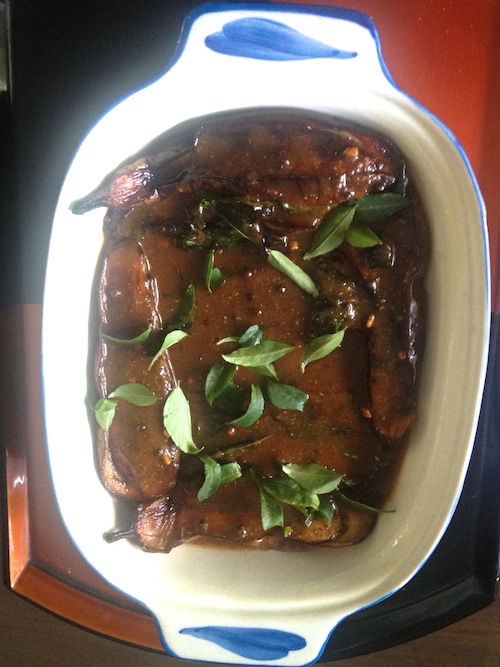
What is it all about? For the answer, I turned to the blog of a third prominent Indian economist (and apparently excellent cook) Debraj Ray:
1. Economic growth is fundamentally uneven.
2. Looking at rates of growth per person will fail to reveal this basic fact. High growth and extreme inequalities can co-exist. Indeed, they often do.
3. There are a number of ways to deal with uneven growth. The most important of these is occupational choice: education and training to enter new sectors. But occupational choice is slow (it will often take a generation), and it is imprecise (by the time we’re done retraining, the economy may have hared off somewhere else).
4. So other ways need to be found to even out that unevenness.
5. But wait — why won’t the good old market take care of it? It might: if growth in one sector trickles to another via expanding demand. If software engineers like potatoes, the potato farmer stands to gain. Or the tourist industry. Or hairdressers. Just how strong these intersectoral bonds are is a profoundly empirical question. Is there enough work on assessing these strengths? The simple answer is no: not nearly enough. To simply hope that the bonds will work is no good.
We have now arrived at the heart of the matter: is (5) enough? That is what the debate needs to be about. Not about Bhagwati, and not about Sen.
6. And if (5) isn’t enough, what then? Then we are left with two alternatives:
7. Active and sustained government intervention to even things out. Social spending on education. On health. [On] nutrition. On transportation and communication networks. On minimal safety nets. The market can take care of the cool stuff. The public sector gets a less sexy role: getting the basics right. That is what Drèze and Sen (and frankly, many others) are about.
Failing (7) and provided that (5) fails as well, we have just one option:
8. Sustained, crippling social conflict, not just cutting across class lines but along any marker which can be arrogated for the purpose: religion, caste, geography, language.
[B]efore Apple launched its own iOS Maps app, Google Maps for iOS was already markedly inferior to Google Maps for Android. Not because Google was incapable of producing a great Google Maps app for iOS but because they didn’t want to make one.
To get out of that bind, Apple has never needed to make a product that’s actually superior to Google Maps. What they’ve needed to do is produce an application that clears two bars. One is that it has to be good enough that your typcial doesn’t-care-too-much phone consumer doesn’t reject iOS out of hand. The other is that it has to be good enough such that if Google doesn’t want to lose the entire iOS customer base it has to scramble and release a great Google Maps app for iOS and not just for Android. Apple’s Maps app easily clears both of those bars. Before the release of iOS 6, the inferiority of Apple’s Google-powered iOS Maps app to Android’s Google maps was a real reason to prefer an Android phone. Today, there is no such reason. Not because Apple Maps is as good at Google Maps, but because Google Maps for iOS is as good as Google Maps for Android.
When he left Rwanda that July, Mr. Tourre returned to the United States to enter the Ph.D. program at the University of Chicago. He also joined an intramural soccer team there, the Bootstrappers, until an Achilles’ tendon injury that required surgery sidelined him for a period of time.
As with many of the people who met him in Chicago, Nancy L. Stokey, an economics professor, initially had no idea of Mr. Tourre’s legal woes. She found out only after he had served as a teaching assistant in one of her undergraduate classes. “He was one of my best students,” she said.
Robert Shimer, another of Mr. Tourre’s economics professors, agreed. “He’s someone who, if he continues on the same track, is going to be one of our top job market candidates.”
The Democrats are threatening the change the filibuster rules in the Senate. The repercussion may be a significant response by the Republicans when they take control of the Senate. This may be quite soon if Nate Silver’s forecasts pan out.
But perhaps the magnitude of the response can be quantified by examining history? Legislation has to be approved by the House, Senate, President and often the Supreme Court. How would a simple majority rule in the Senate have changed legislation? Repealing Obamacare, civil rights, etc might be hard even with Senate majority rule. Cabinet and other appointments require Senate approval. How would a simple majority rule have changed personnel? John Bolton was a recess appointment at the U.N. – things would not have been different if he had been approved by Senate majority rule. Etc , etc.
Probably someone has studied this already…
I just had one of my worst travel experiences. On United.
I was flying with my two kids and we got to O’Hare at 9 am in plenty of time for our 10.30 am flight to Seattle. The plane was delayed for one hour initially but then, after the airplane arrived, it turned out there was some malfunction so we had to wait for another plane. That one was due to leave at 2 pm.
My kids are pretty good but they were getting a bit restless so I decided to let them pick a treat for every delay. They opted to have lunch at Wolfgang Puck’s in the other of the two United terminals. They got to veto Frontera Fresca. So far so good.
The next bit of news – easy to forecast – further delay till 2.25. Peanut M&Ms. But then things got interesting. The pilots on the incoming flight had timed out given the additional 25 minute delay and we had to wait for new pilots to turn up. Ice cream for the kids. But no-one was insuring me so I was getting more and more pissed off. This pilot time out was news to me but surely eminently foreseeable for United? We left at 4.30 pm. Kids were on a sugar high and I was on a United low.
Dani Rodrik will be the Albert O. Hirschman Professor of Social Science at the Institute for Advanced Study in Princeton as of July 1, 2013. Before then, he was the Rafiq Hariri Professor of International Political Economy at the John F. Kennedy School of Government, Harvard University. He has published widely in the areas of international economics, economic development, and political economy. His research focuses on what constitutes good economic policy and why some governments are better than others in adopting it.
Didn’t see anything on the IAS webpage announcing it as yet.
A prominent and well-connected economist who has openly supported opposition figures has resigned from several posts and abruptly left Russia under mounting pressure from investigators, officials of the university he leads said on Wednesday.
The economist, Sergei Guriev, has been questioned repeatedly in a case that stems from a report that he co-wrote that harshly criticized the treatment of Mikhail B. Khodorkovsky, the imprisoned oil tycoon and one-time political rival to President Vladimir V. Putin.
A centrist figure who is at home among Russia’s power brokers, Mr. Guriev drew attention a year ago for publicly declaring his support for the anti-corruption blogger Aleksei Navalny.
I’ve read Guriev’s papers in the past but his name seemed particularly familiar. I realized the Mikhail Golosov has presented a joint paper with Guriev and others at the Nemmers Conference just last week. Some people think Stalin’s policies were necessary to push labor from the countryside to industry and hence the hardship they caused, while cruel, had some long term positive economic impact. Chermukin, Golosov, Guriev and Tysvinki argue, using data they collected and a two sector growth model, that Stalin’s policies reduced welfare significantly in the long run.
This guy is hardly a radical.
Airlines that offer this either send travellers an email inviting them to upgrade or travellers can go direct to the airline’s website.Once you’re on their site, rather than them saying, ‘you can pay £400 to upgrade’, you can now say, ‘I’ll pay £300’,” explains Ken Harris chief executive of Plusgrade, the technology company behind the platform. “There may be a minimum upgrade price and there will be an indicator which shows the strength of your offer.” The airline will then email you at least 72 hours before your flight to tell you if your bid has been successful; if not, you retain your original reservation.
Taking things to another comfort level:
Along with upgrades, you can also pay a nominal fee to ensure the seat next to you is not occupied.
To extract surplus and reduce information rents from high types, “low” types must be punished with inefficient allocations. Expect to be seated en masse if you do not purchase an upgrade even if the plane is half empty.
“Thibs is a guru,” Gibson said. “He understands the game plan.
“He had me guarding Ray Allen. That’s how much confidence he has in everybody’s ability to guard on defense. He really drew up and knew what the team was gonna do.
Every time they ran down and ran offense, it was exactly what Thibs showed us on paper.”
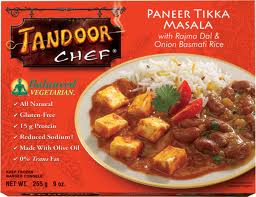
I enjoy my Mother’s cooking all too rarely. This is good for my waist line but bad for my taste buds. I have resorted to consumption of frozen Indian food as a poor substitute. I was surprised to find that Whole Foods carries a reasonable brand, Tandoor Chef, that has some decent options. Of course, these products come with a Whole Foods price tag.
On a recent trip to Devon Av., I happened to notice that the Fresh Farms supermarket carried these same products. Unfortunately, the prices are benchmarked against Whole Foods – no good deal there. But the supermarket also carries much cheaper products by Healthy Tiffin and they bear a remarkable resemblance to the Tandoor Chef products, e.g. both have Paneer Tikka Masala cooked in a relatively healthy way (if that is possible!). On closer inspection, Healthy Tiffin and Tandoor Chef are both made by Deep Products. I have been enjoying the arbitrage opportunity for a few months now. I worry that Deep Foods will reduce the quality of the Healthy Tiffin products to prevent arbitrage!

I was watching Fox News and they were discussing whether the law needed to be changed so US citizens could be interrogated at length without being told their Miranda rights. The rationale is that the suspect is willing to give information if he knows it will not be used against him in a court. Also, he will be more pliable with no lawyer present. And if the information is very valuable, this is a price worth paying. (At least I think this was the gist of the Five on Fox crowd. I was a bit inebriated after a boozy conference meal at the Princeton Conference on Political Economy.)
The Five on Fox usually rail against rampant Leviathan – an uncontrolled government usurping the rights of honest, gun toting, red meat eating citizenry. That same Leviathan, if given the power to use domestic enemy combatant status, would apply it more and more broadly. A domestic enemy combatant is actually harder to define objectively than an assault weapon. A slippery slope would undoubtedly ensue and regular citizens would face being interrogated as enemy combatants. This is the risk of adopting the view of the illustrious Five.
But what about the benefits of greater Leviathan power, the power to interrogate true enemy combatants? We know Leviathan breaks the law at the risk of being held to account in court. There is no point running this risk in run of the mill cases. But there is a benefit in true enemy combatant cases. No jury will convict Leviathan in the latter case – the court of public opinion will replace the court of law. But egregious violations in run of the mill cases will surely lead to convictions by triggering the feeling “that could have been me” in jury members. So, roughly speaking, the law will be broken if and only if the case merits it.
Hence, there is no need for “domestic enemy combatant” status w.r.t. Miranda rights.
HT: I believe Becker and/or Posner made a similar argument years ago. If someone can tell me the reference I would be grateful.
Credit cards carry hidden fees, cell phone plans have two year contracts, hotels rip you off if you get a Kit Kat from the minibar etc etc.
It is possible to explain these features in the “rational firm, dumb consumer” paradigm if there is one rational firm, i.e. a monopolist. Things get trickier if there is competition. If one firm is offering a deliberately confusing pricing scheme to extract surplus from boundedly rational consumers, why doesn’t another offer something transparent and steal customers? Then the usual logic of Bertrand competition should eliminate intransparent pricing and lead to a zero profit equilibrium. There are two theories (I know of) for why this might not happen.
The first is the adverse selection story of Ausubel. If one credit card company cuts prices, instead of attracting confused, profitable consumers, it attracts unprofitable, risky customers who might default. The deviation is not worthwhile and this undercuts the usual Bertrand logic.
The second is the add-on story of Ellison and Gabaix and Laibson. Let’s say hotels are pricing hotel rooms below cost and making profits on the add-ons (minibars, pay per view, phones etc.). One hotel deviates and prices the room just above costs and gets rid of the rip off pricing on the add-ons. Confused consumers learn they have been confused and go to the hotel which prices rooms below cost and remember to take their cell phone and laptop (to watch streaming movies) and pack a few energy bars. The hotel that prices just above costs does not get new customers and the deviation was not worthwhile.
You can’t purchase the subsidized cell phone from ATT without signing on to the rip off two year plan – so the add-on story is hard to apply. There might be some adverse selection towards TMobile because you can pay for the cellphone in installments so you can default. But this effect does not seem large and could go the other way – stay with ATT, get an even more subsidized cell phone and default on the two year plan.
So, does that mean the upstart maverick player TMobile has triggered competition and cheap plans await us?
Harvard grad student (?), Seth Stephens-Davidowitz, studies Google searches for racial epithets 2004-2007 to control for reverse causation. He used this to define an area’s racism. He finds:
Racially charged search rate is a significant, negative predictor of Obama’s 2008 and
2012 vote shares, controlling for Kerry’s 2004 vote share. The result is robust to controls
for changes in unemployment rates; home-state candidate preference; Census division fixed
effects; demographic controls; and long-term trends in Democratic voting….The preferred point estimates imply that, relative to the most racially tolerant areas in
the United States, prejudice cost Obama 4.2 percentage points of the national popular vote
in 2008 and 4.0 percentage points in 2012. These numbers imply that, among white voters
who would have supported a white Democratic presidential candidate in 2008 (2012), 9.1
(9.5) percent did not support a black Democratic presidential candidate.
Congress is wading through NSF funded research to weed out projects they consider unworthy. One study they hit upon studies duck penises. The lead author, Patricia Brennan of UMass- Amherst, describes the act of duck procreation:
Male ducks force copulations on females, and males and females are engaged in a genital arms race with surprising consequences. Male ducks have elaborate corkscrew-shaped penises, the length of which correlates with the degree of forced copulation males impose on female ducks. Females are often unable to escape male coercion, but they have evolved vaginal morphology that makes it difficult for males to inseminate females close to the sites of fertilization and sperm storage. Males have counterclockwise spiraling penises, while females have clockwise spiraling vaginas and blind pockets that prevent full eversion of the male penis.
Evolutionary arms races between predator and prey are not unusual. Arms races between males are not unusual – peacock tail effects. But an arms race between males and females of the same species does seem unusual. Males seek to inseminate as many females as possible and have evolved elaborate penises. Females want to choose their mates so they have evolved an elaborate defense mechanism. The mechanism minimizes the chance of egg fertilization if sex is forced. But if the female is a willing partner, insemination is easier.
This research seems quite interesting. It is basic science. No pharmaceutical company is going to fund it. Seems better than funding weapons that the Pentagon does not want.
Still not the complete account of the batlle – middle segment is missing
(HT: Chris Blattman’s twitter feed.)
In a few years, this blog will focus on the concerns of “fifty-something” professors. Retirement communities in Florida and California will be the main topic of discussion. Before that comes the fiftieth birthday party. Should it be “celebrated” with a public gathering of some sort, ignored completely, or with some significant event involving just the nuclear family? In investigating the final option a few years in advance, expecting to be really decrepid by then and hence need a lot of help to move around, I looked at the National Geographic tours. They have a sophisticated pricing scheme:
Tier Pricing
Our trip costs are determined by group size. (As you can imagine, we’re able to secure lower per-person rates with
larger groups.) When you sign up for a trip, its highest cost will be noted on your initial invoice and then adjusted 30
days prior to your departure. If for any reason the group falls below the minimum number of guests, a small group
surcharge may be applied. (We have found that our guests prefer to pay a bit more rather than have their trip canceled.)
Please note that trip physicians, lecturers, and GeoEx staff are not included in the guest count to determine per-person
trip cost.
For an exotic trip to Turkey, this boiled down to: $9350 (6–7 guests), $7950 (8–9 guests), $7450 (10–11 guests), $6350 (12 guests).
The higher the volume, the lower the price. No penalty for booking early. But at these prices, I’m leaning towards ignoring the 50th landmark completely and putting the money down for a foreclosed home in Florida.

I am staying in Brooklyn over spring break. There is a certain Brooklyn look. I can’t put my finger on it but it seems to have some common elements: Only browns, dark blue and, of course, black clothing allowed. Jeans have to be skinny and cannot be stonewashed or comfortable. Shirts have to a little too tight and hair has to look greasy. A five day beard is ubiquitous for men. I fit in except I like my clothes loose fitting to accomodate my girth. Also, I lack the final piece of the Brooklyn outfit – a dog. Owners are allowed to release their suppressed color choices on their dogs which often sport an orange or red sweater.
Apart from the dogs, there is much to like here. We could not get into Chuko so we ended up in Zaytoons. The bread is spectacular and the food is quite good though a tad below the high standard set by Semiramis back home. But opposite Zaytoons is Mecca: the Ample Hills Creamery. One child insisted on dessert so we went in even though the rest us were exhausted. What a find – well, it was a find to us even if it’s well known in NYC. We had scoops of maple bacon, pistachio-squared, honey graham and honey snickerdoodle ice cream. Sometimes food brings you closer to God. This was such a case. We want to be closer to Her every day. We are planning a daily visit. We’ll be zealots by Friday when we leave.
I just flew to La Guardia from O’Hare. It is spring break so the plane was full. The United agent tried to persuade two people to take a later flight. Initially, she offered $300. No-one took the bait. She upped the ante to $400. Still no volunteers. Then, she raised the stakes to $400 plus a first class seat.
Maybe no-one was willing to delay their trip. Or perhaps now the blandishment was ever increasing, people were waiting for the better deal.
Obvious solution is to give insurance: if the deal gets better, the people who bit first get the better deal too.
Do you favor or oppose taxes on bank depositors?
I am totally against it. First, deposits under 100,000 are insured. What happened to that insurance? How could the euro group agree to taxing deposits as small as one euro? What is the meaning of deposit insurance in the euro zone? Second, deposits include the savings of honest people who have paid their taxes and saved for retirement, to buy a home, educate their children or whatever. Why pay a hefty additional tax? And how would these people feel when they woke up on Saturday morning to be told, “Sorry guys, we are not letting you withdraw your money anymore, until we sort out how to take a big chunk away from you.” And why? Because two banks out of the tens operating in Cyprus made bad investment decisions three years ago to help Greece out of its crisis, and got hit by the troika. What’s the incentive that banks now have in the European Union to treat risky investments with caution? If one of them takes bad risks the others will pay for it; if it works well for it, it will keep the profits. A classic scenario for market breakdown.
David Pogue’ followers have been worried about e-book resales and their impact on authors. I also offered my speculations on the same topic. Pogue went to the trouble of looking at the patents and finds:
[The] patents also give the publisher or bookstore the right to impose a minimum price for reselling an e-book. That limit could drop over time, as Apple’s patent makes clear: “As another example, all digital movies must be sold for a minimum of $10 until six months after their respective original purchase date. After the six month period, all digital movies must be sold for a minimum of $5.”
Both proposals suggest that publishers could also limit the number of times a digital item can be resold: “A threshold may limit how many times a used digital object may be permissibly moved to another personalized data store, how many downloads (if any) may occur before transfer is restricted, etc.,” says Amazon’s patent. “These thresholds help to maintain scarcity of digital objects in the marketplace.”
It would be fun research project to work out the optimal scheme: how many new e-books should be produced each period, how should they be priced, how should the “second-hand” e-books be priced etc. Might be easy in the full commitment case. The limited commitment case might be more fun….
We have a visitor this weekend so we did the obligatory trip to Millenium Park, took pictures under the Bean etc. It was freezing cold so we only lasted half an hour before heading to Nellcôte for brunch – I hung tough under pressure to go to Big Bowl. But by the end of the meal, my initially reluctant companions agreed Nellcôte was a big success.
You are greeted with the highbrow (Sunday NYT) and the lowbrow (US Weekly). At least when we went, the room was not super full so you could easily have a conversation. The restaurant is named after the French villa where the Stones partied while they recorded Exile on Main Street. Somehow the decor manages to pull off that kind of ambience despite (because of ?) having Anthropologie style sofas and armchairs arrayed in the lounge area. Most of the food was good – the lobster hash, sunnyside up egg pizza, and whole wheat pancakes received rave reviews. Only the french toast got any criticism whatsoever – it was considered to be if anything too sweet and desserty. But, for me, the thing that tipped the whole experience over the top was the plate of cheese, salami, home made jams, brioche, fresh madeleines etc that they bring to the table while you read decide whether Charlize Theron or Kim Kardashian looked better in the yellow dress they both happened to wear (Charlize in my opinion).
I resigned as Editor of BEJTE last month, along with the other Editors. The journal was sold by Aaron Edlin to DeGruyter Publishing. Speaking for myself, there were two issues:
1. Commitment to open access: Initially, DeGruyter were going to charge for articles and access. We thought we convinced them that this would be a terrible idea, especially as BePress was a pioneer in open access publishing. And we joined as Editors in the old model. I showed the DeGruyter people the Theoretical Economics webpage. Editors at other BePress journals resigned when initially DeGruyter stuck to its guns with a policy of charging for articles. This seemed to move them towards our position. However, the journal webpage still confusingly quotes prices for individual purchase while having a link to Free “Trial” Access. Why is there a link for purchase if the journal is open access? Why the world “Trial” if the journal is committed to open access? So, the message to us was confused.
2. Execution: Along with the transfer of ownership came a transfer of software. BePress actually had quite good software. DeGruyter switched to software sold by Thomson Reuters (perhaps the same software as used by AER, but I am not sure?). They hired just two guys to manage the transition. They were totally overwhelmed. Emails went unanswered. Authors were confused. The software screwed up submission and resubmission of articles so there were constant emails from exasperated authors. There was no intellectual work and all the work was operational, helping DeGruyter fix its problems.
These two problems led to our resignations last month. Although we are still listed as Editors, we have in fact resigned.
In late January, Amazon received a patent to set up an exchange for all sorts of digital material. The retailer would presumably earn a commission on each transaction, and consumers would surely see lower prices.
But a shudder went through publishers and media companies. Those who produce content might see their work devalued, just as they did when Amazon began selling secondhand books 13 years ago. The price on the Internet for many used books these days is a penny.
On Thursday, the United States Patent and Trademark Office published Apple’s application for its own patent for a digital marketplace. Apple’s application outlines a system for allowing users to sell or give e-books, music, movies and software to each other by transferring files rather than reproducing them. Such a system would permit only one user to have a copy at any one time.
Meanwhile, a New York court is poised to rule on whether a start-up that created a way for people to buy and sell iTunes songs is breaking copyright law. A victory for the company would mean that consumers would not need either Apple’s or Amazon’s exchange to resell their digital items. Electronic bazaars would spring up instantly.
In principle, a resale market is good for the orignal seller. A buyer is willing to pay more to buy the product in the first place if he can recoup some of the cost by reselling the product later on. If the original seller can design the resale market, setting the terms of trade and the quantity traded, the resale market has to increase profits. The main difficulty is that the current owners of e-books say will compete with the original seller for new business. But if the price of resale and perhaps even the quantity is set by the original seller, the competition can be controlled while increasing revenue.
The main problems come with the inability to control the resale market. Today’s ebook buyers compete with the original seller. Ebooks do not depreciate so there is no vertical product differentiation. Price competition will be intense. This reduces the profits the original buyers can make from resale and thus also the higher price the original seller can charge. The original seller also faces competition from the books she sold in the past and this reduces her profits. But then how are authors or publishers going to make any money?
One other solution relies on commitment – the commitment to sell very few books. In the first period, very few Grishams are produced and a commitment is made that no more will ever be produced. Anyone who wants to read it will have to buy one from the lucky people who currently own one. The resale market will sustain high prices and the author will be able to charge a high price for the first editions. Grisham ebooks will be proudly displayed like Picassos. The Koch brothers mansions will each have a Kindle room with readers nailed to the wall. Paul Ryan will be able to walk up, switch it on and see a Grisham flicker up on the screen. Authors and publishers will boast of the price they got at auction not the millions sold in the first few months.
Or, of course, it will be impossible to commit, particularly when the cost of production is zero. Grisham will be forced to tour as relentlessly as Miley Cyrus, reading out unreleased short stories to rapt audiences of deeply unfulfilled practising lawyers.
“It’s disturbing because I don’t know what it means about whether they could look at my own e-mail,” said Oliver Hart, an economics professor. “We need to have a discussion and a better understanding of the policy.”
He and other professors said the searches would prompt him to conduct more business through private e-mail accounts outside of Harvard’s reach.
If one activity is being monitored by the Principal, then the Agent switches to another one. The only problem is that Google looks at the other one.
The new standard, which was agreed to at a meeting of the International Air Transport Association in October, will allow airlines to ask customers searching for airfares through travel agents or Web sites to first provide their names, frequent flier numbers, contact details and other information before presenting them with prices. A few airlines are expected to test this approach this year, and it could be widely adopted in a few years, according to the trade group. A majority of the group’s 240 members, which include most American airlines though not Southwest, voted for the standard.
Industry officials say the standard, which they call “new distribution capability,” is simply a way for airlines to better tailor their services to the needs of their customers. For instance, an airline might offer a package that includes free checked baggage, an aisle seat and a 10 percent discount to frequent fliers. And customers would be able to compare competing bundles from different airlines. They also say customers will still have the option of shopping anonymously for basic fares if they choose not to provide any information about themselves.
Thank God for Southwest.
 Cheap Talk