
You are currently browsing Sandeep Baliga’s articles.
I am attending a workshop organized by Eli Berman at UCSD. Eli and his co-authors have been studying the military surge in Afghanistan. Colonel Joe Felter, a key member of the research team, presented an overview of the theory of counterinsurgency (COIN) – How can the Afghan government and the US forces “win hearts and minds”?
Think of Apple and Samsung competing for consumers. In the end, a consumer hands over some cash and gets an iPad or a Galaxy. Both sides of the exchange have sealed the deal, an exchange of a product for money. The theory of COIN works the same way. Two potential governments compete for allegiance from an undecided population. They offer them security and public goods in exchange for allegiance. They may also use coercion and violence to compel compliance. There is a key difference – an Afghan citizen can take the goodies offered by the U.S., claim he will offer his allegiance and then withhold it. The exchange takes place over time and there is no “contract” that guarantees payment of allegiance for US bounty.
The Afghans will offer their allegiance to the government that will be around in the long run. And the Taliban tell them, “The Americans have watches but we have the time.” And this strategic issue undercuts the theory of COIN. How can the surge work if one of the firms that is trying to sell you a product won’t be around to honor the warranty?

Some ants give up reproduction and take care of the queen ant’s young. This altruism (“eusociality”) seems to contradict selfish natural selection. Why would these ants be so selfless?
A solution seems to arise via the theory of kin selection: an ant maximizes the sum of its own payoff and the payoff of a co-player weighted by how closely related they are. A rather precise formula was provided for this by the biologist W.D. Hamilton and it provides the underpinning of sociobiology. It might also provide an explanation for eusociality: the baby ant you are looking after is closely related to you. Also, via a quirk of fertilization, related ants share 3/4 of their genes increasing the “inclusive fitness” payoff behind the theory of kin selection..
But now along come some contrarians, Martin Nowak, Corina Tarnita and perhaps most surprisingly, the sociobiologist E.O. Wilson. In a recent paper in Nature, they argue
Eusociality, in which some individuals reduce their own lifetime reproductive potential to raise the offspring of others,
underlies the most advanced forms of social organization and the ecologically dominant role of social insects and humans.
For the past four decades kin selection theory, based on the concept of inclusive fitness, has been the major theoretical
attempt to explain the evolution of eusociality. Here we show the limitations of this approach. We argue that standard
natural selection theory in the context of precise models of population structure represents a simpler and superior approach,
allows the evaluation of multiple competing hypotheses, and provides an exact framework for interpreting empirical
observations.
This has set off a firestorm – witness the huge number of letters arguing their paper is flawed. The letters are gated so I have not read them but an economist can certainly read the ungated original paper and get some sense of the controversy.
First, Nowak et al. argue that the simple equation that Hamilton wrote down to capture inclusive fitness is too special. It does not account for complementarities in payoffs and assumes pairwise interaction. It often gives results which would come from maximizing fitness alone. The Hamilton inequality is that cooperation occurs if R>c/b where R is relatedness, c is the cost to the cooperative action action and b is the benefit. It already looks quite special as it seems to assume interaction payoffs are given by the Prisoner’s Dilemma. This part of the Nowak et al critique does not look controversial to an outsider.
The second part is weird, at least to an economist. Nowak et al offer their own theory of eusociality. They compare two scenarios. In one, the queen ant lives a solitary life in her nest as all her kids wander off and start their own nests (assume asexual reproduction for simplicity). So the queen has to defend her own nest against predators and this affects the birth and death of her kids. In the other scenario, the kids stay and look after the newborns, eusociality. This can increase the birth rate as the queen is less distracted by defense activities, and cut the death rate as the nest is well defended. But why would the ants stay and defend and not wander off? This seems to be the controversial part: Nowak at al assume the ants are robots pre-programmed to stay and hence they do not face a choice. They do not get a good wage or have a terrible outside option, as we would say in economics. Rather, they are like the Borg in Star Trek New Generation. This smacks of group selection not individual selection. And E. O. Wilson is a co-author on this theory. No wonder it is controversial.
Downside: It invites Cynicism. Upside: It allows the CEO to make an example of a Cynic and keep other Cynics in line.

You never know what you will run across in New York – a monument celebrating the Nobel Prize or a fossil shop with a great collection of dinosaur teeth. A couple of blocks further north on Columbus, there is Kefi, a casual modern Greek restaurant. The top floor was already full by 7 pm and we were led to the basement. At first, we were pleased. There were fewer diners and pleasant conversation seemed feasible. Food was ordered and some delicious morsels started to arrive. A warm fingerling potato salad with green beans and feta was delicious, an oregano based dressing adding a depth to the simple ingredients. The spreads for sharing were generic and the Mythonos beer had a funky toothpastey taste that took some getting used to. Some ups, some downs.
Then the trouble started. There is a room in the restaurant basement that can be used for private functions. We could hear a band practicing. We feared the Greek version of a mariachi band marching from table to table demanding payment to depart. It wasn’t that bad but once the private function actually started and the band was in full flow, conversation became hard. I pitied the table right next to the private function room. More food arrived and was quite good if rich. By that point, desert was out of the question and we went elsewhere for a late digestif.
Not sure I’ll be going back.

In their daily lives, politicians tell truths, half truths, do not tell the whole truth or just outright lie. Elections, media questioning, the cut and thrust of policy debate force them into situations where they confront these choices. If they take the easy route and veer from the truth, they either get away with it or are caught out. If they get away with it, they learn that they can tell half truths and survive. So, they will do it again. Perhaps, they will go even further and outright lie.
The rest of us in our daily lives are not pushed to constantly debate and live in the media spotlight. We have few opportunities to learn what happens if we lie. Perhaps, we assume that that route leads to discovery, ignominy and ruin. This assumption is not tested frequently as we are rarely put in positions where we have to experiment. Hence the assumption survives for longer is a kind of personal self-confirming equilibrium. Our inner (Anthony) Weiner is suppressed by the fear of discovery. But in the realm of politics Congressman Anthony Weiner released his inner Weiner many years ago with impunity and started his slide down the slippery slope
This simple theory assumes symmetry – we are all alike but the environment in which we live is different. An even simpler theory assumes asymmetry – the types of people who go into politics are more prone to Weinerisms than the rest of us.

Kellogg is raising money for a new building. The Dean and the Great and the Good and doing fundraising. Various committees are in charge of deciding how people should be allocated to offices. Given by lack of political acumen and seniority, I know I will be next to the men’s restroom in the basement. The absence of amy ambiguity about the outcome means I am spending no time agonizing about my decision. But I imagine many of my colleagues are looking at proposed plans and wondering if they can get the corner office. Or will they prefer to be close to friends and co-authors at the cost of giving up a great view of the lake and fit young undergrads playing soccer on the lakeside fields?
Last week’s economic theory seminar speaker, Mariagiovanna Baccara, has a paper with several co-authors that offers an answer. The paper documents the experience of the faculty at an unnamed (but easily guessable) professional school which moved into a new building. The school decided to use a random serial dictatorship mechanism: the professors were split into four equivalence classes by rank (full professors, assistant etc.). Within each class, the order in which each player could choose an office was determined randomly. If there are no externalities, this mechanism achieves an efficient allocation. The first player to move gets the penthouse suite, the second player, the next best corner office etc. But if players care about which players they end up next to, the procedure is not efficient. Each player will not fully internalize the effects of his choice on others.
Before the move, the professors sat within departments and small clusters of like-minded fellow researchers. If the value of this and other networks is small, we would expect players to choose the “room with a view” strategy, picking the best physical location from the remaining offices. The authors compare the allocation that would have resulted if faculty chose offices based on physical characteristics alone with the allocation that actually arose. They find, for example, that co-authors are 36% more likely to be together in the actual allocation that the simulated allocations.
It is possible to estimate network effects a bit better. Aware of the possible inefficiencies of their mechanism, the designers relied on the Coase Theorem to help them out: The mechanism allowed faculty to exchange offices in exchange for cash from their research accounts. If arbitrary exchanges are implemented say between 10 faculty, then ex post exchange will achieve the surplus maximizing allocation. The initial allocation determined via the dictatorship will simply determine the status quo from which bargaining begins but not the final allocation: the famous idea of property right neutrality. But large scale exchanges involve transactions costs and there were few exchanges observed and the ones observed involved two professors. So the authors look at pairwise stable allocations. Combined with various separability assumptions on preferences, this equilibrium notion allows them to estimate network effects. They find co-authorship is more important than department affiliation and friendship. Once these effects are estimated and utilities identified, we can ask the value left on the table by pairwise stable allocations. The authors find an allocation that gives a 183% increases in utility compared to the implemented allocation.
As other schools move buildings, they will use other mechanisms. It will be interesting to study their experience.
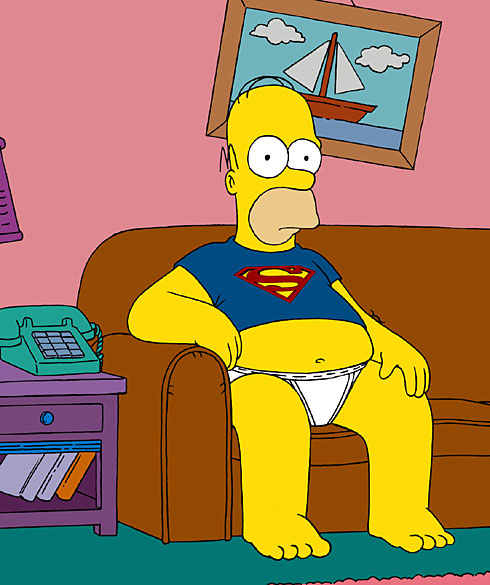
You’ve seen Thor, are about to go to the X Men prequel and are waiting to see Captain America. But where is Superman?
It turns out that a copyright issue has bedevilled the Superman character for many years. Jerry Siegel and Joe Shuster signed away rights to the Superman character to DC comics for $130 over seventy years ago. As the character literally and figuratively took off in the movies and in comic books, Siegel and Shuster got little share in the revenue. But the Copyright Act of 1976 allowed the original owners and their heirs to reclaim ownership if it turned out the value of their invention had become clearer over time and they had been underpaid. Siegel’s heirs used the law to eventually achieve joint ownership in 2008. Since then, investment in the Superman character has languished.
The reasons are simple and are related to the classic hold-up model of Grossman-Hart. Any gain from investment in Superman made by DC Comics will have to be shared with the Siegel heirs. This acts like a tax on investment and hence generates underinvestment. It is better of the ownership is in just one hand. But this amplifies the hold-up problem – it is obvious that DC Comics should own the rights to Superman. After all, they have the expertise in the comic book business and in the brand extensions. But how will they decide the price they will pay the Siegels to get 100% ownership? The present discounted value of the franchise going forward will be the key determinant. Hence, DC Comics (Warner Bros is also involved) have the incentive to destroy the value of the franchise to get a good price. Fans lament that this is what is happening:
Perhaps the most damning part of the decision document was the revelation that executives at Warners shared fans’ cynicism about Superman’s potential (Remember, Warners and DC were the defendants in this case):
Defendants’ film industry expert witness, Mr. [John] Gumpert, termed Superman as “damaged goods,” a character so “uncool” as to be considered passe, an opinion echoed by Warner Bros. business affairs executive, Steven Spira… Indeed, Mr. [Alan] Horn [Warner Bros. President] admitted to being “daunted” by the fact that the 1987 theatrical release of Superman IV had generated around $15 million domestic box office, raising the specter of the “franchise [having] played out.”
Almost as surreally, DC and Warners apparently argued to the court that
Superman was equivalent [in terms of public recognition and financial value] to a low-tier comic book character that appeared mostly on radio during the 1930s and 1940s and that has not been seen since a brief television show in the mid-1960s (the Green Hornet); an early 20th century series of books (Tarzan) or a 1930s series of pulp stories (Conan) later intermittently made into comic books and films; or a television, radio, and comic book character from the 1940s and 1950s, much beloved by my father, that long ago rode off into the proverbial sunset with little-to-no exploitation in film or television for decades (The Lone Ranger).
And these are the people in charge of the character?!?
(Hat Tip: Scott Ashworth)
The last time the Republicans in the House stuck in their heels and voted against legislation proposed by the President, the Dow fell 777 points. The President was George W. Bush and he was asking the House to approve TARP. A few days later, the House – Democrats and Republicans alike – blinked and approved the legislation.
This time the President is a Democrat and he is demanding that the Congress approve an increase in the debt limit. The stakes are high and if the debt limit is not raised we might see another collapse in the Dow. Who will blink first?
One answer is that we must ask who will get blamed by voters if the deal does not get made. In 2008, a Republican President was at odds with Republicans in the House. The further the Dow fell, the more the Republicans looked as if they were to blame. In 2011, each side can hope to pass the buck and blame the other if the debt limit is not raised. The side the voters blame will suffer in the next election. So both sides will dig in and other things remaining equal the war of attrition is worse.
Another answer is that the correct audience the politicians are playing to is not the voters but Wall Street. The collapse of AIG caught everyone by surprise but the risks of not increasing the debt limit have been discussed for months. Wall Street will suffer if the Government cannot pay owners of Treasury bonds. They and their lobbyists have the politicians’ attention. The campaign donations will dry up if the politicians play havoc with debt repayment. In this scenario, the war of attrition will peter out as each side chickens out in the face of declining donations.
Step 1: Show me the money.
Given the differential between federal reimbursements and the cost of the meals, the breakfast plan “has the potential to create $8.9 million of new revenue,” according to an internal document. C.P.S. gets as much as $1.76 per student for a meal costing about a buck.
Step 2: Maximize volume via food offerings
One classic—a sausage wrapped inside a pancake on a stick, to be dipped into syrup—was likely filled with saturated fat and calories, [a nutritionist] said. A cold alternative was Rice Krispies, Cheerios and Kellogg’s Frosted Mini-Wheats—all of which she found benign—and skim milk.
For the four days, there was not a piece of fresh fruit, there was insufficient whole grains and the orange juice was 100 percent juice but included apple and pear juice (“a money saver”), she said.
Step 3: Parents Revolt.
Meredith Crowley, a CPS parent, said she is upset that the district is serving dessert for breakfast, citing menu items such as chocolate cereal and Rice Krispie bars. She said the district implemented the program largely to generate revenue and plug a budget hole.
“Please give someone at CPS a red pen and ask them to go through the menu at Chartwell’s, ditch the desserts, red-line the Rice Krispie bars, freeze the Frosted Mini-Wheats,” Crowley said. “I will not stand back and let CPS balance the budget on the backs of poor children.”
You go into a restaurant and ask them the wait time for a table for two. The hostess says 45 minutes. Is she making it up off the top of her head?
I have always wondered about this. It turns out that some restaurants have a more sophisticated approach. They use software sold to them by opentable to estimate wait time. There is one employee whose job it is to wander round going table to table eyeballing the state of the meal. How many people are eating dessert? Have they paid or are they waiting for the check? This information and more is inputted into the software. The software then churns out an estimated wait time by size of table. This much I know.
What I don’t know is whether the hostess then adds or subtracts a fudge factor as a function of wait time. For example, if there is excess demand but the queue is short do you underestimate the wait time to encourage people to stay? The paradigmic incentives in the Crawford-Sobel Cheap Talk model arise for the restaurant.
A fitting end to the conflict conference organized by Joan Esteban:









In the New Yorker, Lawrence Wright discusses a meeting with Hamid Gul, the former head of the Pakistani secret service I.S.I. In his time as head, Gul channeled the bulk of American aid in a particular direction:
I asked Gul why, during the Afghan jihad, he had favored Gulbuddin Hekmatyar, one of the seven warlords who had been designated to receive American assistance in the fight against the Soviets. Hekmatyar was the most brutal member of the group, but, crucially, he was a Pashtun, like Gul.
But
Gul offered a more principled rationale for his choice: “I went to each of the seven, you see, and I asked them, ‘I know you are the strongest, but who is No. 2?’ ” He formed a tight, smug smile. “They all said Hekmatyar.”
Gul’s mechanism is something like the following: Each player is allowed to cast a vote for everyone but himself. The warlord who gets the most votes gets a disproportionate amount of U.S. aid.
By not allowing a warlord to vote for himself, Gul eliminates the warlord’s obvious incentive to push his own candidacy to extract U.S. aid. Such a mechanism would yield no information. With this strategy unavailable, each player must decide how to cast a vote for the others. Voting mechanisms have multiple equilibria but let us look at a “natural” one where a player conditions on the event that his vote is decisive (i.e. his vote can send the collective decision one way or the other). In this scenario, each player must decide how the allocation of U.S. aid to the player he votes for feeds back to him. Therefore, he will vote for the player who will use the money to take an action that most helps him, the voter. If fighting Soviets is such an action, he will vote for the strongest player. If instead he is worried that the money will be used to buy weapons and soldiers to attack other warlords, he will vote for the weakest warlord.
So, Gul’s mechanism does aggregate information in some circumstances even if, as Wright intimates, Gul is simply supporting a fellow Pashtun.
The new iPad “newspaper” the Daily profiles Next Restaurant and their fixed-price online reservation system. As we blogged before, the tickets sell out in seconds and there is a huge resale market with $85 tickets selling for thousands of dollars in the resale market. The excess demand implies the tickets are underpriced from a pure profit-maximization perspective. But Nick Kokonas, one of the partners in Next and the person responsible for the innovative pricing scheme, is reluctant to use an auction to capture the surplus Next is generating for scalpers. He is worried about price-gauging. We have suggested one solution: impose a maximum price/ticket, say $150.
There is a new idea reported in the Daily: Next will offer “season tickets” in 2012, allowing dinners to come four times/year, each time the restaurant changes theme, going from say French early twentieth century to South Indian mid-twentieth century (just a suggestion!). The usual motivation for season tickets is to offer a “volume discount” and extract more surplus from high willing to pay customers. Another is to have demand tied in. Next has no need to offer volume discounts, if anything the tables are priced too cheap. Perhaps there will be a volume premium for guests privileged enough to be able to go to four meals at Next rather that try to find four separate reservations? I guess the season tickets make it even easier to fill up the restaurant for the year and reduce the reservations hassle factor for the restaurant. Looking forward to hearing the details….
James is an alley-mechanic – he and his team of five workers repair cars in an alley behind a church on the South Side of Chicago. James rents the space from the church pastor for $50/day. James has been doing business there for twenty years or so. Then, along comes Carl, another alley mechanic. He sets up a garage close to James. Carl hires some homeless people to hand out flyers offering discounts to motorists arriving at James’ repair shop.
James is ticked, to put it mildly. James thinks he has property rights to car repairs in the area – he pays $50/day for this right. He asks the pastor to adjudicate. The pastor is well-known in the neighborhood and often acts as a mediator in contractual disputes. The pastor finds in favor of James. But Carl is not from the neighborhood and does not acknowledge the pastor’s authority. He continues to compete with James.
James turns to an informal court that has developed in the neighborhood. The court arose to settle disputes between rival gangs but it grew to act as a general arbiter of contractual disagreements in the local underground economy. Again, the court finds in favor of James. Again, Carl ignores the determination of the “court” as it has no authority over him. Finally, the pastor is forced to use old-fashioned contract enforcement – violence. He hires a gang of thugs to beat up Carl and his crew and drive them out. End of story
(Source: Talk by Sudhir Venkatesh at the Harris School, University of Chicago)
Hamlet: Do you see yonder cloud that’s almost in the shape of a camel?
Polonius: By the mass, and ’tis like a camel, indeed.
Hamlet: Methinks it is like a weasel.
Polonius: It is backed like a weasel.
Hamlet: Or like a whale? Polonius: Very like a whale.-William Shakespeare, Hamlet, Act 3, Scene 2
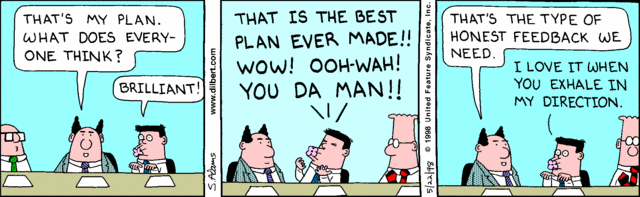
For most of your career, you have toiled away getting bonuses, stock options and the like. Your CEO believes in pay for performance and the data says you have performed so you have been paid. You are so successful that promotion beckons – the CEO appoints you to a senior position, advising her on key investments your firm must make to expand. She has her eye on building a new factory in Shanghai and she asks you to look into it. The investment might be good or bad. Your hard work collecting data on potential demand and costs will help to inform the decision. But there is a key difference. In your old job, your hard work led to higher measurable profit and you were paid for performance. In your new job, information acquisition might as well lead to a signal that the investment is bad as to signal that it is good. In other words, a bad signal does not signal that you did not collect information while bad performance is your old job was a signal that you were not working hard. How can the CEO reward pay for performance in your new job?
Since there is no objective yardstick, the CEO must rely on a subjective performance measure. Your pay will depend on a comparison of your report with the CEO’s own signal. The problem arises if you get a noisy signal of the CEO signal. Then you have a noisy assessment of what she believes and hence a noisy signal of how your report will be judged and hence renumerated. In equilibrium, you will condition your report not only on your signal but also on your signal of the CEO’s signal. You are a “yes man”. The yes man phenomenon arises not from a desire to conform but from a desire to be paid! Prendergast uses this idea as a building block to study many other topics including incentives in teams. The greater the level of joint decision-making, the problematic is the yes man effect. He points out that if the CEO asks you to back up your opinion with arguments and facts, this mitigates the yes man effect. Plus he has the great quote above at the start of his paper.
The daring raid on Osama Bin Laden’s Pakistani hideout has deeply embarrassed the Pakistani military and secret service ISI. American helicopters were able to fly in undetected, kill the world’s most wanted man and leave with his body. We might speculate about the consequences for Al Qaeda and the possible acceleration of withdrawal of American troops from Afghanistan. Instead, I thought I would talk about the implication of the American attack on Pakistan.
First, if Navy Seals were able to fly in and steal Osama Bin Laden, might they be able to steal Pakistan’s nuclear materials? A much more difficult and perhaps impossible enterprise with weapons at different locations, some of them mobile. But the Abottabad adventure was highly improbable too. Therefore, one result of the death of OBL is that the Pakistanis will guard their nuclear weapons with more diligence. This is good for the rest of the world as it reduces the chances of a WMD falling into the hands of extremists. It is bad to the extent that the rest of the world (i.e. the US!) has plans to capture Pakistani WMDs in some emergency scenario.
Second, the Pakistani military does not come out of this incident looking good. Either they are incompetent, unknowingly allowing OBL to live in an army town, or they are complicit, deliberately harboring a terrorist where he might be least likely to be found. In either scenario, Pakistan might think that the American action emboldens India. India now has cover to adopt a more aggressive stance against Pakistan. This in turn implies that Pakistan might adopt a more aggressive stance itself to counteract any reputational fallout from its perceived ineptitude. Some kind of cross-border incident in Kashmir is an obvious move for Pakistan to engineer. There is some distance between Pakistani politicians and the military and some kind of “confidence-building” move by India might help to forestall any increase in tension. Such a move unfortunately is politically difficult given the huge suspicion of the Pakistani military and ISI following on the heels of the discovery of OBL living safely in Abottabad.

As the UK votes on voting, a Guardian article explains:
A theorem (proved by Allan Gibbard and Mark Satterthwaite) tells us about elections designed to find a single winner, as is the case when a constituency elects its MP. The theorem says that, if there are three or more candidates, any voting system which is not a dictatorship and which allows the possibility of any candidate winning, is susceptible to tactical voting (where voters have an incentive to vote in a way that doesn’t reflect their personal preferences).
When I need career advice, I turn to the newsletter of the Committee on the Status of Women in the Economics Profession. How should your research strategy change after tenure? Bob Hall has a great article in a recent newsletter and I mentioned it in a previous post.
Next up: What is the AER looking for when it publishes paper? Who better than recent Editor Robert Moffitt to tell us in the Spring 2011 issue (yet to be uploaded on the CSWEP website).
Here are some key points Moffitt makes:
1. You always need to think carefully about the journal you submit to, and you need to research the kinds of papers that have been published there; whether the journal seems to be open to your type of work; who the editor is and what his or her orientation is; and who the associate editors are, because they are likely to be referees for your paper.
2. Now let me say a few things about the all-important question of what editors look for (aside from, to repeat,strong content). I will list three characteristics: (1) the importance of the question and of the main results; (2) the clarity, organization, and length of the paper; and (3) its degree of novelty in either method or data. 3. Editors always read the introduction to a paper first to see what the paper is about and to make a judgment about the importance of the question and how interesting the findings are….. One of the implications of this fact is that you should work very hard on your introduction. The introduction is absolutely key to a paper’s success. You have to grab the attention of the editor and the referees. You have to be a good “salesman” for your work. It has to be well-written, succinct, and to the point (as an editor, I have always disliked long, windy introductions that explain in exhausting detail the background literature, what the paper does, etc.—I just want a simple summary). You should expect to write and rewrite your introduction repeatedly. Many papers get sent back to the authors without refereeing right at this stage—the question does not seem that important for the journal they edit.
4. Novelty in method or data is particularly important at the top journals, where novelty is given more weight than at lower-ranked ones. Nevertheless, it gets positive weight at all journals. If a paper has this kind of contribution, it needs to be emphasized in the introduction and should be one of the selling points of the paper.
5. I should also say a word about citations. As an editor, I was always annoyed if a paper was coming out of a fairly large literature yet the citation list was minimal. That made me think that the author was playing games and citing only people the author thought would be friendly to the paper. You should never play games like that, because the editor will often notice that some important papers aren’t cited and will immediately send the paper to one of the authors of such papers to referee.
6. Most papers are rejected, even those authored by the top economists in the profession..One rule I have is, (almost) never, never complain about a decision. Most rejections are made not just on the basis of the factual objections of the referees, but by their “feeling” about the paper as well as the editor’s.

The members of a firm must work together on a big joint project. There are many ways the project could be implemented. One obvious procedure is dictatorial: the CEO simply choses her favorite option and demands that everyone follow her orders. This is sometimes called directive or narcissistic leadership. Another procedure is more participative: The CEO asks everyone their opinion and a decision is made. Everyone might vote so the decision is made democratically or at the very least the CEO makes everyone’s opinions into account before making the decision herself.
In an emergency situation where decisions need to be made quickly, dictatorial leadership makes sense. If you are in the middle of capturing Bin Laden, there is no time to mess around with participative leadership. One person gives orders and everyone follows.
But in many other situations, it is wise to ask everyone’s opinions before embarking on a joint project. The obvious rationale is that information is dispersed and communication might help to aggregate information. The less obvious reason (to economists!): If people do not feel they “buy into” the decision, they are not going to work hard. There may be no information to aggregate but the mere fact that everyone votes means that even the minority who voted against the decision feel committed to it.
A firm is thinking about making a huge new investment. After consultation and deliberation, the CEO and the employees unanimously decide the project should go ahead and initial investment begins. As time passes more and more members of the organization realize that the investment is not a good idea after all. It is better to cut and run. Some costs are sunk and the NPV looking forward is negative.
The CEO is in charge of the continuation decision but his incentives are not aligned with the organization’s. Privately, he was actually reluctant to pursue the project. Publicly, he boasted about the investment, how great it was all going to be, how great the firm would be when the investment paid off. The CEO cannot go back on his word. The market will judge him purely on whether the investment is made and whether it pays off. He cannot cancel the project and instead he forces it through. If it pays off, his career takes off; if it fails, his career is a shambles but is is also in a tailspin if he cancels the project. The employees watch anxiously. They will give him a year and if nothing works, they will look for opportunities elsewhere.
A player can engage in productive effort which adds value or in unproductive effort, buttering up the boss. There are two workers and one is more productive than the other: The marginal product of effort for worker A is bigger than the marginal product of effort for worker B. Productive effort is rewarded with monetary payment or career advancement and so is effort expended at buttering up the boss.
We get the following simple insight: The higher productivity worker faces a higher opportunity cost of buttering up the boss. He will spend less time on unproductive activity and more time on productive activity.
(Acknowledgement: Loosely based on a model presented by Stergios Skaperdas)
I organized and am attending a conference on conflict at NU. Here is the website for the conference with schedule and papers.
Hat Tip: Frank’s comment in post below
To Be or Not To Be, That is the Question…
A hard question to answer in a business school professor’s teaching life. Am I just teaching common sense? Is This Material Too Simple? Existential questions. And then comes evidence that actually rather basic knowledge is quite helpful. Witness the startling article “Real-Life Lessons in the Delicate Art of Setting Prices” in the NYT.
Lesson 1: Inelastic Demand
‘About three years ago a computer error caused all of the prices on Headsets.com to be displayed at cost rather than retail. With the lower prices on display for a weekend, Mike Faith, the chief executive, expected sales to soar. Instead, the increase was marginal. “It was a big lesson for us,” Mr. Faith said’
Lesson 2: Vertical Differentiation and Market Power
(1) Math tutor Kronenberg:
‘I learned it’s a misconception that if you raise prices too much, you’ll have no business,” Mr. Kronenberg said. “There are many customers who shop based on quality, not lowest price.’
(2) Headsets.com:
‘[Mike Faith] realized that sales for his company, which is based in San Francisco, were far less dependent on price than on what he now says differentiates his business: customer service. “Every call we get is answered by a human being within four rings,” he said, “and our reps are well trained and know a lot about the headsets.”
Since the incident, Mr. Faith has raised prices once, by 8 percent and without much fanfare, although regular customers were told in advance. The result? Revenue rose about 8 percent as well.’
(3) Artisan wheat flour producer:
`Naomi Poe, founder of Better Batter Gluten Free Flour near Altoona, Pa., learned that it is important to try to understand how your customers value your product.
In the food industry, Ms. Poe said, customers generally look for the cheapest price, but because her flour and baking mixes contain no gluten, they cost more to manufacture. She initially tried to compete with products that contain gluten on price but lost money on every sale. To raise prices, she had to convince customers her products offered added value. “In blind taste tests on regular people — not just those who are gluten-free — we heard consistently that our cakes were superior,” she said. “We also offer an unconditional guarantee as well as education and counseling.”
Her first year in business, 2008, she raised prices 20 percent, increasing her gross profit margin — the profit on each item she sells — about 11 percent and increasing sales revenue 25 percent, she said.“This helped us cover our expansion costs in 2008,” Ms. Poe said. After that, the business grew about 250 percent year to year.’
(3) Lesson 3: Price Discrimination
‘Last year [Footsyrolls, a company producing roll-up flat shoes] changed their offerings, going to two tiers of products and pricing. The Everyday Collection sells for $20 a pair and a higher-end category, Lux, for $30 a pair. “We actually have had the most interest in our higher-priced shoes,” Ms. Caplan said.
Because they brought one line down $5 and another up $5, the average price per unit remained about the same, but the impact was immediate. “We introduced the Lux line in summer 2010 and had a 100 percent increase in revenue,” she said. “We actually ran out of stock.”’
Lesson 4: These people need more lessons.
(1) Mike Faith: ‘The truth about pricing is it’s an art with a little bit of science, rather than a science with a little bit of art.’
No, Mike! It’s the other way round.
(2) Naomi Poe: ‘In January she raised prices an additional 10 percent, this time to cover broker and distributor fees as well as the rising cost of fuel and ingredients. Far from losing customers, she saw her revenue double and her gross margins leap to about 36 percent from 20 percent.’
Revenue is not the same as sales. Sales can go down when you raise price and revenue go up. If this happens, your price is in “negative marginal revenue” territory so your pricing strategy is horribly wrong. Perhaps a short exec ed course at the Kellogg School of Management taught by me for a large but well worth it fee will help you learn what marginal revenue means and make you hundreds of thousands in profits.
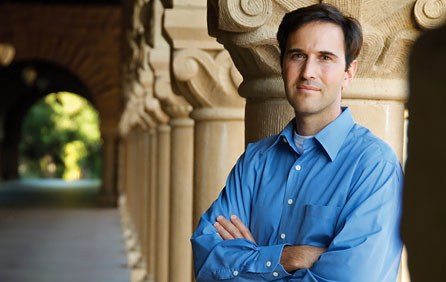
I remember going out to dinner with Jon Levin when he was on the job market (I think we went to Topolobambo?). My food memory is way better than my seminar memory but I think Jon presented “Relational Incentive Contracts” as his job market paper. Many employees are paid not only a base salary but a bonus based on hard to verify details of their performance. Their employer realizes if she reneges on the promised performance-based bonus, there will be serious consequences. As an example of the benefits of keeping employees happy, Jon mentions a dispute between United and its pilots. During contract negotiations, the pilots “worked to rule”. The resulting cancelled flights and delays convinced United to pay generously.
The relationship between the employer (principal) and the employee (agent) is a repeated game. The agent might have unobservable information each period or exert unobservable effort each period. The principal’s wage offer and bonus payment between the two parties are observed by both parties. Levin studies an environment with transferable utility. If the principal deviates at any point in time, the equilibrium demands that they move to a static equilibrium where the principal offers a constant wage and the agent exerts zero effort. Hence, with observable principal behavior it is easy to keep the principal in line. The difficulty is keeping the agent working at the optimal level. In principle, the (incentive constrained) surplus maximizing contract can be quite complex. But with transferable utility it is simple. The optimal contract can be taken to be stationary: the principal offers the same wage and bonus as a function of observed agent output. Any non-stationary contract where continuation values vary over time can be replicated by a stationary contract: Any variation in continuation payoffs to the agent can be replicated by a transfer in the first period. Hence, a stationary contract suffices to give incentives to the agent. It might unravel incentives for the principal. But since the principal’s and the agent’s payments to each other are observable, incentives w.r.t. transfers can be maintained in the stationary contract.
Levin then uses this benchmark to study many other things but my impression as an outsider to the relational contracting literature is that the result on stationary contracts is the fundamental contribution of the paper. In many organizational economics seminars, I have seen presenters say “by Levin’s Theorem 2 I focus on stationary contracts” and then proceed to find the optimal contract in their setting under stationarity. The paper has around 500 citations according to Google Scholar.
Now, I am going to wander into (even) shakier territory given my (lack of) expertise: I am going to describe one of his recent forays into empirical work. Adams, Einav and Levin study the behavior of borrowers in the subprime market for auto loans. They have some amazing data from an auto sales company that also originates such subprime loans. They also track the behavior of borrowers over time. There are lots of interesting results.
First, demand is higher during tax rebate season. Second, a $100 increase in required down payments reduces demand by 9% keeping prices fixed. Keeping the down payment fixed, the same decrease in demand is generated by a price increase of $3000! The authors calculate that this implies borrowers are indifferent between paying $100 today or $1515 in one year!
The authors have the same data as the lender: they have data on applicants and on the performance of loans that were initiated. Applicants have a median FICO score below 500 (the US median is 700-750), an average income of $1200/month and live with their parents or rent. Around 2/3rds are turned away. Those who are successful make a downpayment of $1000 and buy a car costing around $11,000 Interest rates are 20-30% and the default rate is 60%.
The lender uses risk-based pricing and faces regulated interest rate caps. In theory, the latter should affect the down-payment. Credit rationing can also occur in equilibrium with moral hazard and adverse selection. The authors tease out various implications of the theory credit-rationing and see if they are backed up by the data. For example, the more likely you are to default, the larger is the loan you demand – after all you are not paying it back anyway! Also, the probability of default should rise with loan size for a given individual. The authors can disentangle the first (adverse selection) from the second (moral hazard). They argue that credit-scoring can go a long way towards mitigating the impact of adverse selection but moral hazard is more difficult to eradicate.
I still want to absorb the identification of moral hazard vs adverse selection in the data. As a b school teacher, I will give this paper the highest compliment possible : I hope to incorporate this somehow into my competitive strategy course. I hope the authors tracked not only the borrowers but the lender’s performance so we can determine whether they should have been lending in this market in the first place.
Jon has done lots of other work: see the AEA write-up.
Congratulation Jon!

A hypothetical example – A business school is offering a non-degree executive education course. Forty people sign up and yet the course is cancelled. An administrator says that when the overhead costs are taken into account, the course is unprofitable.
Without the class, the lecture rooms and dorm rooms would be empty and the same number of staff employed. That is, the overhead cost is incurred whether the class is taught or not. Hence it should not be included in determination of the cancellation decision. The revenue from the class should be compared with the extra variable costs incurred from running it (e.g. the salary paid to the teacher!).
The reverse fallacy is also possible: The class is on the schedule, very few students have signed up and yet it is not cancelled. If it is cancelled, the logic goes, how would the school recover the overhead?
Jeff and I have a paper Mnemonomics… that offers a theory of the sunk cost fallacy based on limited memory. We call the first fallacy above “the pro-rata fallacy” and the second “the Concorde fallacy” (after the supersonic jet). In experiments, we find the pro-rata fallacy is extremely common.
The Greeks gave us philosophy, mathematics, history and science but did they give us great food? I always thought the answer was “No” but Taxim restaurant in the Bucktown neighborhood of Chicago persuaded me the answer might be “Yes”.
The first dilemma we faced was choosing the wine. Taxim has an all-Greek wine list and the names of the grapes are unrecognizable. I asked for a Rhone-like red and a generous glass of a Greek version of Syrah was promptly delivered. (I think the name of the grape has an “X” in it but I can’t swear to it!). The wine was delicious and I might actually enter the Greek section of a wine shop – if I can find a wine shop which has a Greek section!
We decided to mainly go the route of the small hot and cold plates with just one entree. The food had some highs, lows and mediums. Highs: The fried cauliflower with capers. Lentils with feta. Duck fat fries (not so greek!). Cauliflower is my new favorite vegetable. I polished off a delicious roasted cauliflower at the Girl and the Goat and incorporated a NYT roasted cauliflower recipe into a pasta dish. The Taxim version is up there. The lentils needed a touch more salt but once that was added, they were good. Mediums: the roasted eggplant and the leek in phyllo. The eggplant turned out to be babaganoush and the phyllo was too buttery for my taste. Low: the duck breast – a bit dry according to my dining companion.
Bottom line: I’m definitely going again. Might mix up my order a bit and try a wine flight.
 What impact does trade between a developing and a developed country have on inequality in the developing country?
A plausible version of the canonical Hecksher-Olin model of trade would say that inequality decreases in the developing country. The Hecksher-Olin model studies the impact of different factor endowments on trade, taking technology as given across countries. Suppose there is only one consumer good and suppose the ratio of skilled to unskilled labor is higher in the developed country. Then the wage of skilled workers in the developing country is higher than that of skilled workers in the developed country and the wage of unskilled workers is higher in the developed country vs the developing country. Allow trade in factors of production so factor prices are equalized across countries. Skilled workers will migrate from the developed to the developing country and unskilled workers the reverse. The wages of skilled workers in the developing country will go down and the wage of unskilled workers will go up. Inequality in the developing country – where developing is identified with a particular ratio of factor endowment – will go down with trade.
Apparently, the stylized facts on trade and inequality do not fit this story. Kremer and Maskin offer a different theory based on complementarities in worker skill levels in production. Suppose the only consumer good is produced by a manager and a worker. The skill level of the manager has a bigger impact on output than the skill level of the worker: output is the square of the skill of the manager times the skill of the worker. Hence it is more efficient to assign a high quality worker to the manager’s task than the worker’s task. Suppose there are skill levels A and B in the developed country and C and D in the developing country where we assume A>B>C>D. Suppose there is an abundance of C workers in the developing country. Before globalization, some C workers are matched with each other producing CCC and some are matched with D workers producing CCD. The wage of the C-workers must be CCC/2 to maintain zero profits and this pattern of matching in equilibrium.
Now allow movement of labor across countries or equivalently production across borders. Then the following is possible: C workers move to the developed country for a higher wage w’. The D workers who are low skill and hence unattractive partners for production in the developed country, stay in the developing country. They may still be matched with C workers but getting lower wages CCD-w’ as C workers now must earn more to stop them working for the developed country. Or if all C workers now work for the developed county, D workers end up matched with each other producing and splitting only DDD and hence with lower wages. In either case, globalization increases inequality in the developing country.
This is the main idea. Many extension and other parameter configurations are discussed. A useful literature review identifies Hecksher-Olin models where globalization can also increases inequality.
It was really fun to read this paper. It is simple and clever. It generates externalities in wages from matching patterns. The implications are subtle and have provocative implications.
 Cheap Talk