
You are currently browsing Sandeep Baliga’s articles.
Note that the final plot device where one player does not know the rules of the game has not been encompassed by standard game theory.
Many people’s thoughts turn to contraception on Valentine’s Day. But thanks to the election campaign and the implementation of the Affordable Care Act, Americans have been thinking about contraception for several days. The ACA mandates provision of contraception by healthcare plans including those managed by Catholic hospitals.
What is the rationale for a mandate in a competitive labor market? The Becker model of discrimination predicts the mandate is unnecessary. Suppose employers choose not to offer contraception benefits in healthcare plans. But talented workers may value these benefits. Then an employer can deviate and offer contraception benefits or a new firm can enter and offer benefits. They can attract individuals who value the benefits, produce higher quality products at lower costs etc. etc. The classic textbook economics model. The mandate requires the contraception benefits be free. But the insurance companies will simply include them in the price they charge for other services. Nothing is really free.
I suppose that if the government simply makes it illegal for any healthcare plan to offer contraception benefits, this argument breaks down. But is any politician advocating this position, even Santorum? Instead, the Republicans run the risk of alienating independent and moderate voters. They have a coherent libertarian style argument against the mandate and have succumbed to a weaker argument. Meanwhile President Obama seems to have “turned a crisis into an opportunity” to use a MBA teaching cliche. According to Andrew Sullivan,
The more Machiavellian observer might even suspect this is actually an improved bait and switch by Obama to more firmly identify the religious right with opposition to contraception, its weakest issue by far, and to shore up support among independent women and his more liberal base….
Take a look at the polling. Ask Americans if they believe that contraception should be included for free in all health-care plans and you get a 55 percent majority in favor, with 40 percent against. Ask American Catholics, and that majority actually rises above the national average, to 58 percent. A 49 percent plurality of all Americans supported the original Obama rule forcing Catholic institutions to provide contraception coverage.
If the GOP really makes this issue central in the next month or so, Santorum (whose campaign claims to have raised $2.2 million in the two days following his victories last week) is by far the likeliest candidate to benefit..—especially since Romneycare contained exactly the same provisions on contraception that Obamacare did before last week’s compromise was announced. That’s right: Romneycare can now accurately be portrayed as falling to the left of Obamacare on the contraception issue. This could very well be the issue that finally galvanizes the religious right, especially in the South. Imagine how Santorum could use that on Super Tuesday. In fact, it could be the issue that wins him the nomination. And do you really think that would hurt Obama in the fall?
The answer is tantalizingly close and yet just out of reach. An interested reader can find some of the relevant information here, in a Deutsche Bank prospectus for potential investors in Bain Capital. On pages 16 and 17, the prospectus lists all the investments made by Bain Capital from 1984-1998, roughly the time that Mitt Romney ran the company. For example, their 1984 investment of $2 million in Key Airlines led to an annual return of 52.9%. It does not tell you how much money investors made because you would have to subtract off Bain’s fees which this Table does not have (other parts of the prospectus may help you to do that). The thing that is impossible to work out is the employment impact of Bain’s investments. The prospectus does not say anything about that issue. But the names of the companies are listed in the left hand column. So, it might be possible to work out what happened to these companies via a web search and come up with some answers.
If someone had the time and the ability to do that, it would be very interesting I think. I’d certainly be interested in the answer.
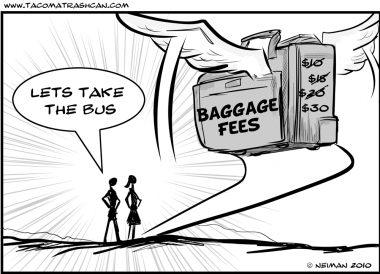
The usual examples we give for the law of unforeseen consequences involve government intervention. For example, rent control helps people who manage to get apartments at subsidized rates. But supply dries up so many people won’t manage to rent. (They will buy a house they can’t afford and cause a mortgage crisis!) But the law of unforeseen consequences should equally apply to the private sector. There is less scrutiny of the private sector by the media. Plus it is hard to get information as it is not in the public domain. Sometimes, the policies adopted by forms are public and we can all see the law operate:
An entire cottage industry has emerged for products that help people evade the baggage-check fees, according to Kate Hanni, director of FlyersRights.org, a consumer group that represents airline passengers. Ms. Hanni uses vacuum-seal bags inside her carry-on bags, she said; the bags, which shrink down to a compact package when air is pulled out by a vacuum cleaner, allow her to fit considerably more items in a carry-on than would normally be possible.
“I can fit three times the amount of clothes in a carry-on than I used to be able to,” she said.
There is also the Scottevest line of travel clothing in which trench coats, vests and other garments are made with large built-in pockets that allow people to carry everything from folded shirts to an iPad.
“You can fit all of your folded shirts, iPad, cellphone, iPod, sunglasses, camera, passport, keys — you can put everything in the jacket that you would put in a carry-on,” Ms. Hanni said. “It’s sort of sweet justice.”
Plus we have more people with carry ons, delays as they board the plane and gate check their bags etc. etc. Surely, some effects were foreseen but were they all?
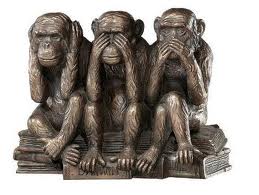
I am reading Robert Trivers’ The Logic of Deceit and Self-Deception. It is a lot of fun and incredibly interesting – my wife keeps on nabbing it, she is enjoying it so much.
His main thesis is simple: In our evolutionary past, we had to lie a lot to get ahead, to deal with parent-offspring conflict etc. We are better liars if we can convince ourselves that we are not liars. Hence, this leads to self-deception. I was reminded of the strength of this claim today.
I set an old question to my students (not one of my own but inherited from the past cohorts of teachers). This question has been used recently by many fellow teachers and it has been taught by TAs. I happened to look at the historical answer to the question and found a mistake. And the topic had not really been covered in class. A student then came to ask me about precisely this question. I decided to pretend the answer in the answer key was right – it would only have confused him more if I had gone into the right answer and I had not taught the subtlety in class, I rationalized to myself. A few minutes later he came back and asked me why the answer wasn’t in fact the one I had found earlier. I was found out. I told him his answer was correct too.
But the question and (incorrect) answer had been posed unchanged for 8 or so years without anyone pointing out the answer was wrong. Why was it discovered now? I suppose the student who spotted the right answer could be quite smart – and he is. But there are many smart students in previous generations who never found the right answer.
So, my explanation is really the Trivers’ explanation. I did not lie convincingly. My doubts about the answer manifested themselves somehow to the student. He investigated further and cracked the problem. In previous years, the teachers were convinced the answer was right and never even questioned it. They never had to lie because they truly believed they were telling the truth, just like the Trivers’ thesis on self-deception. Students left convinced. If they had doubts, they stifled them.
The student who spotted the error will be on the PhD market soon. I will write him a strong letter.
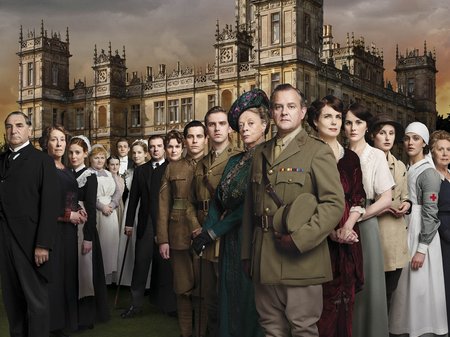
Diehard Downton Abbey fans didn’t watch the SuperBowl, preferring the trials and tribulations of Matthew and Mary to the seesawing fortunes of Tom and Eli. Series 2 has already been shown in the U.K., as well as a Xmas special. For those who could not work out how to set up their computer to mirror British I.P.addresses and watch it on streaming video, the wait has been long. How can they get their Downton Abbey fix? They could get the British DVD version and have it shipped. But will it work on their DVD player? But do not worry, the producers are going to give the fans a relaxing spliff – series 2 is coming out on DVD is the US on Feb 7. Cunning on two levels.
First, there is plenty of time to have it shipped and get it in time for Valentine’s Day for your loved one. (Reminder to self – get the dvd asap)
Second, and more dastardly, the rabid fans can get to watch all the episodes yet to be shown on PBS (and maybe even the Xmas special?). The timing is perfect. Release it any later and people will have seen the end and fewer people will buy it. Release it any earlier and PBS will not pay as much for the TV rights. Someone’s thinking back in England – probably a working class guy who would have been a footman in Downton Abbey days but now runs ITV.
In a very interesting WSJ article (I managed to read it without a subscription), Tom Sargent writes:
Did the federal government do the right thing in refusing to bail out the states in the early 1840s? By doing so, the federal government reset its reputation vis-a-vis the states, telling them in effect not to expect it to underwrite their profligacy. In the short run, that cost the federal government substantially in terms of its reputation with its own creditors. Federal credit abroad suffered along with state credit. But in the long run, the decision exposed state governments to continuing market discipline, making future crises and requests for federal bailouts less likely.
If the federal government had chosen to bail out the states a second time, it probably would have taken greater control over state taxes and revenues in order to prevent yet another bailout situation. Refusal to bail out the states was thus a pivot point in sustaining a federal system in the United States. It led the states to discipline themselves by rearranging their constitutions in ways designed to allow them to retain freedom and responsibility for taxing and spending within their borders.
Europeans today might be tempted to say “yes” to bailouts. Or they might also recall a time when Americans preserved their own federal system by saying “no.”
Gingrich, Santorum (and I guess also Ron Paul) keep splitting the conservative vote in the Republican primaries. Romney gets through because of the split.
Gingrich and Santorum are playing a dynamic version of Chicken (a war of attrition) with budget constraints. With complete information, a war of attrition has the player with the lower budget dropping out immediately in equilibrium. He knows that eventually there will be a penultimate stage where the player with the bigger budget will definitely fight because he knows he will be the only player left standing the next and final period and hence will win the prize with certainty. The player with the dwindling budget might as well drop out and save his money at the penultimate stage. But then we can backward induct to the pen-penultimate stage etc. and the player with the smaller budget drops out immediately.
This solution relies on a lot of rationality and complete information. Both of these are suspect in the Republican primaries. On the one hand Gingrich seems to be in the better financial position. He has a billionaire bankrolling him, Santorum does not. But on he other hand, the billionaire might not want to waste money on a lost cause. And it appears Santorum does have more money in the bank than Gingrich because he does have some support. And both men display the mixture of nutty self-belief and guile that is characteristic of politicians. Plenty of reason for the race to go on for along time.
Perhaps too long for Obama supporters. I think they should prefer Gingrich as the Republican candidate in the general election not Romney. In Florida, Romney showed that he has strong support among moderates. Moderates are the key to victory in the general election. A Democratic billionaire has to pitch in, help out the casino billionaire and bankroll the Gingrich SuperPac. They can do this by setting up an anonymous company with a PO box, keep their identity hidden and sign over a check. A big enough donation should trigger a Santorum exit as in analysis above. Then, it’s Romney vs Gingrich the rest of the way (with fringe support for Paul).
B School Profs looking for “war stories” read McKinsey Quarterly more religiously than the Quarterly Journal of Economics. The stories are just stories because there is no effort at identification and data come from surveys rather than payoff based decision making. This does not make for research in the academic sense. Here is a claim in a recent article (free registration required):
Most executives, the survey found, believe that their companies are too stingy, especially for investments expensed immediately through the income statement and not capitalized over the longer term. Indeed, about two-thirds of the respondents said that their companies underinvest in product development, and more than half that they underinvest in sales and marketing and in financing start-ups for new products or new markets
Why aren’t companies investing? Decision making biases says the survey:
Executives who believe that their companies are underinvesting are also much more likely to have observed a number of common decision biases in those companies’ investment decision making. These executives also display a remarkable degree of loss aversion—they weight potential losses significantly more than equivalent gains.
I wish there was a crisp anecdote (e.g. “When I moved to General Mills, I did not introduce Choco-Honey-Nutto-Organic Cheerios – even though it did great is focus groups – because in my last job I got burned when I okayed perfumed Pampers and it stank in the marketplace.”)
Hot off the presses from the Hollywood Gossip:
[T]he rapper quickly accepted when a follower named MyBestAssets made him an offer regarding his hometown Giants and the New England Patriots.
It’s unclear who MyBestAssets is, what those assets are, and what the extent of her relationship with Chelsea Handler’s ex is. But she’s apparently a Pats fan.
“Lets bet. If the Giants lose the Superbowl, u must post ur d*ck on the twitter. If they win, I’ll post my boobs & face. Bet?” she wrote. 50 quickly went all in on that.
“Ok It’s a bet. See your d*ck on twitter Feb 5. Lol” she wrote.
LOL indeed. This is definitely the most unusual wager we’ve heard of, which is saying something, as certain THG staff members have bet on the coin toss. The coin toss.
Anyway, let’s go Giants. We really don’t need to see that.
I’m a Pats supporter but I now I have some reason to be happy if the Giants win.
Maureen Dowd provides the reminder. Impressive that Newt does not lose his temper or cease to take Ali G seriously.
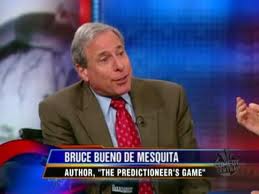
My family have decided that I am too sarcastic. I concurred. So, I agreed to sign an anti-sarcasm contract :
“Under pain of having to donate $1 toward Lego for every infraction, I hereby declare my intention to eschew sarcasm.”
The kids were making $8/day for the first few days till I learned a little self-control. So far so good.
Then, weird little things started happening. A child would ask innocently: “Can we have second dessert?” Or “Can I skip homework today?” etc. I would unfortunately respond with sarcasm.
I realized that the attempt to deal with my sarcasm by giving me incentives had created another incentive problem. I tried to change the contract so the money goes to charity but my kids refused to renegotiate….Is there some corollary of the Holmstrom moral hazard in teams model that says our it is impossible to implement optimal incentives with budget balance?

From a NYT Q&A about a trip to Bangladesh:
WASSIM RAGAB: How do you overcome the corruption in Bangladesh and still run successful projects?
MELINDA: It’s unfortunate and true that Bangladesh is perceived to be one of the world’s most corrupt countries. The Bangladeshis I have met have told me that they feel this in small ways on a fairly regular basis. Because the problem is systemic, it’s hard for them to go against the tide. One doctor I met with yesterday told me that nobody pays attention to traffic lights since you can buy your way out of a ticket for a small fee and because if you don’t run the red light, “everyone else will and you’ll never get to your destination.” Obviously, these unnecessary surcharges on everyday life and other forms of corruption are a major impediment to faster economic growth and it’s something the government and others must address.
Because everyone else is running a red light, a best response is to run it yourself. For some people, a best response to everyone not running the red light is to not run it yourself. This is a coördination game logic. Actions are strategic complements: I am more willing to run the red light if you are running it.
Corruption can be thought of in two ways. First, it is a sunspot that makes the running lights equilibrium focal. Second, there are heterogeneous costs (or benefits) to running a red light. Suppose there is no corruption. Then, there is a threshold equilibrium where people run the red light if and only if their cost is below the threshold. Corruption lowers the costs of running the right and shifts the threshold up: More people run red lights. By strategic complements this creates a spiral where yet more people run red lights etc.
Via WSJ:
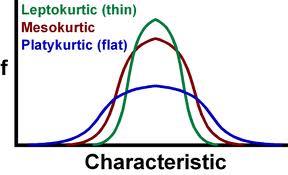
The White House’s top economist on Thursday said income inequality in the U.S. has reached the point where the “middle class has shrunk.” He said the development was “causing an unhealthy division in opportunities, and is a threat to our economic growth,” according to prepared remarks…
The consequence of a shrinking middle class, Mr. Krueger said, was “more families falling into either end of the distribution, and fewer in the middle. The statistical word for this is ‘kurtosis.’ I can see why the term polarization has caught on.”
You are managing a small team. You are meant to make sure they work hard. Monitoring is costly and you would like to shirk your responsibilities. But your monitoring is observable to the worker bees. They incur no costs to observe your effort. If you shirk your duties, there will be payback from the workers. There is always the possibility that they turn you in to your supervisor. This could be a deliberate act. More likely, it is inadvertent because “loose lips” that sink ships. So, you are left with no choice but to monitor. And since you are monitoring, the workers are left with no option but to work. Everyone is worse off. If only the workers could keep their mouths shut and the manager could shirk.
My colleaque, political scientist Tim Feddersen, says he does not understand recent U.S. elections. He understood Bill Clinton, Dick Morris and triangulation. He understood George W Bush and “compassionate conservatism”. These are all consistent with the logic suggested by the median voter theorem: politicians should adopt policies that will win the support of the median voter (forget the fact that the politicians will renege on their promises as soon as they get in office!). But George W Bush was not a compassionate conservative in 2004. And for some reason, Tim can’t rationalize how President Obama got elected via the median voter theorem.
So there is a competing theory which is less well worked out, the ideological voter theory. In this theory, it is the extremes that determine elections so the candidate must play to them. One version of the theory would include turnout as a second dimension of voting strategy as well as how the citizen actually votes once she gets in the voting booth. Extremists have lower costs of turning out so the payoff to motivating them at the cost of alienating independents is greater than the benefit to motivating independents at the cost of not motivating extremists. This theory would say Santorum is the biggest threat to Obama. Watching Santorum’s speech the other night, I was moved by his story about his grandfather’s life as a coal-miner while I found Romney’s speech formulaic and artificial. So, I have some sympathy for this theory. (Of course, Jon Stewart has yet to fully explain to me what Santorum’s policy positions are If they are as extreme as my preliminary google search suggests, I might switch back to the median voter theory.)
So, the ideological voter theory suggests that Santorum is Obama’s most potent adversary. This implies Obama supporters should hope that Romney comes out alive from the Republican primaries. (I have yet to incorporate Larry Kotlikoff’s candidacy in my world view though I completely endorse Jeff’s fulsome praise. I visited BU Econ a couple of years ago and it has a great “corporate culture” that I too attribute to Kotlikoff.) But Romney has plenty of money so no need to bankroll him. Just give it to Obama.
 Suppose you think centrist, independent voters decide elections. This is the median voter theory of elections. If you believe this theory, then Mitt Romney is the biggest threat to Obama. He is probably a moderate, like the father he hero-worships. He is responsible for Romneycare, the model for Obamacare etc. So, Obama supporters fear Romney as the Republican candidate. They should seek to weaken him as much as possible in the primaries or even try to ensure another candidate is left standing at the end of the primaries.
The strategy of Obama supporters who subscribe to this theory is simple: Give money to Newt Gingrich. He is promising to help Santorum and fight Romney. At worse, he will weaken Romney and at best, given Gingrich’s efforts, Santorum may squeak through.
I’ve mentioned Navarro Vineyards in the blog. I’m a member of their wine club – they only sell direct so you cannot find their wine in stores. Wine Review Online has an interesting interview with a second generation winemaker, Sarah Cahn Bennett, the daughter of the original owners. For instance, a picture of what it might be like to grown up in idyllic but rural Anderson Valley:
I decided to get my undergraduate degree from Saint Mary’s College in Moraga, because after graduating from Anderson Valley High School with only 17 others, I wasn’t ready for large schools and life outside the Anderson Valley. After getting my BS in business administration, I applied for the MS program in viticulture and enology at UC Davis. I got my MS in 2005
They were all inspired by Isaac Asimov psychohistorian Hari Seldon:
Yoram Bauman is also an environmental economist. With this hat on, in the NYT, he says:
Learning about the shortcomings as well as the successes of free markets is at the heart of any good economics education, and students — especially those who are not destined to major in the field — deserve to hear both sides of the story.
Which reminds me of my plan to put in more stuff about common property resources, public goods and externalities into my MBA course next quarter…
On the importance of collateral:
[E]very businessman knows leverage is important. Even Shakespeare
understood that collateral is more important than the interest rate. Who here
can remember the interest rate Shylock charges Antonio in the Merchant of
Venice? But all of you remember the pound of flesh collateral.
On debt forgiveness:
Imagine a $160,000 loan on a house that is now worth $100,000. Lenders on average get less than
25% of the loan back when a subprime borrower is thrown out of his home,
meaning in this case the lender can expect $40,000. Why? Because it takes years
to throw the family out of the house, during which time the owner does not pay
his taxes or his mortgage, and the house is ruined. If the loan had been written
down to $80,000 the borrower might well have paid all $80,000 back, perhaps by
selling the house, because then there would be $20,000 in it for him. By
demanding everything and then throwing the borrower out when he refuses, the
lender loses even more. As Portia says in very similar circumstances in the
Merchant of Venice “The Quality of mercy is not strained …It helpeth him who
gives and him who takes.” The most catastrophic blunder the American
administration has made is in not coordinating a forgiveness on mortgage loans
by lenders.
Michelin has come out with its new Chicago guide, including its lowest level award, the Bib Gourmand. As last year, a list that includes both Ann Sather, a pancake place, and Frontera Grill, a Mecca (according to me!) is incongruous. This makes me distrust all their other city guides.Are they just making the stuff up for gullible tourists? Are they trying to make you buy the guide just to se their rationalization for having Ann Sather in their guide? I decided to give the Bib Gourmand section a chance and went to Yolo in Skokie just a few miles from Evanston.
The first bit of good news: they have a kids menu. The second: they seem to specialize in moles. The third: the food is good! Finally, it is BYOB, helping to keep down the expense. I’m going again. But is it Frontera Grill? No! Is it one of the best restaurants in Chicago? Nope. Should it be on a “good local restaurant” guide? Definitely yes.
I’m not buying any Michelin guides for Chicago or anywhere else.
Richard Russo bemoans Amazon’s takeover of retail:
Amazon was encouraging customers to go into brick-and-mortar bookstores on Saturday, and use its price-check app (which allows shoppers in physical stores to see, by scanning a bar code, if they can get a better price online) to earn a 5 percent credit on Amazon purchases (up to $5 per item, and up to three items).
Amazon seems to be using decentralized market intelligence to undercut the competition. Good for consumers but bad for bricks-and-mortar retailers, as Richard Russo explains. But the logic can equally go the other way. Firms can use market intelligence to maintain high prices. If Firm A can immediately observes Firm B’s price cut (and vice versa), it can match the price cut immediately. This can eliminate the incentive to cut prices and hence allow firms to maintain high prices. A local example:
Over a four-year period beginning in the summer of 1996, the two dominant supermarket chains in the Chicago area charged virtually identical prices for milk, attorneys in a class-action lawsuit accusing Jewel and Dominick’s of price-fixing charged Friday in opening arguments.
So closely aligned were the chains’ pricing structures for the staple that whenever one changed milk prices the other would match it within days, the attorneys alleged….
For example, he said the chains lacked competitive behavior, indicated by a July 1996 memorandum by Dominick’s officials outlining an arrangement with Jewel in which Dominick’s employees would be permitted inside Jewel stores to check prices.
Can Dominick’s and Jewel now use iPhone apps to implement a collusive scheme without hiring employees to visit each other’s stores? There is a large mass of anonymous consumers. The firms offer discounts via apps. It would be in consumers’ interests to collude with each other, reject discounts and refuse to use the apps. But with a large mass of anonymous consumers, collusion is impossible to enforce. The firms can trigger a free-rider problem or prisoner’s dilemma amongst consumers so everyone uses the apps to get discounts. The market intelligence so gathered can be used by the firms to collude. As a consumer, this is the Orwellian nightmare I fear, the reverse of Richard Russo’s.
(Hat Tip: Mort Kamien told me about the milk case years ago. Perhaps he testified against the supermarket chains?)
The public interest, he said, added up to no more than the sheer number of copies the News of the World could sell. “Circulation defines the public interest” – which meant that everything was legitimate as long as the public bought the paper. “You have to appeal to what the reader wants – this is what the people of Britain wants. I was simply serving their need,” he said
Hence, if the people are willing to pay to read about Hugh Grant’s peccadilloes, then it is O.K. to hack into his phone etc. to give the people what they want. There is a flavor of a free market argument here. But we know that prices are necessary for the market to work efficiently – the market is not literally free in terms of commodities being free! There are no prices here so there is no reason why giving the public what they want leads to efficiency. Hugh Grant may value keeping the identity of the mother of his child secret at v while the public values the information at 0<v'<v . In the absence of a price, the information will get revealed even when it is inefficient (i.e it does not maximize social surplus).
Then there is the reverse scenario where details of Hugh’s shenanigans in L.A. are worth v’ to the public and secrecy is worth v to Hugh but v’>v>0. In this case the ex post efficient outcome will be implemented by the media. But there is ex ante inefficiency in gossip production. As Hugh does not capture any or the surplus he generates from cavorting with ladies of the night, he will not cavort at the socially optimal level. To fix this serious problem, Hugh and the Sun, Daily Mail etc have to begin by consulting the seminal work of Ted Groves and Myerson and Satterthwaite. A mechanism of some sort needs to be set up to maximizes second-best social welfare. I am sure someone has already worked this out in some abstract mechanism design context (Cole, Mailath and Postlewaite or Bergemann and Valimaki?). The basic idea should involve “selling the firm to the agent” or setting up transfers so each agent maximizes social surplus. This is hard to do for all agents simultaneously I would guess unless you accept some inefficiency in terms of dropping budget balance or accepting some underinvestment ex ante. But this is still better than the ad hoc mechanism we have right now where the court system makes transfers to Hugh. This wastes resources and does not result in the optimal scheme.
While we mull over what the answer might be, we can enjoy this McMullan performace:



Next Iron Chef is much better than Iron Chef. The latter almost always has Bobby Flay matching his Southwestern style cuisine against some hapless contestant who usually loses. Next Iron Chef has more uncertainty, some new faces and some better chefs. Last night’s episode had fun twists and turns coming out of the mechanism design and a tragic-comic outcome.
First, the chefs had to “bid” for ingredients in a Dutch auction with time allowed for cooking as the “currency”. There were five chefs and five ingredients. The lowest bid won for each of the first four ingredients. The chef who “won” the last ingredient was by the rules of the mechanism left with a cooking time of the lowest bid on the first four ingredients minus 5 minutes. The ingredients were revealed one by one. That was the first twist. The second was that the Chef Anne Burrell had “won” the previous episode and had an advantage coming into this one (more on this below).
Equilibrium analysis for the first twist is not available but instinct suggests very aggressive bidding towards the end since you begin bidding on the fourth ingredient knowing the maximum time you will have with the fifth. This will trigger aggressive bidding all the way through. This was true for all ingredients except sardines which Anne Burrell won for a bid of 50 minutes. Chef Alex Guarnaschelli got the last ingredient, lamb chops, with 25 minutes to cook. Since, Chef Anne had about 20 minutes more than the other chefs, she made three sardine dishes. It is always an error to make multiple dishes in this competition. The judges seem to use a lexicographic criterion. They compare your worst dish with the those of the other chefs. If your worst dish is tied with others’ dishes, then your best dish comes into play and you win. So, doing multiple dishes typically backfires because you cannot spend enough time perfecting each of your dishes so you invariably end up with the worst dish and your best dish gets ignored. The First Irony is that having more time made Chef Anne think she had to do more dishes (she did three) and one of them was Yuk.
Now the second twist: Chef Anne’s advantage was that she got to taste the other four dishes and decide which was of them was the worst. The theme of the episode was “Risk” and she decided, in my opinion voting honestly according to her preferences, that Chef Jeffrey Zakarian had the least risky dish. The two worst chefs from the first part of the competition face off in the second part. And the loser gets eliminated. Chef Anne got to chose one of the two potential losers. What if Chef Anne had voted strategically? The first instinct is to put the best chef in the knockout round but this is wrong. This chef will face one of the worst chefs in all likelihood, beat them and come back the next episode. It is is better to chose the chef you would like to face in case your dish ends up at the bottom. That chef is Chef Alex in my opinion. But Chef Anne chose Zakarian who is a star. And he defeated her in the knockout round. This is Second Irony.
Who would the judges have chosen if they had leeway? It seems Chef Alex would have been in the knockout round and probably Chef Anne would have dealt with her. This is Third Irony. This episode was Shakespearean, as Chef Alex pointed out.
Great talk by Steven Pinker.
Fez tip: Nuh Aygun Dalkiran, MEDS PhD student on job market


Pfizer’s Lipitor, which my doctor will prescribe for me one of these days, is going off patent and facing generic competition. This leads typically to intense price competition and collapsing sales for the brand name. But Pfizer is trying to stave that off by offering deals such as a $4 co-pay rather than the $10 co-pay required with most generics. The mystery is why they are doing all this.
All the special discounts have the same impact as a price cut and the deals actually involve a price cut anyway. So, what’s in it for Pfizer?
The only rationale I can think of is that there is something weird going on at the insurance company level. That is, consumers are getting deep discounts and want to stick to their favored brand name product. So that consumers can consume what they want, the insurance companies will be forced to pay for the drug at the back end. But this does not hold water either because the insurance companies can simply stipulate that only generics be prescribed. hence, they have to be offered a deal to tick with Lipitor.
So, still the Pfizer strategy does not make sense because it replicates the Bertrand competition solution with funkier pricing schemes but no real advantage….
Q: Why did ATT attempt to merge with T-Mobile when there were huge anti-trust issues?
But the advisers that AT&T’s board were listening to most intently were the lawyers who would be on the front lines of the battle: Arnold & Porter and Crowell & Moring, which worked the antitrust strategy in Washington. (Sullivan & Cromwell worked on the deal mechanics.)
Those firms all charge by the hour, so the cynic — or skeptic — might suggest they had every incentive to push the deal ahead.
According to people involved in the decision-making process, the lawyers put the chances of success at 60 to 70 percent.
For AT&T’s board, that was a chance worth taking. The question they now must ask themselves: would they use those lawyers again?
 Cheap Talk