
One of Steve Levitt’s claims to fame: The LoJack and positive externalities. The Lojack is a radio transmitter hidden in a car. If it is stolen, the LoJack signal can be used to find/track the car. Since LoJack is hidden, a thief can’t tell if a car he is thinking about stealing has the LoJack installed or not. Hence, not only does the LoJack deter car theft in cars where it is employed, but it also deters theft of cars where it is not employed. It has a general deterrence effect on all car theft. LoJack owners exert a positive externality on all cars and Ayres Levitt find some way to estimate this effect and find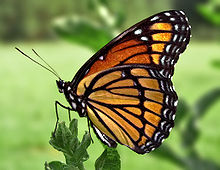 it is large.
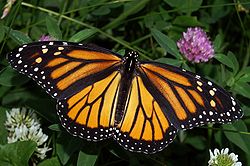
My Five-year old came home yesterday with the following “fact”: The Monarch Butterfly is poisonous and predators have come to avoid it. The Viceroy butterfly resembles the Monarch butterfly but is not poisonous. Predators have come to avoid it, mistakenly failing to identify it as a Viceroy not a Monarch. This resembles the LoJack argument and the Monarch exerts a positive externality on the Monarch. There is “undersupply” of Monarchs from a welfare perspective etc etc.
Alas, like all stylized facts, this one may not be true either. An experiment in Nature purports to show that Viceroys are poisonous to their predators. The authors offered Viceroy abdomens to wild-caught red-wing blackbirds and compared their responses to offers of control species. The Viceroy abdomens were rejected more frequently and the birds displayed discomfort if they did eat them. So, there goes another great stylized fact! I’ll wait a couple of years before I break it to the five year old.
 Cheap Talk
3 comments
Comments feed for this article
January 27, 2011 at 9:43 am
aaron
Bird placebo effect?
January 27, 2011 at 9:47 am
Sandeep Baliga
Aaron: I almost wrote that! As you know jeff is into placebos.
January 27, 2011 at 1:55 pm
Dan
It’s called Batesian mimicry (the stylized version of the butterfly story, that is). In reality it turned out to be a case of Mullerian mimicry, but that is still a case of positive externalities (or mutualism) since both species help the other to survive.