
You are currently browsing Arthur Robson’s articles.

What does a biological perspective imply about impatience? The rate of mortality will contribute to impatience, as is thunderingly obvious, and well-known in economics, certainly since Irving Fisher. A specifically biological contribution is the rate of population growth. If population is growing, then a reproductive strategy that entails the earlier production of offspring would be smiled upon by evolution. Consider a population in which all individuals produce 4 offspring at age 2. The population quadruples in two periods or, equivalently, doubles every period. A type that produced these 4 offspring at age one instead would do much better, quadrupling every period.
However, back-of-the-envelope calculations suggest that the sum of the mortality rate and the population growth rate may be inadequate to produce a plausible pure rate of time preference. That is, even for hunter-gatherers, mortality may be only 1-2% for most ages, for those who are not on the walls-of-death at the beginning of life or at the end. And the rate of population growth over the 1.8 million years of our evolutionary history must be close to zero, as an arithmetical necessity. However, the pure rate of time preference seems likely to be more than 1-2%.
One approach to closing the apparent gap is to suppose the average population growth rate of near zero cloaks a more dramatic detailed scenario. Perhaps, for example, there are long runs of peace and plenty generating substantial population growth. Occasionally, however, there are random demographic disasters of biblical proportions. Suppose these disasters are equal opportunity grim reapers, wreaking the same proportionate damage on all ages. Larry Samuelson and I (AER, 2009) show that the relevant rate of population growth is the rate that obtained during the sunny eras of peace and plenty, thus potentially closing the gap.
Another mechanism to close the gap is sex, finally validating the title of this post. (Thanks for your patience ;). Sorry if you were expecting something more lubricious.) This idea was formulated by an anthropologist, Alan Rogers (AER, 1994). Although there are mathematical difficulties with Alan’s model, and not all plausible models deliver the desired result, the intuition can be resuscitated. (This paragraph relies on work with Balazs Szentes.) This intuition is as follows. A prime motivation for saving for the future is to favor offspring. However, sexual reproduction means that each offspring has a value that is only 1/2 of each parent’s value. This is an instance of “Hamilton’s rule” from biology, but is also, more familiarly, the free-rider problem. That is, offspring are a public good to each couple, and there is a temptation for each parent in the couple to undercontribute.

“Hoist with one’s own petard”– as in Hamlet– a deconstruction. “Hoist” here is an archaic past participle. “Petard” comes from the French meaning a small bomb. Petard is related to the French for “f..t”. (Please note the “t”. I’m rude, but not that rude.) “Le Pétomane” was the stage name of a professional French “flatulist.” (Imagine telling an immigration officer that was your occupation.) Some of the highlights of his stage act involved sound effects of cannon fire and thunderstorms, as well as playing “O Sole Mio” and “La Marseillaise” on an ocarino. He could blow out a candle from several yards away. His audience included Edward, Prince of Wales, King Leopold II of the Belgians, and Sigmund Freud. His life was commemorated in Le Pétomane: Parti Avec Le Vent (Le Pétomane: Gone With The Wind). H/t Google, Blazing Saddles
Consider a two horse race– with probability 3/4 Duchess Camilla wins, with probability 1/4, it’s Princess Anne. You have $1 to bet. Camilla pays $2 for a win, and Anne $1– the precise numbers don’t matter. You are risk-neutral. Which horse should you pick? Camilla, of course, who pays $1.50 in expectation, whereas Anne pays only $0.25. Now suppose this race is run twice and you reinvest your winnings from the first race as a bet in the second. How you should now bet? You will bet on Camilla in the second race, for the same reason as before. Indeed, it is not hard to see that you should bet on Camilla in the first race as well, since you should maximize the expected amount of money you’ll have available to bet on the second. This is kind of boring. If there is any finite number of repetitions, bet on Camilla always.
But what if there is an infinite number of these races, where you reinvest all your winnings, and you care about your wealth in the far distant future? Now there’s a problem with always betting on Camilla– she will lose eventually, and you will be broke as soon as that happens. You must bet some of that $1 on Anne. How much should you bet? If you bet a fraction f on Camilla and 1-f on Anne, your wealth at date T, w(T), say, will be a product of n(T) factors of 2f and T-n(T) factors of 1-f, where n(T) is the number of times that Camilla wins. It follows that (1/T)ln(w(T)) = (n(T)/T)ln(2f) + ((T-n(T))/T)ln(1-f). The law of large numbers implies that (1/T)ln(w(T)) tends to (3/4)ln(2f) + (1/4)ln(1-f). You should maximize this long run limiting growth rate. In this case, it follows that the optimal f = 3/4.
As a strategy for investment, this log criterion was proposed by Kelley in 1956, as Lones Smith reminded me yesterday. He also said this Kelly criterion led to “Beat the Dealer”, the MIT Blackjack team, and eventually the Kevin Spacey movie “21”.
Kelley was roundly criticized by PA Samuelson in 1971, who objected to the criterion of long run wealth maximization, but Kelley was rehabilitated by Blume and Easley in several relatively recent papers.
Without needing to take a stance on the merits of the objections, they do not apply with a biological reinterpretation. In particular, the criterion of long run population maximization is evolutionarily convincing. The corresponding result is that the evolved utility function should be the expectation, with respect to aggregate risk, of the natural log of the expected offspring conditional on each aggregate state.
Individuals should be more averse to aggregate risk than they are to idiosyncratic risk. Preferences do not satisfy “probabilistic sophistication,” since it is not enough to list the outcomes and the associated probabilities. Preferences are interdependent, since the impact of gambles on others matters. Individuals may be induced to take idiosyncratic gambles in the face of aggregate risk.
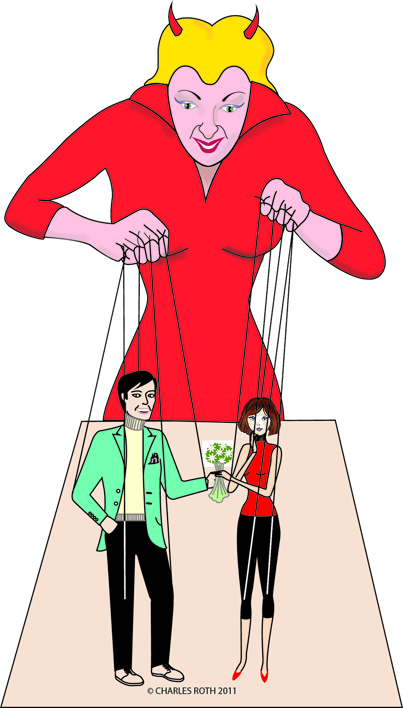
Questions that might at first blush seem banal may have illuminating answers from an evolutionary perspective. Why do we have a utility function, for example? Perhaps because it permits a plastic response by an individual to circumstances that are unusual or even novel in our evolutionary history. Think of Mother Nature as a principal, a puppeteer, who knows the fitness consequences of various outcomes, say. Nature wishes to enhance the evolutionary success of the individual, the agent, the puppet, where this individual also has some local information. This local information might be about the probabilities with which these outcomes occur in various gambles, say. An evolutionary strategy that fixes an appropriate hedonic scoring system for the outcomes within the agent and then devolves autonomy onto the agent permits the agent to blend together the two components–outcomes and probabilities. In the end, the agent chooses the optimal gamble in a flexible and optimal way, endowed with free will, but bound in an hedonic straitjacket.
To ask: Why do we value food, warmth, even of the intelligent and well-educated is to invite incredulity. “What are you, stupid? If we lack those, we will die and have no offspring. Aren’t you into biology?” But if utility is the solution to this principal-agent problem, and we credit ourselves with the requisite intelligence, then why would the optimal utility not simply be offspring? Why wouldn’t the optimal evolutionary strategy not set offspring as utility and then leave it to the intelligent and autonomous agent to figure out that it would be a good idea to eat to further this goal. Sex would seem messy and awkward, but it would have to be endured too. For the kids.
Again the reason why utility has as arguments goods that are intermediate to the production of offspring, as clearly it must in reality, might be that Nature has information that the individual lacks. Although there are, in principle, be other ways of conveying this information, as a matter perhaps of historical accident, Nature has come to whisper in your ear “Don’t think about it, just eat that cheesecake, bask in the sun, smile at that pretty girl…”

Economists stand pretty much alone in believing that people are indifferent to one another’s situation. Psychologists do not believe it, the man/woman in the street typically would not, your mum does not (mine didn’t anway). I wouldn’t go as far as Oliver Cromwell (I beseech you, in the bowels of Christ, think it possible that you may be mistaken.) But we might want to consider the possibility that we are wrong. The prime facie evidence in favor of a concern with status is strong–going back to Duesenberry’s discussion of the consumption function in 1949 and further of course. Modelling a concern with status is rewarding–for example, such a argument sheds light on attitudes to risk. The case for including status in utility could rest there. However, it also seems highly plausible that such a concern with status is the fruit of evolution. It is easy to think of evolutionary scenarios that might engender a concern with relative standing. If males compete with one another to obtain resources, it might be that the most successful male in terms of resources, even if only by a smidgin, wins a wildly disproportionate level of attention from the fair sex. But the economists intense predilection for selfish preferences has only been moved to a deeper level. Deriving non-selfish preferences in this fashion is tantamount to embedding aspects of the game or the feasible set into preferences in a way that would win instant opprobrium in a conventional economic setting. Why wouldn’t an intelligent actor maintain purely selfish preferences in the winner-take-all game described, but apply the features of the game appropriately to arrive at the same course of action? In a new setting, the individual with aspects of the old game embedded in preferences is likely to behave inappropriately, but the actor with purely selfish preferences could recompute and find the optimal course. What is the upshot of all this? Perhaps, non-selfish preferences evolved as a rule of thumb in complex circumstances, a rule of thumb necessitated by complexity and cognitive costs, a rule of thumb whose theoretical treatment is going to be famously awkward.
 Cheap Talk