
Our water pipes are old in Evanston and need replacing. What does that mean?…….More taxes of course!
But the Water Division of the City of Evanston is managed by sharp dedicated operators who know a thing or two about running a business.
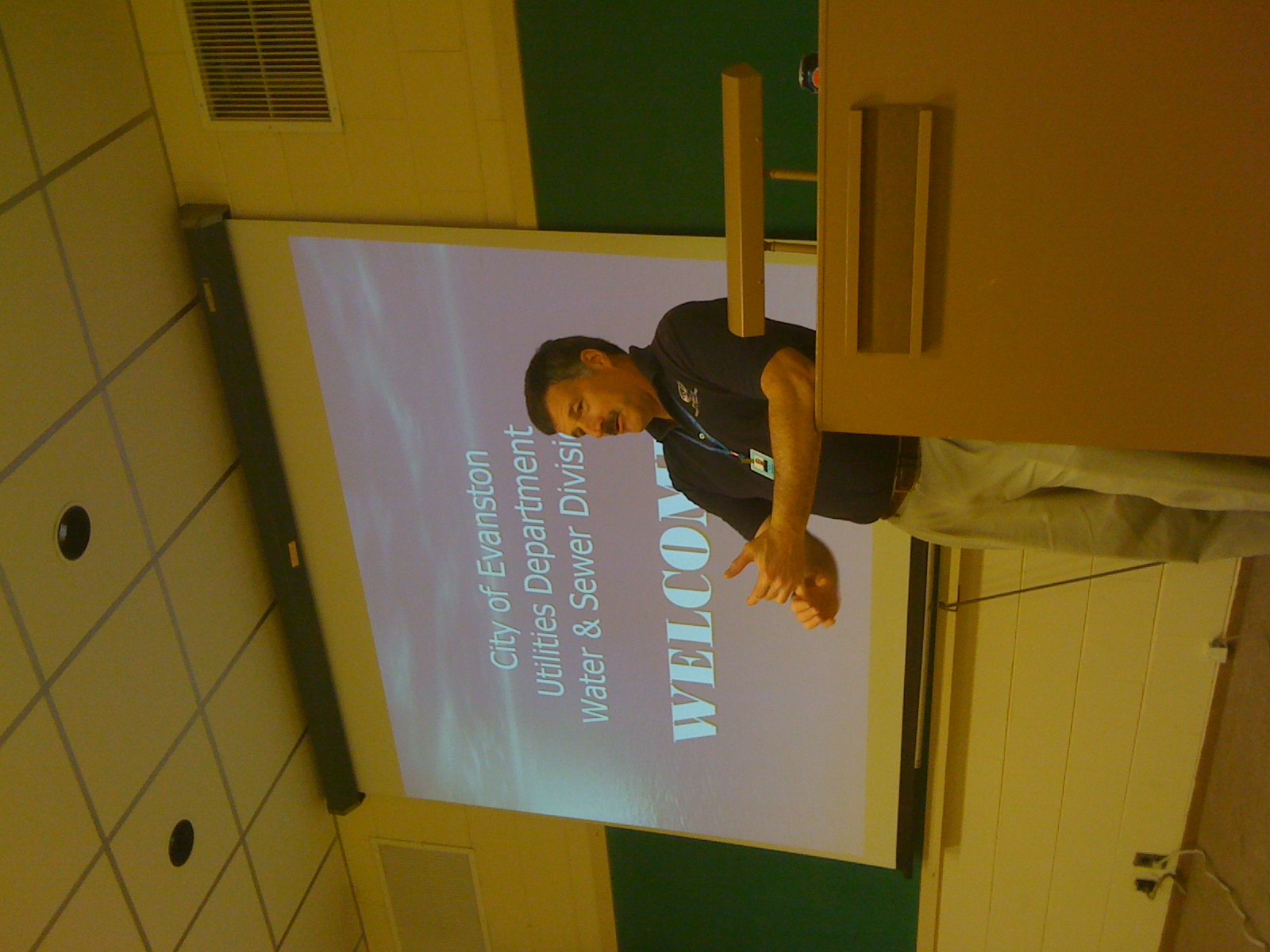
First, they understand good PR. They are running tours of the water treatment facility just north of the NU campus on Lincoln and Sheridan. Our kids wanted to go of course. I thought the whole group traipsing through would be made up of parents and kids. But no! We had retirees asking very technical questions, interested citizens wondering about water purity and funny smells caused by dead algae and a middle-aged couple out on a date. We were all charmed by the head of Evanston Water and his entourage and quite convinced by his arguments for higher taxes.
But he also has another plan. Many of the northern suburbs get their water either from Chicago or Evanston and are tied into long term contracts. As the contracts expire, Evanston and Chicago will compete for business and Evanston is at an advantage. Our cost of production is slightly higher – Chicago can generate greater economies of scale. But Chicago has more large consumers. If it gives one of them a discount, say Morton Grove, then others will clamour for the same deal. Evanston does not face this issue to the same extent. We can safely undercut Chicago’s price to Morton Grove without passing on the same discount to other towns we supply. We have a good old competitive advantage. Then, we can use the profits to upgrade our water system without raising taxes so much.
Another interesting tidbit: Even if we sell water to Skokie at 60c per unit, they charge much more to their citizens. They add a Skokie margin onto the margin Evanston is already charging them: so called double-marginalization. Demand for water is inelastic so double marginalization does not have much effect. But if it were elastic, then prices would be lower and consumer welfare and even profits higher if the Skokie and Evanston Utilities merge and set prices like an integrated monopolist. (This is ignoring the fact that prices are regulated in some way and I do not have the details of exactly how.) Perhaps there are other examples like this where one area sells a public good to another where double marginalization is more important.
 Cheap Talk
1 comment
Comments feed for this article
November 7, 2010 at 10:03 am
Merchant
I support double marginalization!